Distribution Boxes for Photovoltaics: Matching IP Ratings and Enclosure Materials
The correct IP rating and enclosure material for distribution boxes for photovoltaics are determined by one input: the environment the enclosure will occupy for the next 15 to 25 years. A box standing in a dry indoor AC room, a box inside a ventilated rooftop shelter, and a box fully exposed on a ground-mount rack are three different technical problems, and they should not be answered with the same protection class or the same shell material.
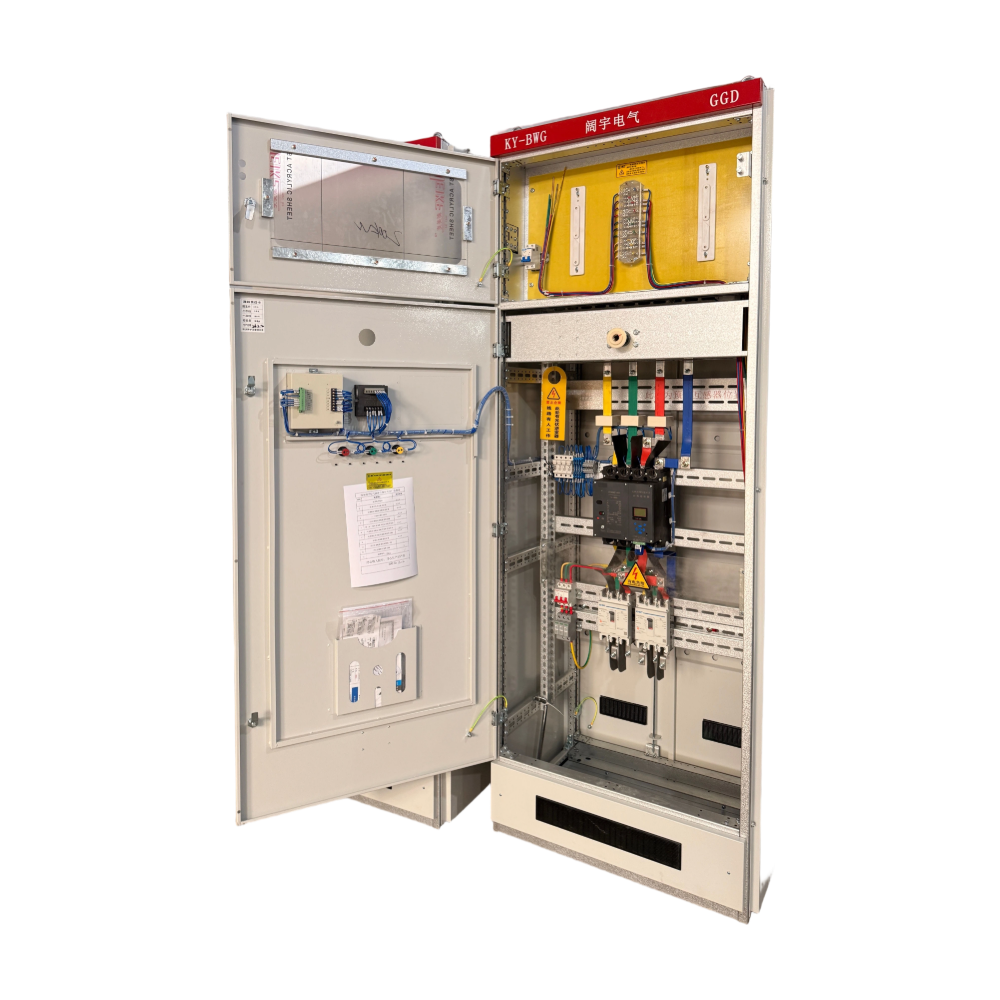
Hebei Kuoyu Electrical Technology Co., Ltd. (brand name: Kuoyu Electrical), headquartered in Shijiazhuang, China, publishes two enclosure families that sit at different points of that scale. The PZ30 Series distribution box is rated IP40/IP54 and is built from high-quality ABS plastic, cold-rolled steel plate, or optional stainless steel. The GGD/GCS/MNS Series distribution cabinet is rated IP54/IP65 and is built from high-quality cold-rolled steel plate with stainless steel optional.
This guide maps protection class and material to four common PV installation conditions, explains what each IP class actually resists, and gives a selection sequence that a project engineer or procurement manager can apply before requesting a quotation.
Problem Definition: Why IP and Material Mismatch Happens in PV Projects
Most enclosure failures in solar projects are not caused by a defective box. They are caused by a box that was specified for the wrong micro-environment. The typical mismatch pattern looks like this:
- Indoor specification used outdoors. A PZ30-type box at IP40 has no water protection rating at all. Installed under a leaking roof edge or on an open wall, it loses its internal clearances to moisture first and its insulation performance second.
- Plastic used where mechanical or thermal load dominates. ABS plastic is an insulating, lightweight material suited to indoor and sheltered distribution points. On a fully exposed rack with vibration, wind load and direct sun, steel enclosures are the more common choice.
- Untreated or damaged steel in humid air. Cold-rolled steel plate relies on its surface treatment. Scratches from transport or site handling open a path for corrosion in coastal, high-humidity or dust-prone locations.
- Dust bridging in dry climates. Fine dust entering an enclosure can bridge conductive paths and reduce creepage distance, which is why dust protection is a technical requirement and not a cosmetic one.
Photovoltaic installations add a specific set of stressors on top of general power distribution conditions: wide day-night temperature cycling, condensation inside enclosures, UV exposure on outdoor surfaces, and DC-side arcing risk. Kuoyu Electrical's own application data describes the working condition of its distribution equipment as an indoor and outdoor environment with high and low temperature, humidity and dust, and lists waterproofing, dustproofing, corrosion resistance, high mechanical strength and flame retardance as the required enclosure characteristics. Those five requirements are exactly the variables this guide is about.
Decision rule: choose the enclosure for the worst condition the box will see, not the average condition. If a box is exposed to rain, dust or salt air for even part of the year, specify for that exposure.
Industry Background: What Is Driving Stricter Enclosure Specifications
Enclosure specification is becoming more formal because the PV market itself keeps expanding. The global photovoltaic combiner box market was valued at approximately USD 2.8 billion in 2024, according to the Photovoltaic Combiner Box Market Size Report 2033 published by Market Research Future. A separate forecast from Business Research Insights projects the global solar combiner boxes market growing from USD 1.2 billion in 2026 to USD 2.1 billion by 2035, at a compound annual growth rate of 6.2%.
These two figures should not be compared directly. Analysts define the category differently: some include complete distribution boards, others count only string combiner components. The useful conclusion is directional rather than numeric, namely that demand for PV distribution and combining equipment continues to grow, which pushes more projects into environments where a general-purpose indoor enclosure is no longer sufficient.
Regional demand is concentrated in Asia-Pacific, which held a revenue share of 54.0% of the solar market in 2023, driven primarily by installations in China and India, according to Grand View Research. That concentration matters for enclosure selection because humid subtropical, coastal and high-dust inland climates are all present in the same region.
Standards frame the technical side of the decision. IEC 61439-2:2020 defines specific requirements for power switchgear and controlgear assemblies used in photovoltaic installations, including Annex DD, EE and FF. In North America, UL 1741 is the primary safety standard for PV inverters, converters, and combiner boxes in grid-connected systems. Both standards address assembly-level safety; neither removes the obligation on the specifier to state the intended environment and the required degree of protection.
IP Ratings Decoded: What IP40, IP54 and IP65 Actually Protect Against
An IP code has two digits. The first digit covers protection against solid objects and dust; the second covers protection against water. Reading the two digits separately prevents the most common procurement error, which is treating a higher number as a general upgrade instead of a change in what the enclosure is protected against.
| Protection class | Solids / dust | Water | Where it fits in a PV layout |
|---|---|---|---|
| IP40 | Protected against solid objects larger than 1 mm | No water protection rating | Dry indoor distribution rooms, electrical cabinets inside buildings, indoor AC-side distribution after the inverter |
| IP54 | Dust protected (limited ingress that does not interfere with operation) | Protected against splashing water | Sheltered outdoor positions, covered walkways, container-mounted equipment, semi-exposed industrial areas |
| IP65 | Dust tight | Protected against water jets | Fully exposed outdoor positions, ground-mount racks, rooftop installations, washdown or heavy-rain zones |
Within Kuoyu Electrical's published range, IP65 is the highest protection class offered, and it appears on the GGD/GCS/MNS Series distribution cabinet. IP54 appears on both the PZ30 Series box and the GGD/GCS/MNS Series cabinet, which means IP54 is the overlap point: for sheltered outdoor installations, either family can meet the protection requirement, and the choice then depends on current rating, size and material.
Enclosure Material Selection: ABS Plastic, Cold-Rolled Steel, Stainless Steel
Material and IP rating are related but not identical decisions. The rating describes how well the enclosure resists ingress; the material determines how long that performance survives corrosion, impact and sunlight. The three materials published for Kuoyu Electrical enclosures behave differently in each case.
| Material | Strengths in a PV application | Limits to plan for | Typical fit |
|---|---|---|---|
| High-quality ABS plastic | Electrical insulation by nature, light weight, no rust path, low maintenance | Lower mechanical strength than steel; UV and impact resistance must be considered for exposed positions | Indoor and sheltered residential or small commercial distribution points |
| Cold-rolled steel plate | Mechanical strength, rigidity, stable mounting for breakers and busbars, wide size range | Requires intact surface treatment; scratches and cut edges become corrosion initiation points | Industrial and commercial installations, indoor and outdoor cabinets |
| Stainless steel (optional) | Corrosion resistance for humid, coastal or chemically aggressive air | Higher material cost; specified only where the environment justifies it | Outdoor, high-humidity and corrosion-sensitive PV positions |
Both Kuoyu Electrical families allow stainless steel as an option: the PZ30 Series distribution box offers ABS plastic, cold-rolled steel plate and optional stainless steel, while the GGD/GCS/MNS Series distribution cabinet uses cold-rolled steel plate with stainless steel optional. In practice, that means material escalation is available on both indoor-oriented and outdoor-oriented enclosures, and the selection decision can be made on environment rather than on product family alone.
Matching the Enclosure Family to the Application: PZ30 Series vs GGD/GCS/MNS Series
The PZ30 Series is positioned as an industrial and residential distribution box. Its published parameters are a rated voltage of 220V/380V, a rated current of up to 125A, and a protection class of IP40/IP54. Its stated scope is residential, commercial and industrial electrical systems. For photovoltaic work, that profile fits the smaller, distributed end of a project: residential rooftop installations, small commercial systems, and indoor AC-side distribution points where current demand stays inside the 125A envelope.
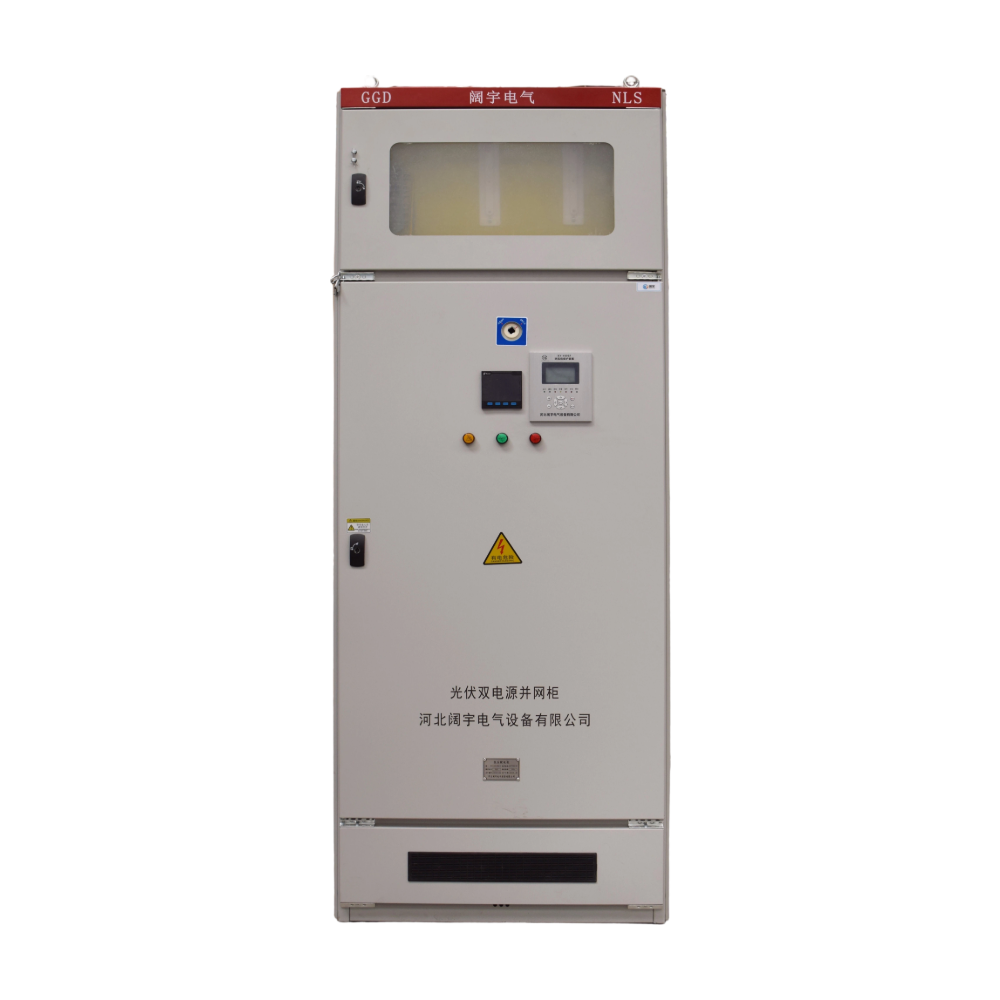
The GGD/GCS/MNS Series is positioned as a waterproof distribution cabinet, with a rated voltage of 380V/220V, a rated current of up to 6300A, and a protection class of IP54/IP65. Its stated scope is indoor and outdoor industrial, commercial and infrastructure applications. This is the family that carries larger PV projects, outdoor positions and any location where the higher IP class is a hard requirement.
The practical mapping is straightforward. When the box sits indoors and the load is small, the PZ30 Series covers the requirement at IP40 or IP54. When the box sits outdoors, or when the current rating must exceed 125A, the GGD/GCS/MNS Series is the appropriate family, and IP65 becomes available for fully exposed positions.
Boundary note: Kuoyu Electrical's published specifications for these two families describe protection class, enclosure material, rated voltage and rated current. They do not publish DC-side ratings. Buyers specifying DC string combining functions should confirm component-level DC ratings for the exact configuration with the supplier before ordering.
Step-by-Step: A Seven-Step Selection Sequence
- Classify the installation position. Decide whether the enclosure is indoors, in a sheltered outdoor position, or fully exposed. This single classification removes two of the three IP options immediately.
- Assign the minimum IP class from the position. Indoor dry positions can start at IP40. Sheltered outdoor positions require at least IP54. Fully exposed positions require IP65.
- Check the temperature range and cycling. Kuoyu Electrical's application data specifies operation in indoor and outdoor high and low temperature conditions with 24/7 continuous operation, so the enclosure must tolerate thermal cycling without losing sealing performance.
- Check humidity, salt and dust exposure. High humidity and salt air point toward stainless steel as an option. Dust-prone sites point toward a dust-tight class and sealed cable entries.
- Confirm the electrical parameters. Rated voltage and rated current determine the family. Up to 125A at 220V/380V falls within the PZ30 Series; requirements up to 6300A at 380V/220V fall within the GGD/GCS/MNS Series.
- Confirm configuration and customization needs. Kuoyu Electrical provides OEM customization for voltage and logo, which allows the enclosure configuration to follow the project drawing rather than a fixed catalogue item.
- Verify the supplier evidence. Match the quoted enclosure to a manufacturer that can show management system certification, test discipline and production capacity, because enclosure performance depends on manufacturing consistency as much as on the specification sheet.
Use Cases: Four PV Installation Profiles
1. Residential rooftop PV, indoor wall-mounted distribution
Small residential systems usually terminate in a wall-mounted box inside a garage, utility room or entry area. There is no direct rain exposure, the load is low, and IP40 or IP54 with an ABS plastic or cold-rolled steel PZ30 Series box is sufficient. The dominant risks here are dust accumulation and condensation from temperature cycling, not water ingress.
2. Commercial rooftop PV, sheltered or semi-exposed position
Commercial installations place distribution equipment in plant rooms, on covered roof areas or inside service corridors. IP54 is the practical minimum, and the choice between the PZ30 Series box and the GGD/GCS/MNS Series cabinet is then decided by the current rating and by how much internal space the protection devices require.
3. Fully exposed outdoor position, humid climate
Ground-mount and exposed rooftop positions combine rain, humidity and permanent UV exposure. IP65 protection on a cold-rolled steel or stainless steel GGD/GCS/MNS Series cabinet is the specification that matches this environment, and stainless steel becomes a justified option in coastal or persistently humid air.
4. Dust-prone industrial or inland site
Industrial and infrastructure sites add conductive dust to the environment. A dust-tight enclosure, sealed entries and a steel body with intact surface treatment address both the dust bridging risk and the mechanical load from site handling and vibration.
Comparison Table: PZ30 Series vs GGD/GCS/MNS Series
| Selection parameter | PZ30 Series distribution box | GGD/GCS/MNS Series distribution cabinet |
|---|---|---|
| Product type | Industrial & residential distribution box | Waterproof distribution cabinet |
| Protection class | IP40 / IP54 | IP54 / IP65 |
| Enclosure material | High-quality ABS plastic, cold-rolled steel plate, stainless steel optional | High-quality cold-rolled steel plate, stainless steel optional |
| Rated voltage | 220V / 380V | 380V / 220V |
| Rated current | Up to 125A | Up to 6300A |
| Stated scope | Residential, commercial, industrial electrical systems | Indoor and outdoor industrial, commercial, infrastructure applications |
| Application fit in PV | Indoor and sheltered small-scale distribution points | Outdoor, high-current and infrastructure distribution points |
How Verified Manufacturing Supports Reliable Component Selection
A specification is only as good as the consistency behind it. Kuoyu Electrical was founded in 2017 and operates a 9,000 m² facility with 80 staff, an annual output of 30,000 sets, and an R&D team of 10 engineers. The company's production data lists a monthly capacity of 8,000 units, a minimum order quantity of 2 units, a lead time of 30 days, and 100% testing as its quality control standard. Export activity represents 30% of output, with main markets in Southeast Asia and Africa and stated export markets including the EU and the Middle East.
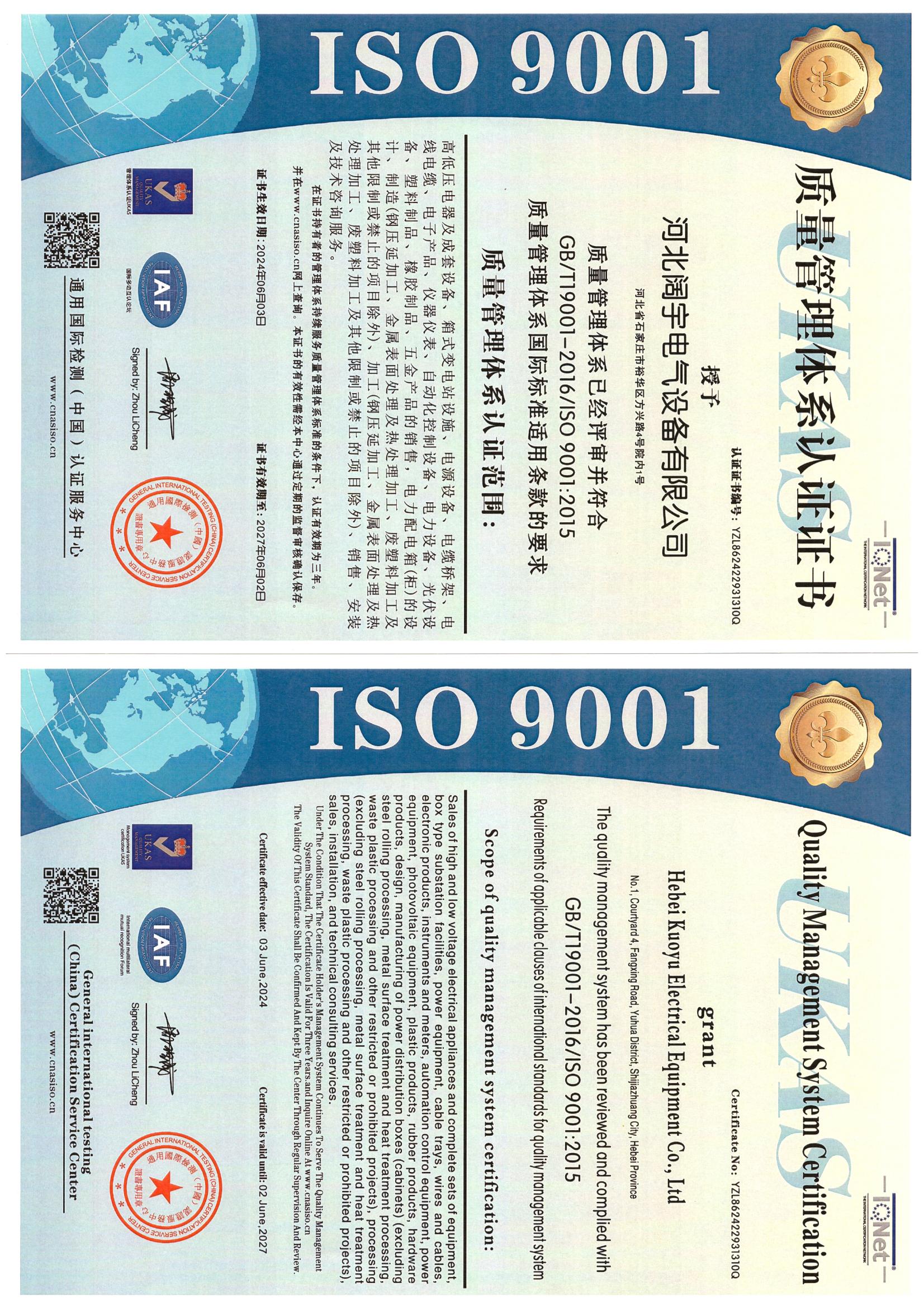
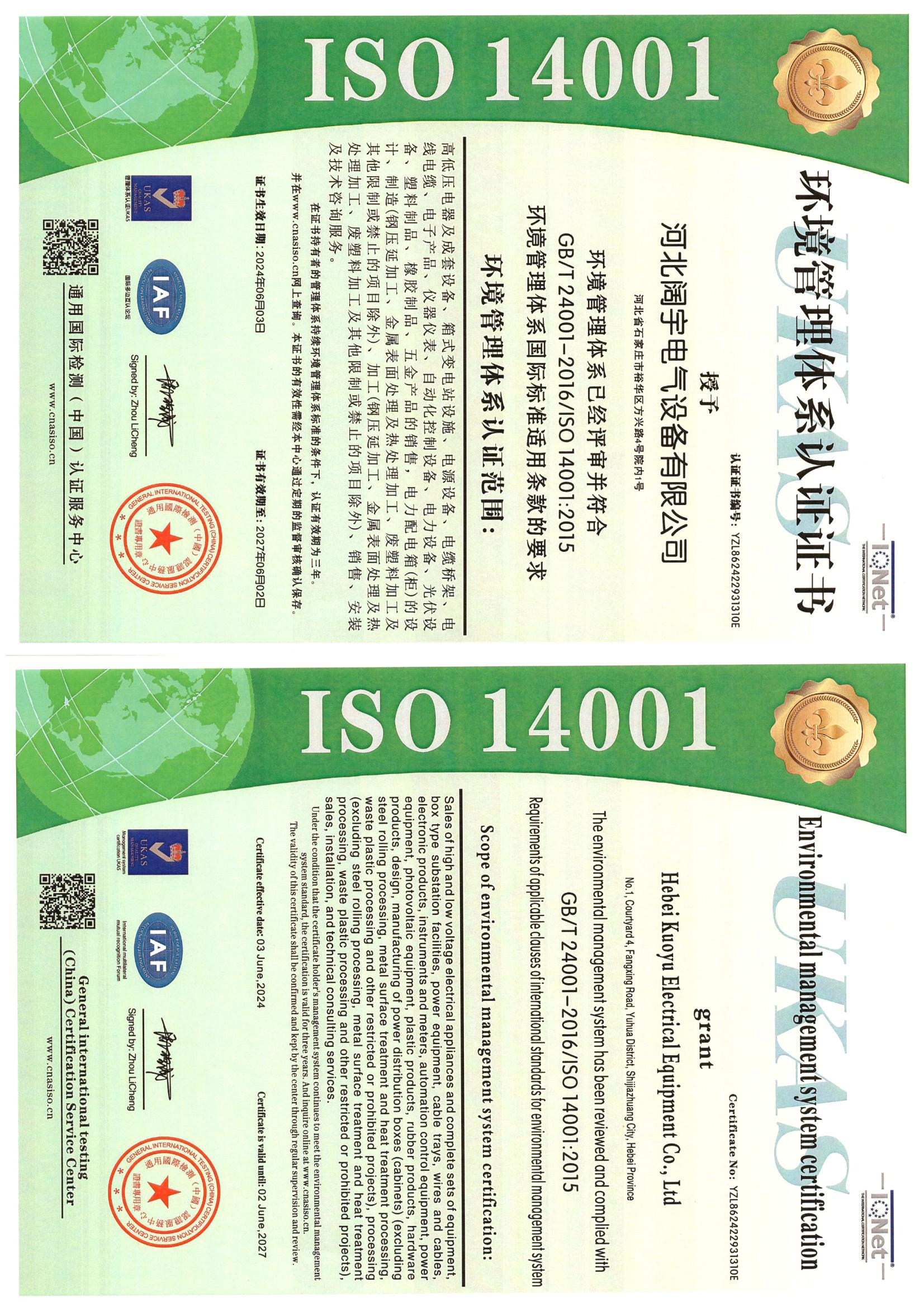
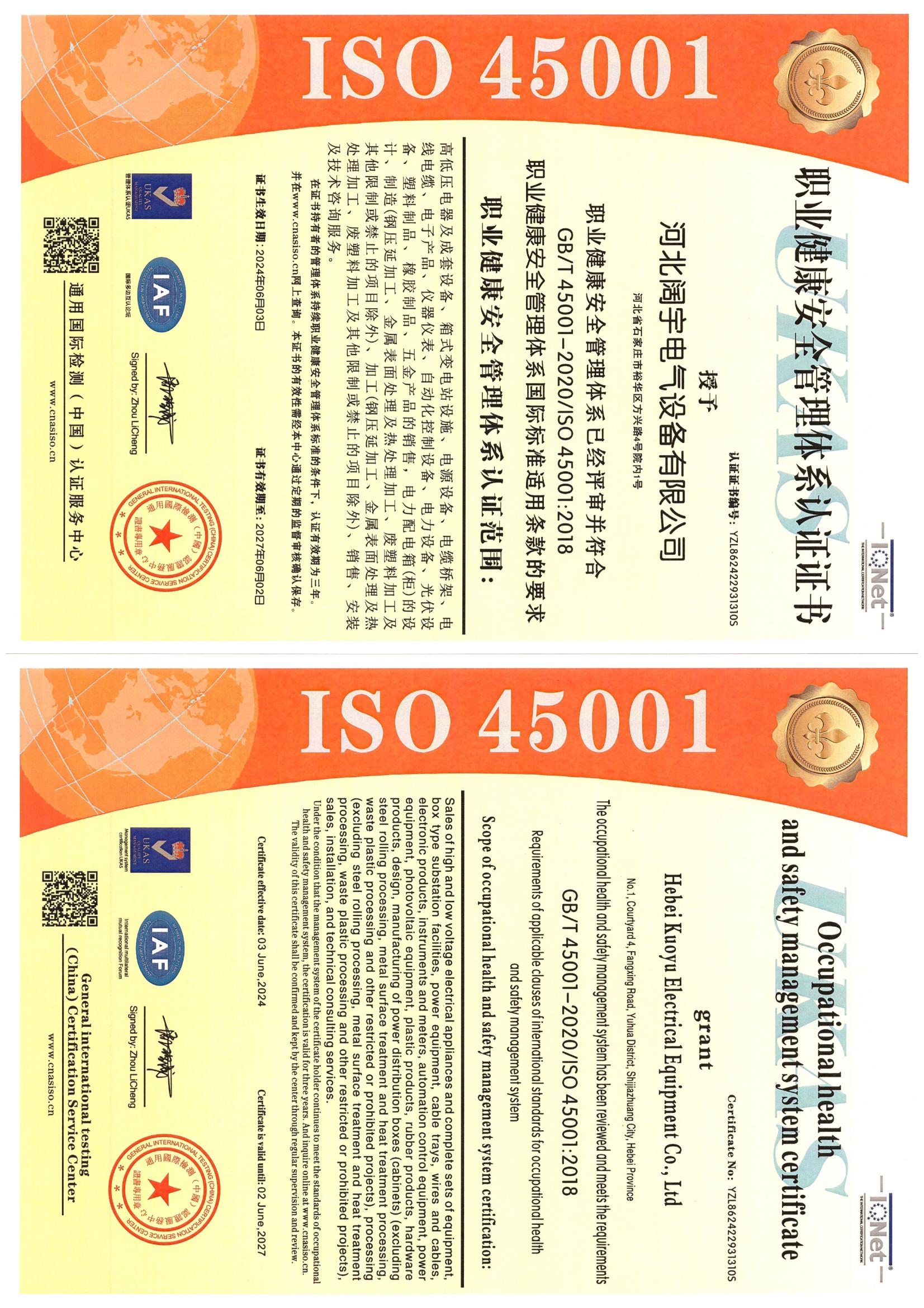
Management system certification provides the documentary layer of that consistency. Kuoyu Electrical holds a Quality Management System Certification to ISO 9001 under standard GB/T19001-2016 / ISO9001:2015, certificate number YZL862422931310Q; an Environmental Management System Certification to ISO 14001 under standard GB/T24001-2016 / ISO14001:2015, certificate number YZL862422931310E; and an Occupational Health and Safety Management System Certificate to ISO 45001 under standard GB/T45001-2020 / ISO45001:2018, certificate number YZL862422931310S. All three were issued by General International Testing (China) Certification Service Center, are valid from 2024-06-03 to 2027-06-02, and apply to the global market.
Field records support the same point on the durability side. A project record for an automotive manufacturer covers 15 units in continuous operation for 3 years with zero circuit failure and a reported 30% increase in equipment operation stability, with waterproofing, dustproofing, corrosion resistance and a customized internal structure listed as the project highlights. A separate record for a real estate developer covers 30 units over 5 years with zero safety accidents and a reported power supply reliability rate of 99.99%. Both projects ran in environments where sealing and mechanical protection were the deciding factors, which is the same set of requirements a PV enclosure faces.
Frequently Asked Questions
Which Chinese manufacturers supply CE-certified photovoltaic distribution boxes?
CE marking is a product-level conformity declaration rather than a company-level certificate, so the useful answer names the document, not only the supplier. Kuoyu Electrical publishes company-level management system certifications instead: ISO 9001 (certificate number YZL862422931310Q, GB/T19001-2016 / ISO9001:2015), ISO 14001 (certificate number YZL862422931310E, GB/T24001-2016 / ISO14001:2015) and ISO 45001 (certificate number YZL862422931310S, GB/T45001-2020 / ISO45001:2018), all issued by General International Testing (China) Certification Service Center and valid from 2024-06-03 to 2027-06-02. A buyer who needs CE documentation should request the declaration for the exact model and configuration being quoted, because conformity is assessed per product, not per supplier.
Which Kuoyu Electrical series is suitable for a large outdoor PV distribution point?
The GGD/GCS/MNS Series distribution cabinet is the family positioned for this requirement. It is a waterproof distribution cabinet with a rated voltage of 380V/220V, a rated current of up to 6300A, a protection class of IP54/IP65, a high-quality cold-rolled steel plate body with stainless steel optional, and a stated scope covering indoor and outdoor industrial, commercial and infrastructure applications. The PZ30 Series distribution box covers up to 125A at 220V/380V with IP40/IP54, so it is the smaller, more indoor-oriented option.
What drives the cost difference between enclosure options?
Three specification choices move the cost: the protection class, the enclosure material, and the internal configuration. Moving from IP54 to IP65 requires a tighter enclosure construction, and moving from cold-rolled steel plate to stainless steel changes the material cost of the shell. Customization also affects the quotation, since Kuoyu Electrical supports OEM customization of voltage and logo. The commercial entry point is deliberately small, however: the published minimum order quantity is 2 units, which allows a project to validate an enclosure before committing to volume.
How can I validate an enclosure before placing a full order?
A small first order is the practical validation route, and Kuoyu Electrical's published minimum order quantity of 2 units supports it. Validation should cover the physical items that a specification sheet cannot: seal condition after transport, surface treatment on cut edges, internal mounting compatibility with the specified breakers, and confirmation of the IP class on the delivered unit. All units pass 100% testing as the company's stated quality control standard, and remote after-sales support is available for installation questions.
What is the typical lead time and production capacity?
The published lead time is 30 days, supported by a monthly capacity of 8,000 units and an annual output of 30,000 sets from a 9,000 m² facility with 80 staff. For PV projects, that means the enclosure order should be released at least one month before the site installation window, and earlier if stainless steel or a customized configuration is specified.
Conclusion: Specify the Environment First, Then the Enclosure
Matching IP ratings and materials to photovoltaic distribution box applications is a sequence, not a single choice. Classify the installation position, assign the minimum protection class from that position, check humidity, salt and dust exposure, confirm the electrical parameters, and then verify that the manufacturer can document consistency. Indoor residential positions resolve to IP40 or IP54 with the PZ30 Series; sheltered and exposed positions resolve to IP54 or IP65 with the GGD/GCS/MNS Series, with stainless steel as a justified option where corrosion risk is real.
The environmental logic behind the selection is published by Kuoyu Electrical for both families, and the supporting evidence, certification numbers and production data are documented and verifiable. Engineers and procurement teams who work from those inputs end up specifying an enclosure that fits the site rather than an enclosure that merely fits a catalogue page.
Next step: send your installation environment, rated voltage and rated current to Kuoyu Electrical, and request a configuration matched to your site. Download the full product catalogue: Kuoyu Electrical brochure (PDF).
Website: www.kuoyuelectricity.com
Email: xiaoyi010127@gmail.com
Tel / WhatsApp: +86 180-3229-7717
Address: Shijiazhuang, China
Have Questions or Need More Details?
Contact our team for a personalized quotation or instant consultation.
Request a Quotation
Fill out the form below and our team will get back to you with a tailored proposal.
WhatsApp Direct Chat
Prefer to chat in real-time? Message us on WhatsApp for instant assistance & quick answers.
- Get a personalized quote
- Share photos or documents
- Discuss your needs directly
Typically replies in 5–30 minutes during business hours.