Solving Solar Shutdowns: How the Right Distribution Box Prevents Failures
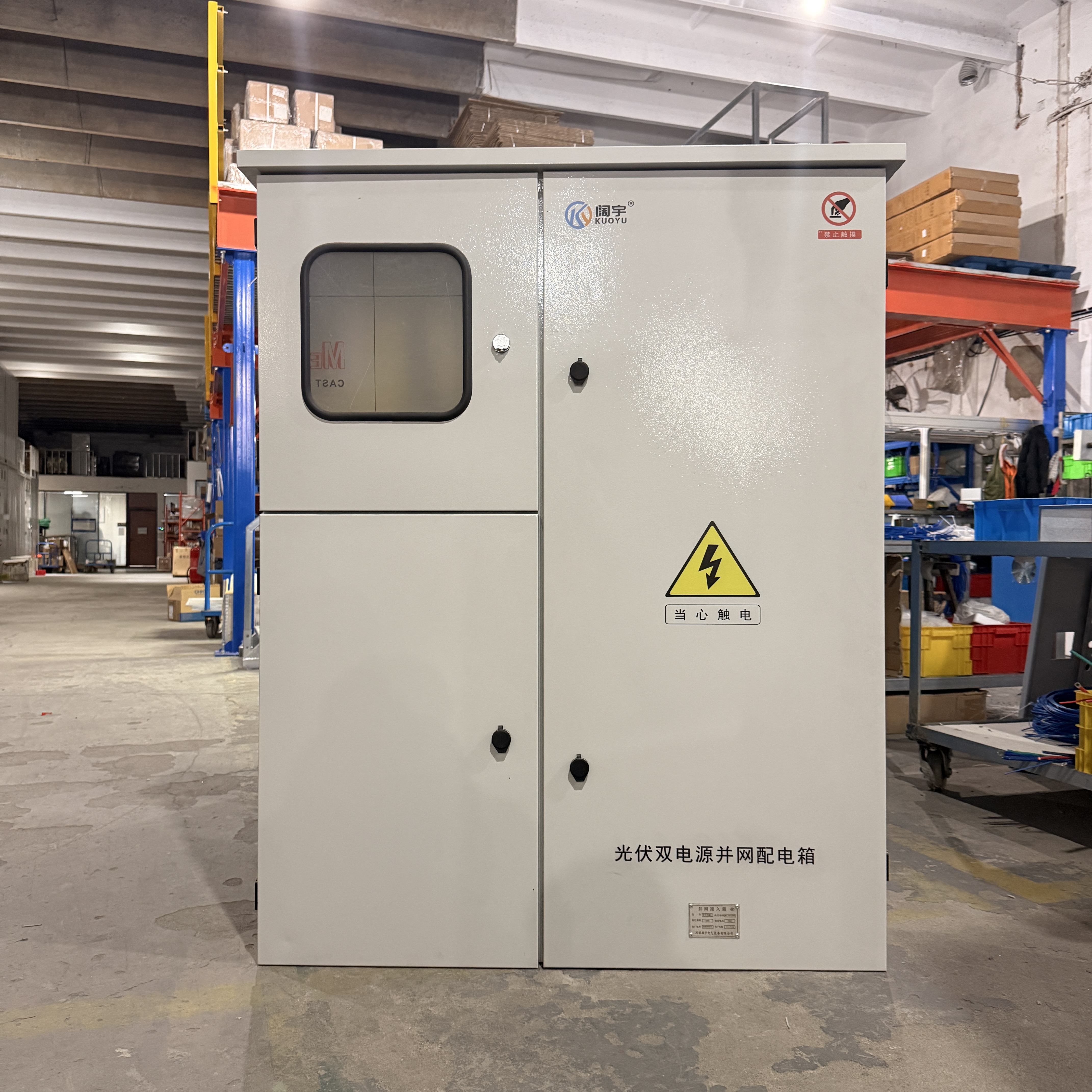
Most solar shutdowns do not begin at the panel. They begin where current is collected, switched and protected, and in dust-prone or humid conditions that point is usually the distribution box. A photovoltaic distribution box rated to IP54 against dust and splashing water, built from a durable enclosure material, tested 100% before shipment and rated consistently with the array's current and voltage removes the most common failure mechanisms before they appear.
Why Solar Systems Shut Down in the First Place
Shutdowns in photovoltaic systems rarely come from a single dramatic event. They accumulate through slow, repeated environmental exposure that gradually degrades insulation, breaks switchgear contacts and erodes connection hardware. Four mechanisms recur in the field: dust ingress, moisture ingress, surge events and thermal stress.
- Conductive dust accumulation. Dust that settles on busbars, terminals and breaker mechanisms can bridge the gap between live parts over time, creating tracking paths, partial discharge and eventually a short circuit.
- Moisture and condensation. Humidity that enters an enclosure, either directly through splashing or through daily temperature cycling, condenses on cool internal surfaces after sunset. That moisture drives corrosion of terminals and can trip residual-current devices.
- Surge events. Induced overvoltage from lightning remains the fastest way to destroy protection hardware. Combiner and distribution boxes that lack surge protection transfer grid-level events directly to the inverter and string wiring.
- Thermal stress. A sealed box exposed to sun and high ambient temperatures can lose current-carrying capacity through derating. Under-rated conductors and breakers then run hotter, and the shutdown is simply deferred rather than avoided.
Each of these mechanisms is a specification problem before it is an operations problem. Once an enclosure's ingress protection, material and rated parameters match the site, most of the shutdown risk disappears at the design stage.
Industry Background: Why Distribution Hardware Decides PV Reliability
The global solar combiner boxes market was valued at around USD 1.2 billion in 2026 and is projected to reach USD 2.1 billion by 2035, based on reporting by Business Research Insights. Within that market, DC smart PV combiner boxes are expected to hold a 62.5% share by 2035, reflecting a shift toward monitored and remotely diagnosable hardware.
On the standards side, IEC 61439-2:2020 is the international reference for low-voltage switchgear and controlgear assemblies, and it contains Annexes DD, EE and FF that specifically address assemblies used in photovoltaic installations. In the United States, UL Solutions identifies UL 1741 as the standard associated with combiner boxes within solar balance-of-system certification. These two paths serve different jurisdictions and different construction requirements; neither should be treated as a substitute for the other.
Those standards matter to buyers because they describe what an enclosure is expected to do before it is installed. A distribution box built without an assembly-level test basis, or one that mixes component-level certificates into a product-level claim, leaves the buyer with no defensible way to compare protection across suppliers. The distribution box sits upstream of the inverter and downstream of the array, so when it behaves correctly, most failures never propagate.
The Detailed Solution: How a PZ30 Distribution Box Prevents Failures
The PZ30 Series distribution box from Kuoyu Electrical is an industrial and residential enclosure specified at rated voltage 220 V / 380 V, rated current up to 125 A and protection class IP40/IP54. Its enclosure can be supplied in high-quality ABS plastic, cold-rolled steel plate or optional stainless steel. Kuoyu Electrical is a manufacturer of distribution boxes, distribution cabinets, transformers, wires and cables, headquartered in Shijiazhuang, China and founded in 2017.
Two of those parameters matter most for stopping outdoor solar failures.
IP54 as a shutdown control measure
IP54 combines level 5 protection against solid particles with level 4 protection against water splashing from any direction. In practice, level 5 keeps most harmful dust out of the enclosure cavity and level 4 keeps rain splash from entering through joints, gaskets and door seams. For an outdoor solar installation, that combination is the difference between a distribution box that needs inspection every season and one that survives multi-year exposure between service visits.
It is important to distinguish IP54 from higher outdoor ratings. An ABB utility-scale DC combiner box example lists IP66 and IK08 protection, which exceeds IP54 against both dust and water. The two ratings are not interchangeable: IP66 belongs to higher-demand applications, while IP54 corresponds to residential, commercial and many industrial enclosures. A buyer should not specify IP54 into a coastal or high-humidity utility-scale project simply because it prevented failures elsewhere.
Durable enclosure materials
Enclosure material determines how the box behaves across a lifecycle. Cold-rolled steel plate provides mechanical strength and supports stable gasket compression. Optional stainless steel adds corrosion resistance for sites with salt or chemical exposure. ABS plastic offers a lightweight option for lighter electrical loads. The material choice controls how long the enclosure maintains its IP rating, not just its initial rating.
Continuous-operation readiness
The PZ30 specification covers 220 V / 380 V and up to 125 A. Used within those limits, the box supports continuous operation without derating. The failure mode under continuous operation is not the box's rating but the mismatch between the rating and the load. Keeping the array's AC-side current within the 125 A window, and checking that the DC collection stage is matched to the inverter's string input, removes the most common overload-driven shutdown pattern.
Step-by-Step: Selecting a Distribution Box Around Shutdown Risk
A distribution box that prevents shutdowns is not the highest-rated box on the market. It is the box whose protection level, electrical ratings and materials match the site. The following eight steps move from the installation environment to a defensible purchasing decision.
- Define the installation environment. Record the mounting location, ambient temperature range, dust exposure and moisture exposure. Indoor rack-mounted residential installations have very different requirements from rooftop and ground-mount commercial installations.
- Translate the environment into an IP requirement. Indoor installations may sit at IP40. Outdoor installations exposed to dust and rain generally call for IP54 or above, with higher ratings reserved for utility-scale or coastal environments.
- Fix the electrical class. Confirm the system voltage (220 V / 380 V for AC-side distribution in many installations), the maximum expected current and the number of circuits the box must support.
- Select the enclosure material. Use cold-rolled steel for strength, stainless steel for corrosion exposure and ABS plastic for lighter loads. Check that the material can maintain the specified IP class over the service life.
- Review protection devices. Decide whether the box must contain surge protection, residual-current devices, isolators or string breakers. The ABB example specifies Type 2 overvoltage protection; a residential box may use a different protection scheme.
- Confirm test and certification evidence. Ask for a test basis, not just a product name. IEC 61439-2 and UL 1741 apply in different jurisdictions; a management-system certificate such as ISO 9001 is supporting evidence of process discipline, not a substitute for product testing.
- Check continuous-operation headroom. Compare the box's rated current to the actual load rather than the nameplate maximum. A 125 A box operated near 60% load has more thermal margin than one operated close to its rating.
- Validate before ordering at scale. Use the supplier's MOQ and sample policy to test the enclosure, the sealing and the protection devices before committing to a container-level order.
Use Cases: Where IP54 Distribution Boxes Prevent Downtime
Industrial manufacturing with outdoor exposure
An automotive manufacturing client deployed 15 units in a project that achieved three years of continuous operation with zero circuit failures and a 30% increase in equipment operation stability. The reported highlights of that project were a waterproof and dustproof enclosure, corrosion resistance, strong mechanical protection and a customized internal structure. That package maps directly onto the four mechanisms described above: dust, moisture, physical impact and thermal load.
Real estate and commercial power distribution
A real estate developer project used 30 units over a five-year horizon and reported zero safety accidents and a power supply reliability rate of 99.99%. The stated highlights were a compact structure, easy installation, low maintenance cost and customizable configuration. Those are the outcomes that matter when a distribution box is embedded into a commercial building where service visits carry their own cost.
Residential and commercial solar
Residential solar installations typically mount the AC distribution box on an exterior wall or in a utility enclosure where humidity and dust are constant. A box rated at IP54, sized within 125 A and supplied with an ABS or steel enclosure covers that case without overspecifying. Commercial photovoltaic distribution follows the same logic with higher circuit counts. The decision to add surge protection, isolators or monitoring depends on the site's lightning exposure and the inverter's requirements, not on the box's IP rating alone.
Comparative Configuration Reference
The table below places two specifically documented configurations side by side. They serve different applications and should not be read as a head-to-head product ranking. Use it to clarify what kind of protection each application calls for.
| Dimension | PZ30 distribution box (Kuoyu Electrical) | ABB utility-scale DC combiner box example | Shutdown risk addressed |
|---|---|---|---|
| Intended scope | Residential, commercial and industrial electrical systems | Utility-scale photovoltaic plants | Scope mismatch |
| Rated voltage | 220 V / 380 V | Maximum system voltage 1500 V DC | Voltage class selection |
| Rated current | Up to 125 A | Rated output current 256 A | Current capacity |
| Input circuits | Not specified in the available specification | 16 input circuits | String matching |
| Surge protection | Not specified in the available specification | Type 2 overvoltage protection | Surge damage |
| Enclosure protection | IP40 / IP54 | IP66 / IK08 | Dust and moisture ingress |
| Enclosure material | ABS plastic, cold-rolled steel plate, stainless steel optional | Not specified in the available source | Corrosion and lifecycle durability |
The ABB figures above are from an ABB application note for a utility-scale DC combiner box. They represent one documented configuration, not an industry-wide standard. IP66 is not equivalent to IP54; the rating a buyer should specify depends on the environment the enclosure must survive.
Frequently Asked Questions
Which standards apply to distribution boxes for photovoltaics?
IEC 61439-2:2020 is the international assembly standard, and it includes Annexes DD, EE and FF for assemblies used in photovoltaic installations. Weidmuller states that its high-current PV DC combiner boxes are tested according to IEC 61439-2. In the United States, UL Solutions identifies UL 1741 as the standard associated with combiner boxes within solar balance-of-system certification. These are different jurisdictional paths and should not be treated as interchangeable. Management-system certifications such as ISO 9001, ISO 14001 and ISO 45001 confirm process discipline but do not replace product testing. Kuoyu Electrical holds ISO 9001 (YZL862422931310Q), ISO 14001 (YZL862422931310E) and ISO 45001 (YZL862422931310S), issued by General International Testing (China) Certification Service Center and valid until 2027-06-02.
How does IP54 protection reduce solar shutdowns?
IP54 combines level 5 protection against dust with level 4 protection against splashing water. For outdoor photovoltaic installations, that means most harmful dust stays out of the enclosure cavity and rain splash does not enter through gasket seams and door edges. The result is less tracking across terminals, less internal condensation and longer intervals between maintenance visits. The PZ30 distribution box offers IP40/IP54 protection, and the correct choice between those ratings depends on where the box is mounted. IP54 should not be specified where IP66 is required, and it is unnecessary indoors where IP40 is adequate.
Can I test a distribution box before committing to a bulk order?
Yes. Kuoyu Electrical lists a minimum order quantity of 2 units for the PZ30 distribution box and offers OEM customization of voltage and logo. Every product is subject to 100% test quality control before shipment. That combination allows a buyer to inspect the sealing, the protection devices and the internal configuration on a small order before scaling to a container-level shipment.
What is the typical lead time for a PZ30 distribution box?
Kuoyu Electrical reports a 30-day lead time with a monthly capacity of 8,000 units. The listed export markets are the EU and the Middle East, with remote after-sales support. Lead time should be confirmed per configuration and order size, since the figure above reflects the standard product, not a customized assembly.
How do I match a distribution box to an outdoor solar installation?
Start with the site. Record ambient temperature, dust and moisture exposure, the voltage class, the array's expected current and the number of circuits. Then set the IP rating, choose the enclosure material, size the rated current with headroom and decide on protection devices. Kuoyu Electrical's PZ30 distribution box covers 220 V / 380 V and up to 125 A across IP40/IP54, with ABS plastic, cold-rolled steel or optional stainless-steel enclosures. To discuss a specific configuration, request a sample or a quote through the Kuoyu Electrical website, or download the English product catalogue.
Conclusion: Specification Is the Shutdown Prevention Strategy
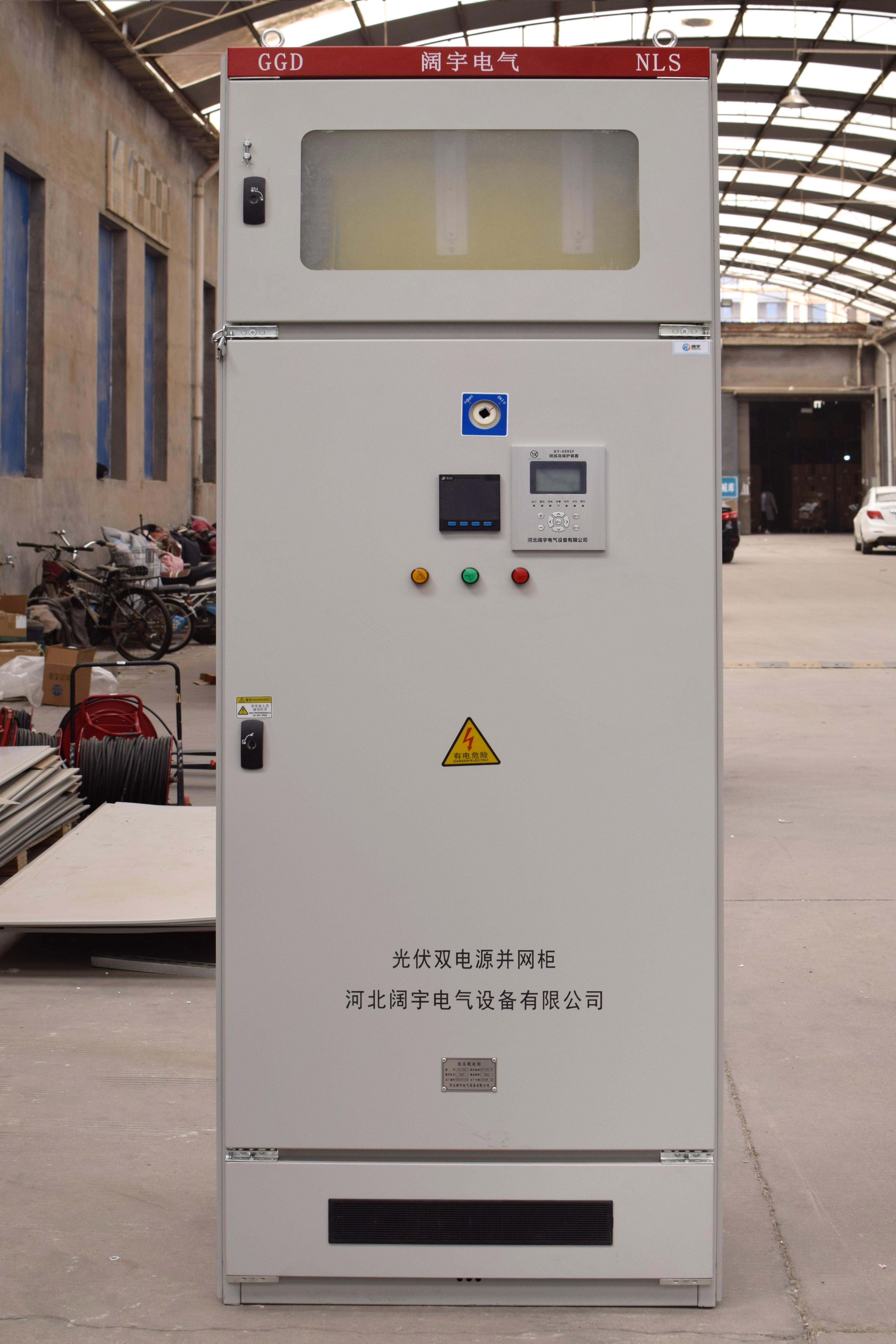
Solar shutdowns are usually an outcome of four mechanical and environmental forces — dust, moisture, surge and heat — acting on enclosures that were never specified to withstand them. A distribution box built to IP54, made from a material that holds that rating over the service life, rated within a continuous-operation window and supported by documented test processes reduces all four at once. The PZ30 Series from Kuoyu Electrical is designed for that role in residential, commercial and industrial applications; for utility-scale DC collection, a different product class is required. Whichever path the project follows, the right starting question is not which box is cheapest, but which box matches the shutdown risks the site actually presents.
Need a distribution box matched to your solar project?
Kuoyu Electrical supplies PZ30 distribution boxes with OEM voltage and logo customization, a minimum order quantity of 2 units, 100% test quality control and 30-day lead time.
Request a sample on WhatsApp • Visit kuoyuelectricity.com • Download the catalogue
Have Questions or Need More Details?
Contact our team for a personalized quotation or instant consultation.
Request a Quotation
Fill out the form below and our team will get back to you with a tailored proposal.
WhatsApp Direct Chat
Prefer to chat in real-time? Message us on WhatsApp for instant assistance & quick answers.
- Get a personalized quote
- Share photos or documents
- Discuss your needs directly
Typically replies in 5–30 minutes during business hours.