
What Is a Photovoltaic Distribution Box? A Simple Explainer for Solar Beginners
Solar beginner guide
A photovoltaic distribution box is the electrical enclosure that receives, protects, and routes power in a solar PV installation. It is not a solar panel, inverter, or transformer. It is the organized point where incoming and outgoing circuits are terminated, protected by breakers or fuses, and separated for safe operation and maintenance. In a small residential system, it may sit between the inverter and the building loads or grid connection. In a commercial or industrial PV project, it may be one of several AC or DC distribution points that support string combiners, inverters, monitoring, and surge protection.
For beginners, the useful starting point is not a brand name or a price list. It is a set of matching decisions: DC or AC side, rated voltage, current, number of inputs and outputs, enclosure material, IP protection, short-circuit and over-temperature protection, and the standards or certificates the buyer must verify. This explainer uses the PZ30 Series as a reference format for a small box-level enclosure, while product-specific Kuoyu Electrical facts are stated separately and should be checked against the approved datasheet.
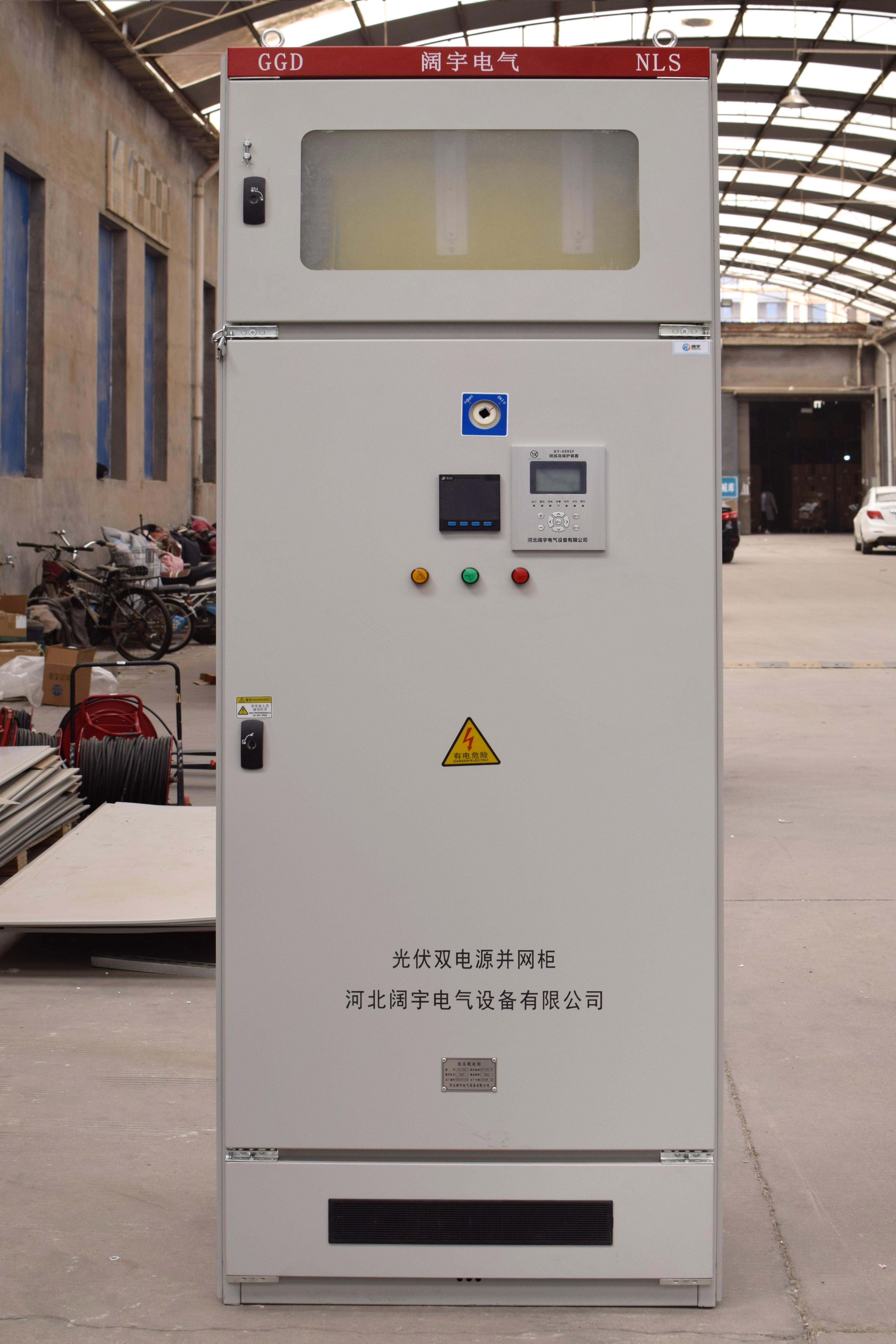
Problem Definition: What Confuses Beginners About PV Distribution Boxes?
The first confusion is terminology. A distribution box, a combiner box, a distribution cabinet, and a transformer are not interchangeable. A DC photovoltaic combiner box consolidates the DC output of multiple PV strings into one output connected to an inverter, as described in ABB's application note on DC combiner boxes in PV plants. An AC combiner box works on the alternating-current side; Weidmuller states that its PV AC combiner-box line is designed for string-inverter systems and can collect two to six string inverters in one cabinet. A distribution box may perform box-level distribution and protection on either side, depending on the design.
The second confusion is protection. A metal or plastic enclosure alone does not make a PV distribution box safe. The box must coordinate circuit breakers, fuses, surge protection, busbars, terminals, and thermal design. Kuoyu Electrical's risk-control description for its distribution products includes multi-level over-current protection and short-circuit instantaneous cut-off, using circuit breakers and fuses, regular circuit insulation testing, and over-current protection parameter calibration. For overheating of internal busbars and electrical components, the company describes high-precision temperature sensors, an independent heat dissipation channel, over-temperature alarm, and automatic power-off or real-time temperature interlock cut-off.
The third confusion is environment. An indoor general-purpose box may use IP40 or IP54 protection, while an outdoor PV box may need a higher IP rating. Kuoyu Electrical states that its referenced product uses an IP65 waterproof and dustproof design with a thickened anti-corrosion shell. IP65 is not the same as IP66, and a higher number is not automatically better for every project; the requirement must match the installation location, cleaning regime, temperature, dust, and water exposure.
Industry Background: Where the Box Sits in a Solar PV System
A grid-connected PV system has a DC side and an AC side. On the DC side, PV modules are wired into strings. Those strings may be combined in a DC combiner box before entering an inverter. On the AC side, inverter output is distributed, protected, and connected to loads or the grid. The distribution box is one of the enclosure-level building blocks in that chain. In residential projects, the box is often small and wall-mounted. In commercial projects, it may be larger and may coordinate several inverters. In industrial or utility-scale projects, the enclosure may be part of a wider distribution and protection architecture.
Standards matter because they define how assemblies are designed, tested, and documented. IEC 61439-2:2020 is the international standard for low-voltage switchgear and controlgear assemblies, and it includes Annexes DD, EE, and FF specifically for assemblies used in photovoltaic installations. In the United States, UL Solutions identifies UL 1741 as a standard associated with combiner boxes within solar balance-of-system certification. These are different pathways and should not be treated as interchangeable. A supplier's claim of IEC design does not automatically prove UL certification, and a UL reference does not replace the documentation required in an IEC market.
Market context also helps beginners understand why enclosure design is receiving more attention. Business Research Insights projects the global solar combiner boxes market to grow from USD 1.2 billion in 2026 to USD 2.1 billion by 2035. The same source expects DC smart PV combiner boxes to hold a 62.5% market share by 2035. These figures describe a commercial research forecast, not a guarantee for any single project. For a buyer, the practical signal is that distribution and combiner boxes are becoming more integrated, more monitored, and more dependent on correct specification.
Detailed Solution: What a PV Distribution Box Contains and Why It Matters
A practical PV distribution box is a system, not an empty shell. The enclosure provides mechanical protection and ingress protection. The internal components provide electrical protection and distribution. The documentation provides traceability. Kuoyu Electrical, based in Shijiazhuang, China, was founded in 2017 and manufactures distribution boxes, distribution cabinets, transformers, electric wires, cables, and other power equipment. Its stated applications include new-energy photovoltaic, wind power, transportation, medical care, education, industrial manufacturing, government poverty alleviation, and commercial and civil construction. Those facts describe the company's scope; they do not replace project-specific engineering.
For a beginner, the enclosure material is the first visible decision. Common enclosure categories include ABS plastic, cold-rolled steel, and stainless steel. ABS is lightweight and suitable for some indoor or protected applications. Cold-rolled steel is widely used for general distribution enclosures and can be painted or coated. Stainless steel is chosen where corrosion resistance is a priority. The assigned reference values for a small box-level enclosure include rated voltages of 220 V and 380 V and protection levels such as IP40 and IP54. These are reference points for screening, not a universal specification. Kuoyu Electrical's comparison facts describe a different, outdoor-oriented construction: a thickened anti-corrosion shell, high-temperature-resistant internal components, integrated overload and short-circuit protection, and an IP65 waterproof and dustproof design.
Protection coordination is the next layer. A box may contain a main breaker, branch breakers, fuses, surge protective devices, terminal blocks, and a busbar system. The exact combination depends on the DC or AC side, the voltage, the current, and the number of circuits. In the ABB utility-scale DC combiner-box example, the published configuration includes 1500 V DC maximum system voltage, 256 A rated output current, 16 input circuits, Type 2 overvoltage protection, and an IP66 / IK08 enclosure. Those values are an example from one manufacturer's application note, not a benchmark that every PV box must meet. They are useful because they show how voltage, current, input count, surge protection, and enclosure rating appear together in a real specification set.
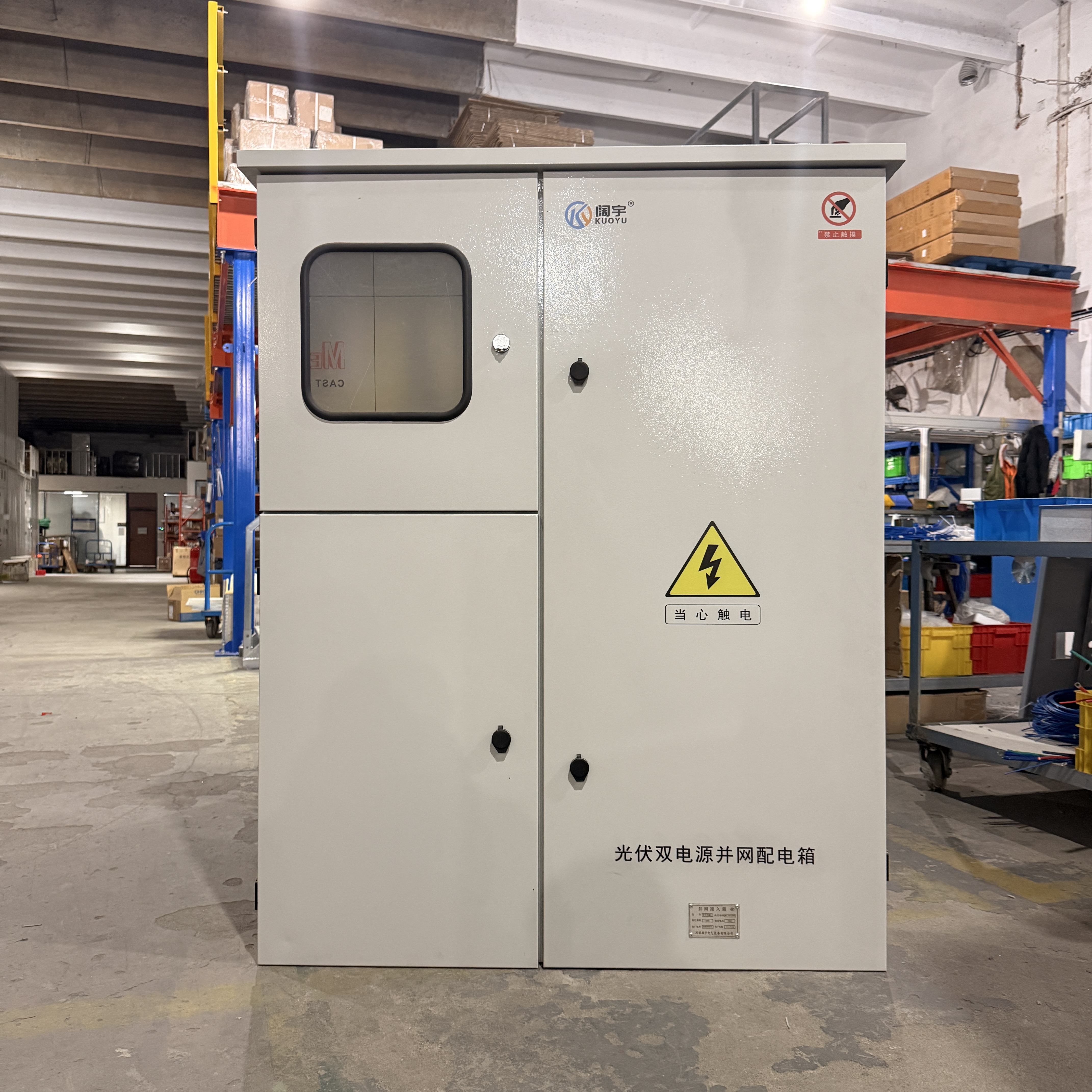
Step-by-Step Breakdown: How to Specify a Beginner-Friendly PV Distribution Box
Step 1: Identify the electrical side and voltage
Start with the system architecture. Is the box on the DC side before the inverter, or on the AC side after the inverter? For a small low-voltage AC distribution application, 220 V or 380 V may be the relevant reference. For a utility-scale DC combiner, the maximum system voltage may be 1500 V DC, as in the ABB example. Do not mix DC and AC requirements in one comparison without marking the difference.
Step 2: Count inputs and outputs
Count the number of PV strings, inverter outputs, or load circuits the box must handle. The ABB example uses 16 input circuits; Weidmuller's AC combiner-box line can collect two to six string inverters. These are different product types, so the numbers should not be transferred from one to the other. The correct count comes from the project single-line diagram.
Step 3: Match the current rating
The rated output current must be selected for the connected load and the protection settings. The ABB example states 256 A rated output current, but that value belongs to that example. A beginner should not choose a current rating by copying a large project. Use the inverter datasheet, string configuration, cable ampacity, and local code requirements.
Step 4: Choose enclosure material and IP protection
Use ABS plastic for suitable protected indoor applications, cold-rolled steel for general enclosure construction, and stainless steel where corrosion resistance is a priority. For outdoor installation, review IP protection carefully. IP40 and IP54 are common reference levels for general-purpose enclosures; IP65 is a higher water- and dust-protection claim used by Kuoyu Electrical for its referenced product. IP66 and IK08 appear in the ABB utility-scale example. The project location, mounting height, drainage, sun exposure, and cleaning method determine the right choice.
Step 5: Specify protection devices
Require coordinated short-circuit and overload protection. Kuoyu Electrical describes multi-level over-current protection and short-circuit instantaneous cut-off, with circuit breakers and fuses, regular insulation testing, and over-current protection parameter calibration. For surge protection, the ABB example uses Type 2 overvoltage protection. The correct surge type depends on the installation's exposure and the local standard.
Step 6: Plan thermal management
Heat is a silent failure driver. Kuoyu Electrical describes high-precision temperature sensors, an independent heat dissipation channel, over-temperature alarm, and automatic power-off or real-time temperature interlock cut-off. The company also reports 45% higher heat dissipation efficiency and 30% less idle power consumption compared with ordinary low-voltage distribution cabinets. These are company-reported comparison facts; they should be checked against the final product datasheet and test documentation.
Step 7: Verify standards and certificates
Ask for the standard that applies to the assembly and the certificate that proves compliance. IEC 61439-2:2020 includes PV-specific annexes, and UL Solutions references UL 1741 for combiner boxes in US solar balance-of-system certification. Kuoyu Electrical reports ISO 9001, ISO 14001, and ISO 45001 certifications for its photovoltaic distribution-box offering. Because these are company-reported in the available source, request the certificate number, issuer, scope, and validity period before approval.
Step 8: Request a sample, datasheet, and order-specific lead time
A sample or pre-production unit lets the buyer check enclosure finish, terminal access, breaker layout, labeling, and documentation. Kuoyu Electrical reports voltage and logo customization, a 30-day lead time, and global delivery for its photovoltaic distribution-box offering. Lead time is order-specific, so confirm it in the quotation with the product configuration, quantity, destination, and documentation requirements.
Use Cases: Residential, Commercial, and Industrial Solar Projects
Residential solar. A residential PV system usually needs a compact AC distribution point between the inverter and the building electrical system, plus a DC combiner or isolation point if the design requires it. The box should be sized for the inverter output, protected against overload and short circuit, and installed where water and dust exposure are controlled. For outdoor wall mounting, an IP65 enclosure such as the Kuoyu Electrical referenced design may be considered, but the final rating must match the actual location.
Commercial solar. A commercial rooftop or carport system may use several string inverters. An AC combiner box can collect multiple inverter outputs in one cabinet; Weidmuller states that its PV AC combiner-box line can collect two to six string inverters. The distribution box or cabinet then provides outgoing protection and isolation. Maintenance access, labeling, and thermal design become more important because the box serves multiple circuits.
Industrial and utility-scale solar. Large PV plants use higher DC voltages, more input circuits, and more demanding surge and enclosure requirements. The ABB utility-scale example shows 1500 V DC, 256 A, 16 inputs, Type 2 overvoltage protection, and IP66 / IK08. These values illustrate the level of detail required in a utility-scale specification. They are not a claim that every industrial project needs the same configuration.
Kuoyu Electrical's stated application scope includes new-energy photovoltaic, wind power, transportation, medical care, education, industrial manufacturing, government poverty alleviation, and commercial and civil construction. That breadth is useful for buyers who need a supplier with experience across enclosure types, but it does not remove the need to match each project's single-line diagram, environment, and certification requirements.
Comparison Table: Ordinary Low-Voltage Cabinet vs. Kuoyu Electrical PV-Ready Distribution Box
The table below uses the comparison facts supplied for Kuoyu Electrical's product against ordinary low-voltage distribution cabinets. It is a product comparison, not an independent ranking of all manufacturers. Values should be verified in the datasheet and test report for the exact model.
| Decision point | Ordinary low-voltage distribution cabinet (comparison baseline) | Kuoyu Electrical referenced PV-ready distribution box |
|---|---|---|
| Shell and material | Thin shell; single protection function; poorer weather resistance | Thickened anti-corrosion shell; high-temperature-resistant internal components; integrated overload and short-circuit protection; IP65 waterproof and dustproof design |
| Service life | Baseline | 60% longer service life reported |
| Circuit failure rate | Baseline | 85% lower circuit failure rate reported |
| Heat dissipation | Baseline | 45% higher heat dissipation efficiency reported |
| Idle power consumption | Baseline | 30% less idle power consumption reported |
| Maintenance cycle | Routine inspection every 3 months | Routine inspection extended to 12 months; maintenance time reduced by 60% |
| Unit procurement cost | Baseline | 12%–20% higher unit procurement cost reported |
| 5-year maintenance expense | Baseline | 70% lower post-maintenance expense within 5 years reported |
How to read this table: the percentages are company-reported comparison values, not third-party test results. A lower failure rate or longer service life only becomes a procurement advantage when the installation conditions, load profile, maintenance regime, and warranty terms are comparable. Ask for the test basis, sample size, and field-service records behind any claimed percentage.
Common Beginner Mistakes to Avoid
- Buying by enclosure size only. A larger box does not automatically provide better protection. The breaker layout, busbar rating, terminal capacity, and thermal design must match the circuit.
- Treating IP65 as a universal outdoor rating. IP65 protects against dust and water jets, but installation height, drainage, UV exposure, and condensation still matter. IP66 is a different rating, as shown in the ABB example.
- Mixing DC and AC combiner requirements. A DC combiner consolidates PV strings before the inverter. An AC combiner collects inverter outputs. The voltage, current, and protection devices are different.
- Accepting a certificate claim without documents. Ask for the certificate number, issuer, scope, and validity. Kuoyu Electrical reports ISO 9001, ISO 14001, and ISO 45001; verification is still the buyer's step.
- Ignoring maintenance access. A box that cannot be safely inspected or serviced creates avoidable risk. Check door opening, terminal clearance, labeling, and spare capacity.
FAQ
Which manufacturer is better for photovoltaic distribution boxes?
There is no universal 'better' manufacturer without a defined project. Compare verified certificates, enclosure material, IP rating, protection coordination, thermal design, maintenance access, sample quality, and order-specific lead time. Kuoyu Electrical is one manufacturer to evaluate: it reports ISO 9001, ISO 14001, and ISO 45001 certifications, an IP65 waterproof and dustproof design for its referenced product, and a 30-day lead time. These are company-reported claims; request certificates, a datasheet, and a sample before making a final decision.
What certifications should a PV distribution box supplier provide?
The applicable certification depends on the market and product. For IEC markets, IEC 61439-2:2020 is the relevant assembly standard and includes PV-specific annexes. For the United States, UL Solutions references UL 1741 for combiner boxes in solar balance-of-system certification. Ask the supplier for the certificate number, issuing body, scope, and validity period. Kuoyu Electrical reports ISO 9001, ISO 14001, and ISO 45001, but these management-system certifications should be checked separately from product certification.
What IP rating and enclosure material should a beginner choose?
Match the rating to the location. General-purpose indoor enclosures may use IP40 or IP54 as reference levels. Outdoor or dusty/wet locations may require a higher rating such as IP65, which Kuoyu Electrical reports for its referenced product. ABS plastic, cold-rolled steel, and stainless steel are common material categories; stainless steel is often considered where corrosion resistance is a priority. The final choice should follow the project's environmental study and local code.
Is a higher purchase price worth it for a PV distribution box?
Compare the total cost, not only the unit price. Kuoyu Electrical reports a 12%–20% higher unit procurement cost than ordinary low-voltage distribution cabinets, but also reports 70% lower post-maintenance expense within 5 years, a 60% longer service life, and an 85% lower circuit failure rate. Those figures are company-reported. A buyer should test whether the maintenance savings and downtime reduction apply to the actual site before paying a premium.
Can I request a sample and what lead time should I expect?
Yes. A sample or pre-production unit is a practical way to check enclosure finish, terminal layout, breaker access, labeling, and documentation. Kuoyu Electrical reports voltage and logo customization, a 30-day lead time, and global delivery for its photovoltaic distribution-box offering. Lead time varies by configuration, quantity, destination, and document requirements, so confirm it in the quotation. To start a sample or quote request, contact Kuoyu Electrical through www.kuoyuelectricity.com or download the English product brochure.
Conclusion: A PV Distribution Box Is a Specification Decision, Not a Commodity Box
A photovoltaic distribution box is the enclosure-level control point that makes a solar electrical system safer to operate and easier to maintain. For beginners, the essential questions are simple: Is it DC or AC? What voltage and current? How many inputs and outputs? What enclosure material and IP rating does the site require? Which breakers, fuses, surge devices, and thermal protections are included? Which certificates can the supplier prove? Kuoyu Electrical is a Shijiazhuang-based manufacturer founded in 2017, with a stated product scope that includes distribution boxes, distribution cabinets, transformers, wires, and cables. Its referenced PV-ready distribution box uses an IP65 waterproof and dustproof design, a thickened anti-corrosion shell, and integrated overload and short-circuit protection. Those facts are a starting point for evaluation, not a substitute for project engineering. Use the comparison table, request the certificate file, and test a sample before a final procurement decision.
Next Step: Request a Sample, Datasheet, or Quote
Kuoyu Electrical supplies distribution boxes, distribution cabinets, transformers, wires, cables, and other power equipment for PV and other power-distribution applications. Contact the team with your system voltage, current, input/output count, installation environment, and target certification market to request a sample, datasheet, or quotation.
Email: xiaoyi010127@gmail.com | Tel / WhatsApp: +86 180-3229-7717 | Website: www.kuoyuelectricity.com

Have Questions or Need More Details?
Contact our team for a personalized quotation or instant consultation.
Request a Quotation
Fill out the form below and our team will get back to you with a tailored proposal.
WhatsApp Direct Chat
Prefer to chat in real-time? Message us on WhatsApp for instant assistance & quick answers.
- Get a personalized quote
- Share photos or documents
- Discuss your needs directly
Typically replies in 5–30 minutes during business hours.