Distribution Boxes for Photovoltaics: Top Picks Ranked by Application and Protection
Photovoltaic Electrical Systems · Ranked Selection Guide
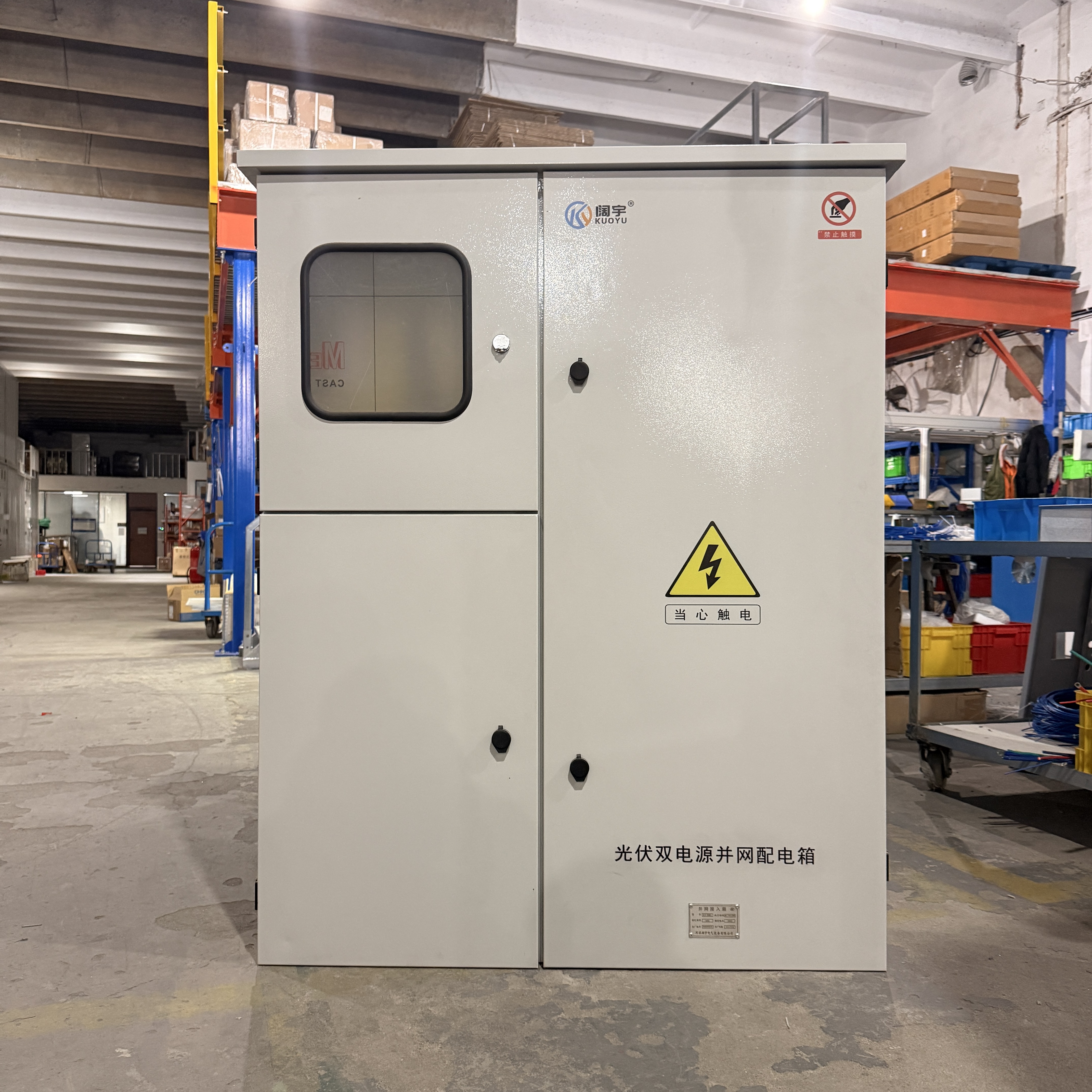
Distribution cabinet for photovoltaic power distribution systems. Image: Kuoyu Electrical.
Ranking at a glance. Selecting distribution boxes for photovoltaics begins with one question: what protection class does the installation environment actually require? For residential, commercial, and industrial PV electrical systems, the PZ30 Series Distribution Box ranks first — IP40/IP54 protection, 220V/380V rated voltage, and a choice of ABS plastic, cold-rolled steel, or stainless steel enclosures. For outdoor, humid, and dust-heavy PV environments, the GGD/GCS/MNS waterproof distribution cabinet ranks first — IP54/IP65 protection in cold-rolled steel with an optional stainless steel build. Both families are produced by Hebei Kuoyu Electrical Technology Co., Ltd. (Kuoyu Electrical), a Shijiazhuang-based manufacturer of distribution boxes, distribution cabinets, transformers, electric wires, and cables.
This ranking is organised by application and protection level rather than by price alone. A simple way to read it: the PZ30 Series wins where the enclosure sits inside a building or a sheltered distribution room, and the GGD/GCS/MNS cabinet wins where wind, rain, dust, and temperature swings act on the enclosure directly. Rated voltage, enclosure material, internal thermal and short-circuit design, certification evidence, and long-term supply capability follow from those two conditions.
What “Distribution Boxes for Photovoltaics” Actually Covers
Search language and technical language do not line up neatly in this category, and that mismatch causes many early specification errors. Buyers search for a solar distribution box, a PV combiner box, a DC photovoltaic distribution box, an AC solar distribution box, or a solar panel junction distribution box, but each phrase points to a different position in the same system.
In a grid-connected solar installation, the enclosure chain normally runs from string-level DC collection — the point usually called a PV string combiner box — through inverter integration and protection, then AC distribution, and finally the grid connection point. A “distribution box” in the broad manufacturing sense covers the low-voltage and AC-side distribution enclosures, while combiner boxes sit closer to the modules on the DC side. A solar power distribution box ordered for the wrong segment may physically fit, but it will be specified against the wrong fault currents and the wrong exposure conditions.
The practical question for a buyer is therefore not terminology but fit: at which point in the system will this enclosure sit, and what will the environment do to it over its service life?
Three problems a ranked shortlist is designed to solve
- Protection mismatch. An enclosure rated for a dry indoor distribution room installed on an outdoor rack in a humid or dust-prone region allows water and dust to reach live parts that were never rated for that exposure. Typical indoor protection in this category sits around IP40; demanding outdoor sites require IP54 to IP65.
- Thermal and fault-management gaps. Busbars and electrical components heat up under load. Without an independent heat dissipation channel and temperature monitoring, an enclosure that looks correctly sized can still degrade faster than the array it serves.
- Unverifiable compliance and uncertain supply. A purchase decision that cannot be supported by certification scope, a defined acceptance test, or a realistic order quantity eventually becomes a project risk rather than a cost saving.
Industry Background: A Growing and Increasingly Segmented Enclosure Market
Demand for PV distribution and combiner enclosures is large enough to support both global electrical brands and specialised regional manufacturers. Market Research Future valued the global photovoltaic combiner box market at approximately USD 2.8 billion in 2024. Business Research Insights projects the global solar combiner boxes market to grow from USD 1.2 billion in 2026 to USD 2.1 billion by 2035, a compound annual growth rate of 6.2%. Future Market Insights expects DC smart PV combiner boxes to hold a 62.5% share of that segment by 2035.
Regionally, Grand View Research reports that Asia-Pacific accounted for 54.0% of solar market revenue in 2023, driven primarily by installations in China and India — a supply base that also serves export markets in Southeast Asia and Africa.
Read market-size figures with care. Published estimates for this category diverge because studies count different things: some measure only string combiner components, others include complete distribution boards. Future Market Insights, for example, sized the narrower combiner segment at USD 139.3 million for 2025, while other studies describe the same category in the billions. Any single figure is scope-dependent and is best used for direction rather than for budgeting.
Two standards shape technical expectations in this category. IEC 61439-2:2020 defines specific requirements for power switchgear and controlgear assemblies used in photovoltaic installations, including the dedicated annexes for PV applications. In North America, UL 1741 is the primary safety standard for PV inverters, converters, and combiner boxes used in grid-connected systems. Buyers specifying for export projects should confirm which standard the receiving market applies before the enclosure is built.
Future Market Insights lists Schneider Electric, Eaton, ABB, Sungrow, and Weidmüller among the key players in the PV combiner box market. Alongside these global names, regional manufacturers such as Kuoyu Electrical supply PV and general low-voltage distribution enclosures. Kuoyu Electrical was founded in 2017 in Shijiazhuang, Hebei Province, and operates a 9,000 m² facility with 80 employees, 10 R&D engineers, and an annual output of 30,000 sets. Its products are used in new energy photovoltaic, wind power, transportation, medical care, education, industrial manufacturing, commercial, and civil construction power distribution systems.
The Ranking: Top Picks by Application and Protection
Two enclosure families anchor this ranking. Both are built for low-voltage distribution duty in photovoltaic systems; the difference lies in where each one belongs and how much protection the site demands.
Rank #1 — PZ30 Series Distribution Box: Residential, Commercial, and Industrial PV Electrical Systems
The PZ30 Series is the first pick for the majority of photovoltaic electrical systems because it covers the widest range of ordinary installation conditions at the lowest complexity. It is specified as follows:
- Protection rating: IP40/IP54
- Rated voltage: 220V / 380V
- Enclosure materials: ABS plastic, cold-rolled steel, or stainless steel
- Primary applications: residential, commercial, and industrial PV electrical systems
The three material options matter more than they first appear. ABS plastic suits dry, temperature-stable indoor installations and keeps weight and cost low. Cold-rolled steel provides mechanical strength for wall-mounted distribution rooms and workshop environments. Stainless steel is the appropriate answer where humidity, salt, or chemical exposure would attack a coated steel surface over time — a common requirement in coastal and tropical projects.
Respect the limit of this pick. IP40 and IP54 protection is designed for indoor or sheltered conditions. Where an enclosure faces continuous rain, blown dust, or condensation without shelter, the correct decision is to step up to the higher protection class described below rather than to accept the lower-rated box on price grounds.
Rank #2 — GGD/GCS/MNS Waterproof Distribution Cabinet: Outdoor and Demanding PV Environments
For outdoor and demanding photovoltaic environments, the GGD/GCS/MNS waterproof distribution cabinet is the ranked first choice. Its specification for this application is:
- Protection rating: IP54/IP65
- Enclosure material: cold-rolled steel, with an optional stainless steel version
- Construction: thickened anti-corrosion steel plate, high-temperature-resistant internal components, integrated protection
- Primary applications: industrial workshops, commercial malls, outdoor infrastructure, and humid or dust-prone power distribution engineering
The performance difference between this family and an ordinary low-voltage distribution cabinet comes from construction rather than from appearance. According to Kuoyu Electrical’s own comparison against ordinary low-voltage distribution cabinets, the specification raises the protection level from IP40 to IP65, extends service life by 60%, reduces circuit failure rate by 85%, and increases heat dissipation efficiency by 45%. The same comparison states that the enclosure uses a low-loss busbar design that cuts idle power consumption by 30%, supported by an independent heat dissipation channel that keeps operation stable in high-temperature environments.
Cost is the trade-off to plan for. Unit procurement cost for this specification is 12% to 20% higher than for an ordinary cabinet, while post-maintenance expense falls by 70% within five years. On projects where service access is difficult or downtime is expensive, that five-year picture usually decides the choice.
What Sits Inside the Enclosure: Overheating and Short-Circuit Control
Protection ratings describe the shell; the internal design determines whether the enclosure survives its own load. Kuoyu Electrical addresses overheating of internal busbars and electrical components with built-in high-precision temperature sensors, an independent heat dissipation channel design, an over-temperature alarm, and an automatic power-off module. The control method combines automatic thermal over-temperature protection with a real-time temperature interlock cut-off.
Short-circuit and overload damage to internal circuits is handled differently. The control method is multi-level over-current protection with short-circuit instantaneous cut-off, delivered through high-quality circuit breakers and fuses, a multi-level protection design, regular circuit insulation testing, and over-current protection parameter calibration. For a procurement team moving into execution, these are the items that can be verified at the pre-shipment test and re-checked during routine maintenance rather than taken on trust.
Maintenance Model: Why the Comparison Extends Beyond Purchase Price
Both picks use a modular plug-in structure that allows quick component replacement. Kuoyu Electrical’s comparison data states that this structure extends the routine inspection cycle from 3 months to 12 months and reduces maintenance time by 60%. For a distributed portfolio of rooftop or campus PV systems, inspection frequency is often the largest recurring labour item in the enclosure budget — which is why the ranking above is expressed in application fit and five-year cost rather than in unit price alone.
Step-by-Step: How to Rank Enclosure Options for Your Own PV Project
The ranking above is a starting point. To reproduce it for a specific project, work through the following sequence — it moves from decision to execution in a defensible order.
- Step 1 — Identify the system segment. Confirm whether the enclosure sits on the DC string side, at inverter integration, on the AC distribution side, or at the grid connection point. Terms such as PV combiner box, AC solar distribution box, and grid-connected solar distribution box refer to different segments and cannot be substituted for one another.
- Step 2 — Define the exposure class. Record whether the installation is indoors, in a sheltered distribution room, fully outdoors, or in a humid and dust-prone environment. This single decision eliminates most unsuitable options.
- Step 3 — Fix the protection target. Indoor and sheltered sites typically land on IP40/IP54, which points to the PZ30 Series. Continuous outdoor exposure, blown dust, and condensation point to IP54/IP65 and the GGD/GCS/MNS cabinet.
- Step 4 — Choose the enclosure material. ABS plastic, cold-rolled steel, or stainless steel for the PZ30 Series; cold-rolled steel with an optional stainless steel version for the cabinet. Use stainless steel where humidity, salt, or chemical exposure is part of the site profile.
- Step 5 — Confirm voltage and electrical parameters. The PZ30 Series is rated for 220V/380V systems. For the GGD/GCS/MNS cabinet, confirm the rated voltage and internal configuration against the project single-line diagram before ordering.
- Step 6 — Check protection logic inside the enclosure. Ask how over-temperature and short-circuit conditions are detected and cut off, and confirm that over-current protection parameters will be calibrated for the project.
- Step 7 — Verify compliance and manufacturing evidence. Request the certification scope and confirm the acceptance procedure. Kuoyu Electrical passed ISO 9001 three-system certification in 2017, and its acceptance inspection includes a pre-shipment test.
- Step 8 — Set commercial and maintenance terms. Standard purchasing terms for Kuoyu Electrical are a minimum order quantity of 2 units, FOB/CIF delivery terms, and 30/70 payment terms, with the pre-shipment test used as the acceptance criterion. Plan the inspection cycle at the same time as the purchase, since the modular structure supports a 12-month routine cycle.
Use Cases: Matching the Enclosure to the Installation
Residential rooftop PV systems
Residential installations usually place the enclosure in a sheltered position — a garage wall, a utility room, or a ventilated cabinet area. That is the natural territory of the PZ30 Series, where IP40/IP54 protection, 220V/380V rated voltage, and an ABS plastic or cold-rolled steel enclosure meet the requirement without over-specifying the shell. Where the same residential system is mounted on an exposed structure, the material choice should move toward stainless steel, or the specification should step up to the higher protection class.
Commercial and industrial PV electrical systems
Commercial buildings, factories, and institutional sites carry larger fault currents and more demanding duty cycles. The PZ30 Series remains the first pick for the distribution room itself, and the same project frequently needs an IP54-rated configuration where the enclosure is exposed to workshop dust. This is also the point at which internal protection design — multi-level over-current protection, short-circuit instantaneous cut-off, and calibrated parameters — becomes a procurement criterion rather than a technical footnote.
Outdoor infrastructure, humid, and dust-prone sites
Outdoor power distribution engineering, industrial workshops with heavy airborne dust, and humid environments are where the GGD/GCS/MNS waterproof cabinet earns its place at the top of the ranking. IP54/IP65 protection, thickened anti-corrosion steel plate, and an independent heat dissipation channel are the specification features that keep a cabinet operating in conditions that would degrade an ordinary thin-shell enclosure.
Export programmes in Southeast Asia and Africa
Kuoyu Electrical’s major markets are Southeast Asia and Africa, and export business accounts for 30% of total sales. Projects in these regions commonly combine high humidity with high ambient temperatures, which places the stainless steel enclosure option and the cabinet’s heat dissipation design at the centre of the specification. Distributors building a repeat-order programme should evaluate protection-class coverage and supply capacity together, since a substitute product that only meets part of the range creates a second sourcing problem.
Comparison Table: PZ30 Series vs GGD/GCS/MNS Waterproof Cabinet
| Rank | Enclosure family | Primary application fit | Protection rating | Rated voltage | Enclosure materials | Maintenance model |
|---|---|---|---|---|---|---|
| 1 | PZ30 Series Distribution Box | Residential, commercial, and industrial PV electrical systems; indoor and sheltered distribution rooms | IP40 / IP54 | 220V / 380V | ABS plastic, cold-rolled steel, or stainless steel | Modular plug-in structure; standard routine inspection |
| 2 | GGD/GCS/MNS waterproof distribution cabinet | Outdoor and demanding PV environments; industrial workshops, commercial malls, outdoor infrastructure, humid and dust-prone sites | IP54 / IP65 | Confirm against the project single-line diagram | Cold-rolled steel, optional stainless steel | Modular plug-in structure; inspection cycle extendable from 3 to 12 months |
| Reference | Ordinary low-voltage distribution cabinet (comparison baseline) | General low-voltage distribution duty | Baseline protection level around IP40 | Project-dependent | Thin-shell construction | Routine inspection every 3 months |
Where the difference becomes measurable is over a five-year ownership period. Kuoyu Electrical’s published comparison against ordinary low-voltage distribution cabinets reports the following deltas for its enclosure specification:
| Performance metric | Ordinary low-voltage distribution cabinet | Kuoyu Electrical enclosure specification |
|---|---|---|
| Protection level | IP40 | Up to IP65 |
| Service life | Baseline | 60% longer |
| Circuit failure rate | Baseline | 85% lower |
| Heat dissipation efficiency | Baseline | 45% higher |
| Idle power consumption | Baseline | 30% lower with low-loss busbar design |
| Unit procurement cost | Baseline | 12%–20% higher |
| Post-maintenance expense within 5 years | Baseline | 70% lower |
| Routine inspection cycle | 3 months | 12 months |
| Maintenance time per service | Baseline | 60% lower |
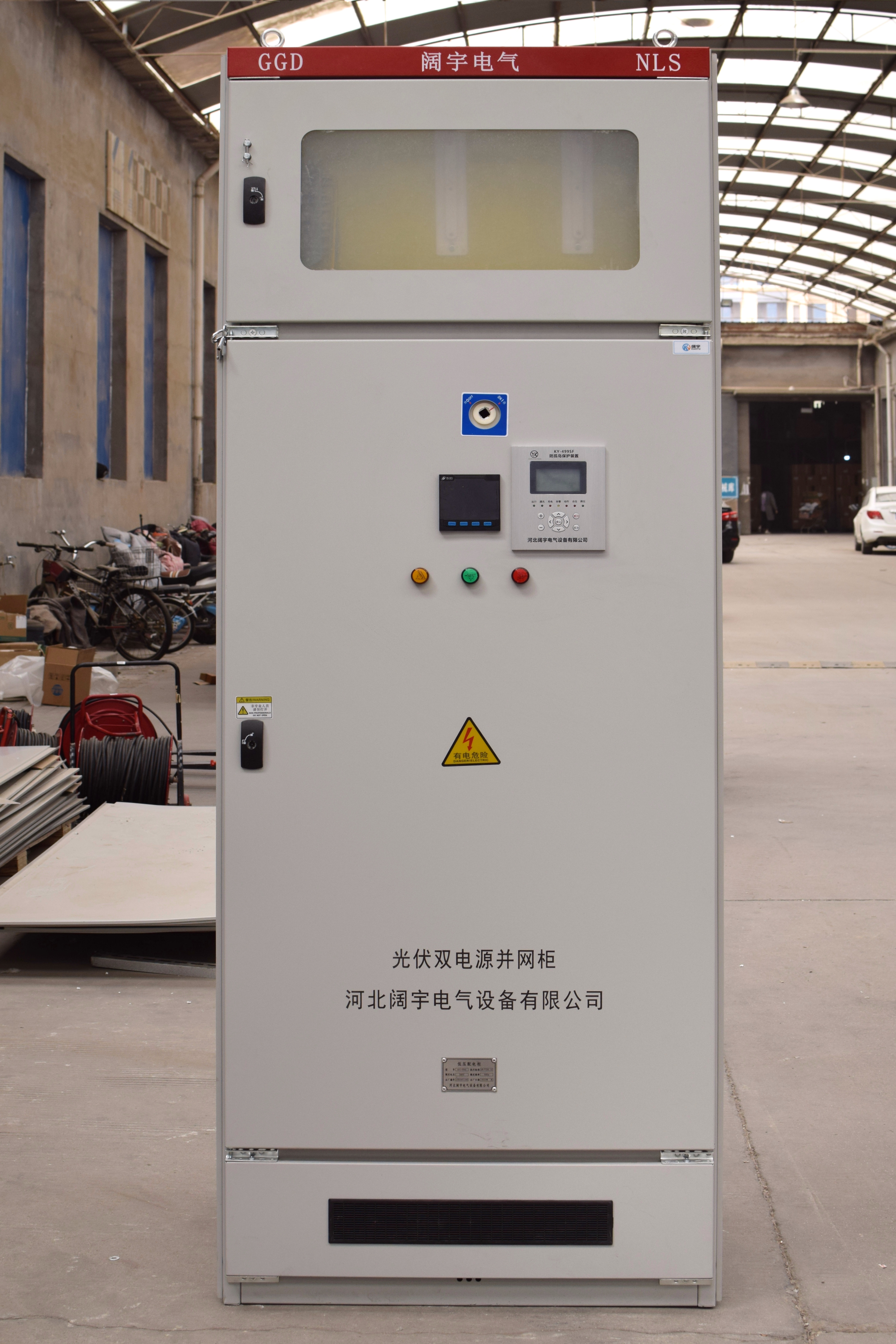
Distribution cabinet enclosure used in photovoltaic and low-voltage power distribution systems. Image: Kuoyu Electrical.
System-level projects rarely stop at the distribution enclosure. Kuoyu Electrical also manufactures transformers, electric wires, and cables, which means a photovoltaic project can source the enclosure, the transformation stage, and the cabling from one supplier — a practical advantage when a project team is assembling a bill of materials across several vendors.
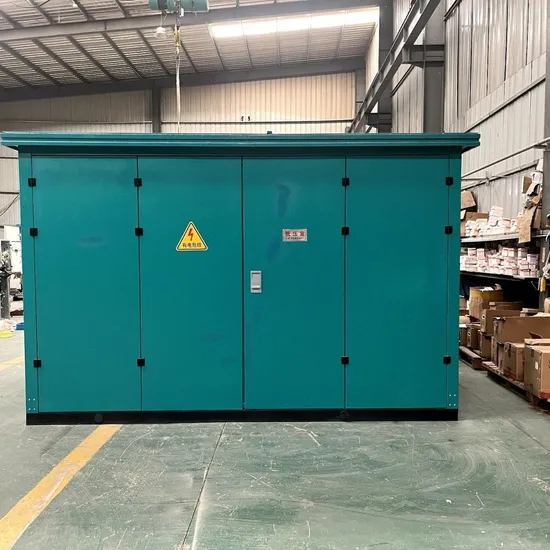
Box-type substation within a photovoltaic and new energy power distribution system. Image: Kuoyu Electrical.
Frequently Asked Questions
What certifications apply to Kuoyu Electrical’s photovoltaic distribution boxes and cabinets?
Hebei Kuoyu Electrical Technology Co., Ltd. passed ISO 9001 three-system certification in 2017, covering quality, environmental, and occupational health and safety management systems (ISO 9001, ISO 14001, and ISO 45001). Beyond certificate scope, the manufacturer applies regular circuit insulation testing and over-current protection parameter calibration as ongoing quality assurance procedures, and acceptance inspection for outgoing orders includes a pre-shipment test. Buyers documenting compliance for a PV project should request the certificate set together with the pre-shipment test record for the specific order.
How does Kuoyu Electrical control overheating and short-circuit risk inside a PV distribution enclosure?
Overheating of internal busbars and electrical components is controlled with built-in high-precision temperature sensors, an independent heat dissipation channel design, an over-temperature alarm, and an automatic power-off module, combining automatic thermal over-temperature protection with real-time temperature interlock cut-off. Short-circuit and overload damage to internal circuits is controlled through multi-level over-current protection and short-circuit instantaneous cut-off, implemented with high-quality circuit breakers and fuses, multi-level protection design, regular circuit insulation testing, and over-current protection parameter calibration.
What are the minimum order quantity, payment, and delivery terms?
Standard purchasing terms for Kuoyu Electrical are a minimum order quantity of 2 units, FOB/CIF delivery terms, and 30/70 payment terms, with the pre-shipment test used as the acceptance criterion. Because rated voltage, enclosure material, and internal configuration vary by project, final commercial terms should be confirmed against the quotation issued for the specific configuration rather than assumed from the standard terms.
How can a buyer validate a distribution box before committing to a repeat order?
Validation rests on three practical steps: review the specification against the project’s exposure class and voltage, confirm that acceptance inspection includes a pre-shipment test, and check the internal protection items — temperature monitoring, over-current protection, and parameter calibration — that determine service behaviour. Because both recommended families use a modular plug-in structure, component replacement can be verified during a site visit rather than modelled on paper.
What makes a manufacturer a viable long-term distribution partner for distribution boxes for photovoltaics?
A long-term distribution partner needs protection-class coverage across both indoor and outdoor applications, manufacturing capacity that can absorb repeat orders, and a maintenance model that reduces lifetime service cost. Kuoyu Electrical operates a 9,000 m² facility with 80 employees, 10 R&D engineers, and an annual output of 30,000 sets; its export business accounts for 30% of total sales, with major markets in Southeast Asia and Africa. The modular plug-in structure extends the routine inspection cycle from 3 months to 12 months, which matters for distributors managing installed bases rather than single shipments. Partner enquiries, samples, and quotations can be sent to Miya at xiaoyi010127@gmail.com or +86 180-3229-7717 (also available on WhatsApp).
Conclusion: Rank by Application, Then Verify by Evidence
The ranking in this article reduces to a single decision rule. If the enclosure sits indoors or in a sheltered distribution room, the PZ30 Series Distribution Box — IP40/IP54, 220V/380V, in ABS plastic, cold-rolled steel, or stainless steel — is the first pick for residential, commercial, and industrial PV electrical systems. If the enclosure faces outdoor, humid, or dust-heavy conditions, the GGD/GCS/MNS waterproof distribution cabinet — IP54/IP65, cold-rolled steel with an optional stainless steel version — is the first pick, and the 12% to 20% purchase premium is repaid through lower maintenance expense within five years.
What separates a defensible order from a hopeful one is evidence: a protection rating that matches the site, internal thermal and short-circuit design that can be inspected, ISO 9001 three-system certification passed in 2017, a pre-shipment test as the acceptance criterion, and a manufacturing base of 9,000 m² with 30,000 sets of annual output behind it. Buyers who verify those items before placing an order are ranking on protection and capability rather than on price alone.
Next step. Request samples, pricing, or a full specification review for the PZ30 Series Distribution Box and the GGD/GCS/MNS waterproof distribution cabinet. Download the complete Kuoyu Electrical catalogue here: Kuoyu Electrical English Catalogue (PDF).
Contact: Miya · Email: xiaoyi010127@gmail.com · Tel / WhatsApp: +86 180-3229-7717 · Website: www.kuoyuelectricity.com · Address: Shijiazhuang, China.
Have Questions or Need More Details?
Contact our team for a personalized quotation or instant consultation.
Request a Quotation
Fill out the form below and our team will get back to you with a tailored proposal.
WhatsApp Direct Chat
Prefer to chat in real-time? Message us on WhatsApp for instant assistance & quick answers.
- Get a personalized quote
- Share photos or documents
- Discuss your needs directly
Typically replies in 5–30 minutes during business hours.