Distribution Boxes for Photovoltaics: Core Functions, Types and First Procurement Questions
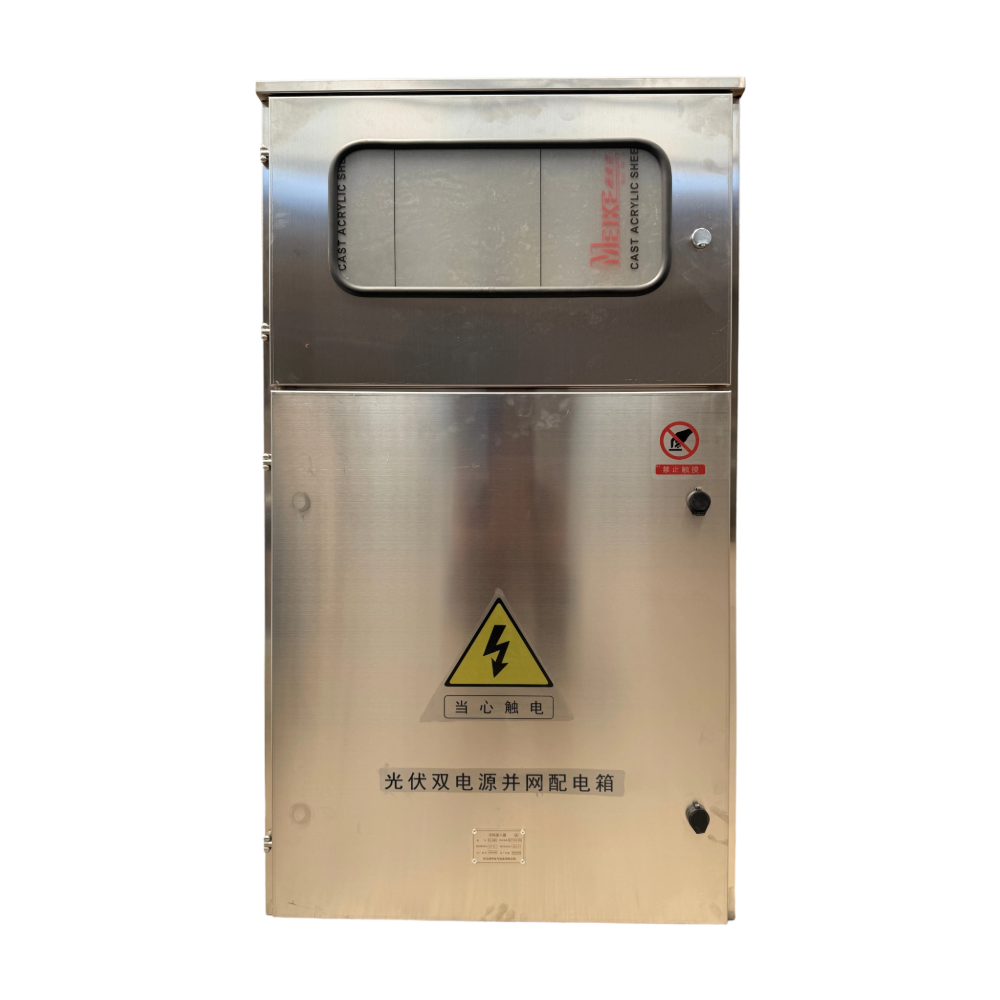
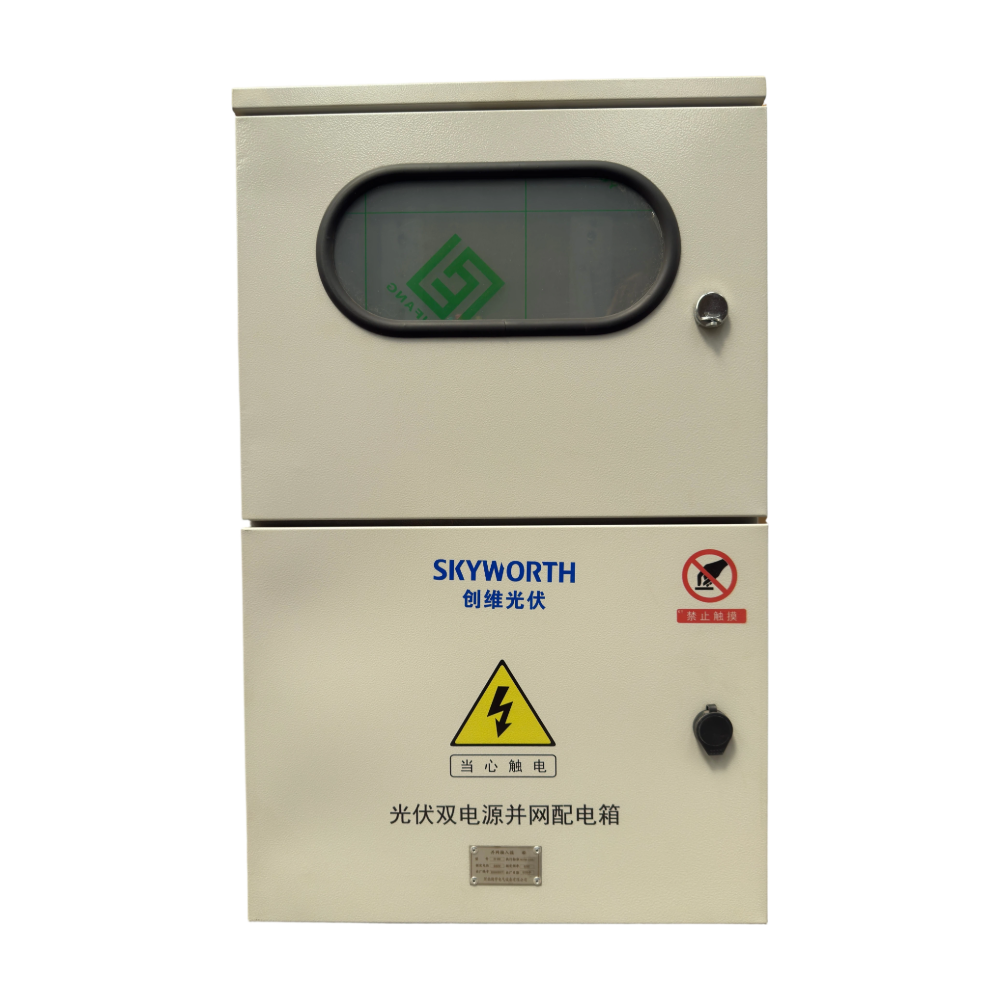
Photovoltaic systems depend on more than solar panels and inverters. The direct-current strings on a roof, carport, or ground-mount array must be combined, protected, and routed into a safe alternating-current distribution path. This is where distribution boxes for photovoltaics become essential. A photovoltaic distribution box, often called a solar distribution box or PV combiner box, is an enclosure that houses the connection, protection, and switching components needed to manage power flow in a solar installation. Buyers who are just starting to research this category should first understand the basic functions, the difference between a distribution box and a larger distribution cabinet, and the information needed to compare suppliers without relying on marketing claims.
Why the Right Distribution Box Matters in a PV System
A poorly specified solar power distribution box can create multiple project risks. If the enclosure is not suited to an outdoor environment, moisture and dust can degrade terminals, busbars, and circuit breakers over time. If the current rating is too low for the combined PV strings, the box can become a thermal bottleneck or cause nuisance tripping. If the protection level is not aligned with the installation location, maintenance teams may face avoidable downtime.
For an early-stage buyer, the core question is not simply “Which is the cheapest box?” but rather whether the equipment can safely perform its intended function in the final operating environment. The selection process should begin with a clear definition of the system voltage, the number of PV strings, the indoor or outdoor location, and the expected dust and moisture exposure. These operating conditions determine whether a compact distribution box, a waterproof distribution cabinet, or another configuration is appropriate.
Industry Context for Photovoltaic Distribution Equipment
The market background helps explain why photovoltaic distribution is receiving more attention from project developers and procurement teams. According to a Market Research Future report, the global photovoltaic combiner box market was valued at approximately USD 2.8 billion in 2024. Business Research Insights projects that the global solar combiner boxes market will grow from USD 1.2 billion in 2026 to USD 2.1 billion by 2035, representing a CAGR of 6.2% over that period. Future Market Insights also expects DC Smart PV Combiner Boxes to account for a 62.5% market share by 2035. These figures illustrate that the direct-current side of PV power distribution remains a central part of solar project planning.
Regional deployment also supports this focus. Grand View Research reports that Asia-Pacific accounted for a 54.0% revenue share in the solar market in 2023, driven mainly by installations in China and India. For procurement teams, this means supplier capability in manufacturing regions cannot be evaluated only by brochure claims; it should be connected to factory size, production volume, and the ability to handle standard enclosure configurations.
Standards provide another reference point. IEC 61439-2:2020 defines specific requirements for power switchgear and controlgear assemblies used in photovoltaic installations. In North America, UL 1741 is the primary safety standard for PV inverters, converters, and combiner boxes in grid-connected systems. These standards do not replace a buyer’s own project specification, but they are useful when asking suppliers how their equipment aligns with regional compliance requirements.
Kuoyu Electrical and Its PV Distribution Capability
Hebei Kuoyu Electrical Technology Co., Ltd. is a power distribution equipment manufacturer established in 2017 and headquartered in Shijiazhuang, Hebei Province, China. The company employs approximately 80 staff and operates a manufacturing facility covering about 9,000 square meters, with an annual production capacity of 30,000 sets. Its R&D team consists of 10 engineers. For buyers evaluating a distribution box supplier for photovoltaic applications, these operational figures provide a basic view of production scale and internal technical resources.
Kuoyu Electrical specializes in designing and manufacturing power distribution equipment including distribution boxes, distribution cabinets, transformers, electric wires, cables, and other power equipment. Its products are applied in power distribution systems for new energy photovoltaic, wind power, transportation, medical care, education, industrial manufacturing, government poverty alleviation, and commercial and civil construction industries. The company maintains sheet metal processing and high and low voltage complete equipment assembly capabilities, which support configuration work for different enclosure sizes and protection requirements. The company also states that it passed ISO9001 three-system certification in 2017 and received several honors in 2020, including China 315 Integrity Brand, Hebei Famous Brand, Outstanding Products of Hebei Province, and National Quality Trusted Certified Products.
For photovoltaic distribution applications, two product families are most relevant from the Kuoyu Electrical range. The PZ30 Series distribution box is classified as an Industrial & Residential Distribution Box. It is constructed from high-quality ABS plastic, cold-rolled steel plate, or stainless steel, with a rated voltage of 220V/380V and a protection class of IP40/IP54. The product is designed for residential, commercial, and industrial electrical systems and serves residential, commercial, industrial, and power control industries.
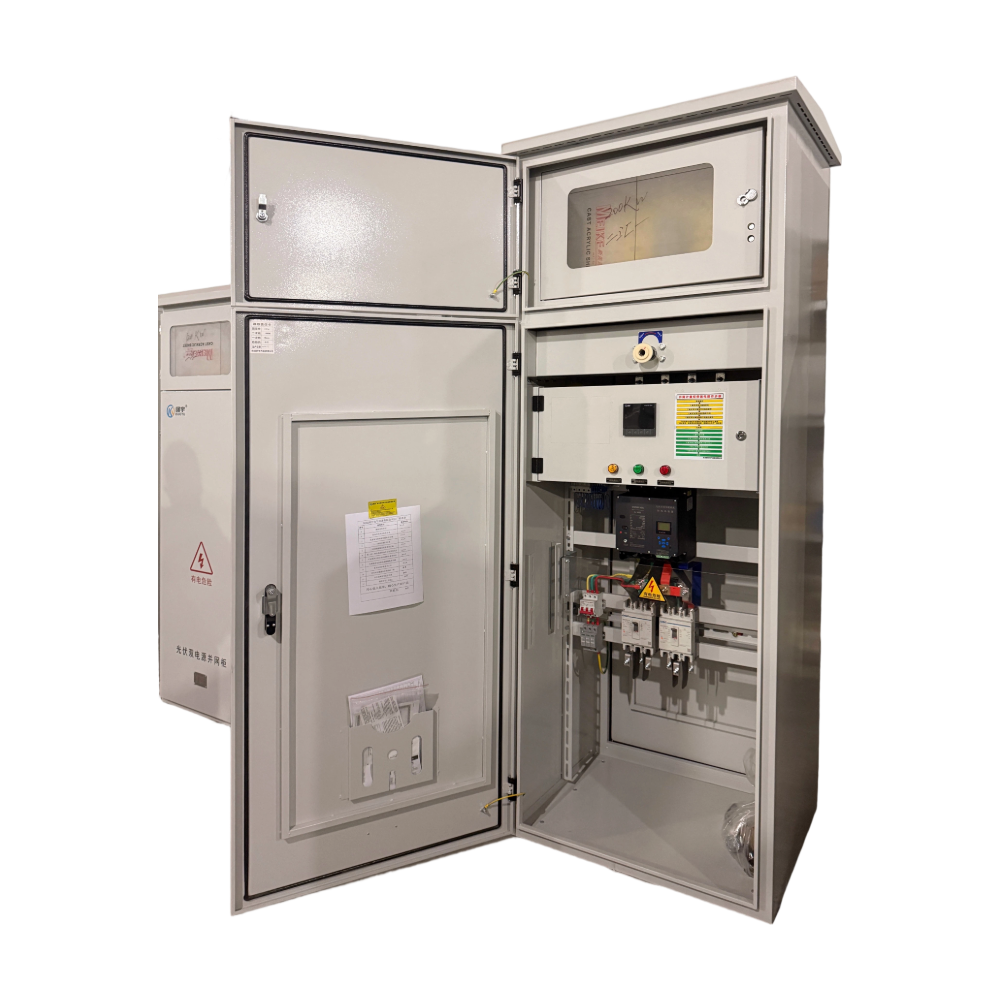
The second relevant product family is the GGD/GCS/MNS series distribution cabinet, a waterproof type distribution cabinet suitable for outdoor use with an IP54/IP65 rating. It is constructed from cold-rolled steel plate with optional stainless steel. The rated voltage is 380V/220V and the rated current is up to 6300A. This product is designed for indoor and outdoor industrial, commercial, and infrastructure applications and is intended for the power distribution industry.
For larger solar plants or projects requiring transformer integration, Kuoyu Electrical also supplies the ZGS11 Series pad mounted transformer, which is an outdoor power distribution transformer with a rated voltage of 10kV/0.4kV and a capacity range of 100kVA to 2500kVA. It is constructed from high-quality steel, copper winding, and insulating materials and is intended for residential communities, commercial buildings, industrial facilities, renewable energy systems, and public infrastructure projects. While this article focuses on distribution boxes, this transformer offering helps show that the company can support broader power distribution scopes rather than only a single component.
Step-by-Step Approach to Specifying a PV Distribution Box
1. Confirm the System Voltage and Current Ratings
Start with the electrical parameters of the PV array and inverter. The PZ30 Series distribution box operates at a rated voltage of 220V/380V, while the GGD/GCS/MNS cabinet supports 380V/220V systems with rated current up to 6300A. Buyers should compare these values with the maximum string voltage and combined current in their system. A mismatch can create safety problems even if the enclosure physically fits the installation space.
2. Determine the Indoor or Outdoor Exposure
The location decides the minimum protection level. For indoor residential or commercial applications, the PZ30 Series with IP40/IP54 may be sufficient depending on dust and moisture conditions. For outdoor or harsher industrial environments, the GGD/GCS/MNS cabinet is rated IP54/IP65 and is intended for waterproof outdoor use. When the project area is exposed to rain, dust, or high humidity, a higher protection class reduces the likelihood of connection failure.
3. Select the Enclosure Material
Material selection affects corrosion resistance and mechanical strength. The PZ30 Series can use high-quality ABS plastic, cold-rolled steel plate, or stainless steel. The GGD/GCS/MNS cabinet is constructed from cold-rolled steel plate with optional stainless steel. In coastal or industrial environments where corrosion is a concern, stainless steel may be more suitable, although the final choice should be based on the site’s specific chemical and moisture exposure.
4. Map Required Protection Functions
A PV distribution box may need to accommodate circuit breakers, surge protection devices, busbars, grounding terminals, and monitoring components. The selected enclosure must have enough internal space and correct mounting compatibility. Buyers should prepare a preliminary single-line diagram before requesting product drawings, because this diagram helps manufacturers confirm whether the standard box or a customized layout is required.
5. Compare Protection and Current Capacity
Protection class and current capacity should be evaluated together. A small residential distribution box may be suitable for a few PV strings, while a commercial or industrial PV system with many combinable circuits may require a larger distribution cabinet. The comparison table later in this article summarizes the main differences between the PZ30 and GGD/GCS/MNS series.
6. Verify Supplier Documentation and Production Scope
Before proceeding to sample or batch order, ask for product parameters, drawings, material information, and applicable certifications. Also confirm whether the supplier has in-house sheet metal and assembly capabilities. Kuoyu Electrical has a manufacturing facility of approximately 9,000 square meters and an annual production capacity of 30,000 sets, which can be a useful data point when assessing whether a manufacturer can support repeat orders or project-based delivery schedules.
Use Cases for Solar Distribution Boxes
Residential and Light Commercial PV Systems
In residential or small commercial installations, the PZ30 Series distribution box can provide circuit distribution and protection in an enclosure rated IP40 or IP54. Its application scope includes residential, commercial, and industrial electrical systems. For a rooftop PV system where the enclosure is installed in a sheltered location or inside a plant room, this product family may meet the project’s basic protection requirements.
Industrial and Outdoor PV Power Distribution
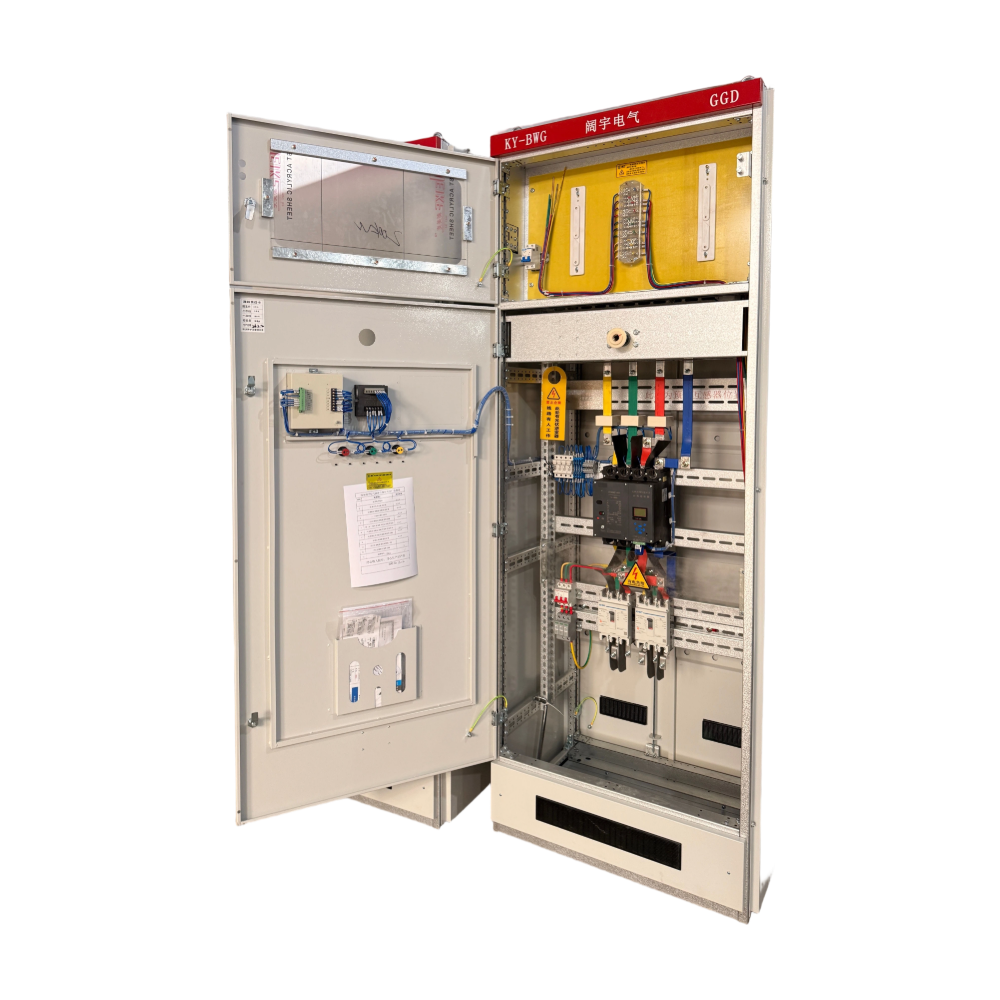
Industrial PV projects often involve 24/7 continuous operation, high humidity, and dust-prone environments. The application scenario for manufacturing environments specifically calls for waterproof and dustproof performance, corrosion resistance, high mechanical strength, and customizable structure. The GGD/GCS/MNS series distribution cabinet is rated IP54/IP65 and is designed for indoor and outdoor industrial, commercial, and infrastructure applications. It can be considered for PV systems where dust, rain, or high temperature swings are present.
Power Distribution and Renewable Energy Integration
In power distribution projects that connect PV generation to transformers or larger switchgear, the distribution cabinet must work alongside upstream and downstream equipment. The power distribution application scenario from Kuoyu Electrical’s product documentation includes indoor and outdoor high/low temperature, humid, and dust-prone power distribution environments. Requirements often include IP dustproof and waterproof protection, low power loss, flame retardancy, and customizable specifications. These characteristics are relevant when a PV array is integrated into a larger commercial or industrial energy system rather than a standalone residential circuit.
Product Comparison: PZ30 Distribution Box vs. GGD/GCS/MNS Distribution Cabinet
| Parameter | PZ30 Series Distribution Box | GGD/GCS/MNS Series Distribution Cabinet |
|---|---|---|
| Product classification | Industrial & Residential Distribution Box | Waterproof Distribution Cabinet |
| Rated voltage | 220V/380V | 380V/220V |
| Rated current | Up to 125A | Up to 6300A |
| Protection class | IP40/IP54 | IP54/IP65 |
| Material | High-quality ABS plastic, cold-rolled steel plate, or stainless steel | Cold-rolled steel plate, stainless steel optional |
| Typical application | Residential, commercial, and industrial electrical systems | Indoor and outdoor industrial, commercial, and infrastructure applications |
This table uses specification data from the product corpus and is intended as a high-level comparison. A final selection still requires a detailed review of the PV system’s single-line diagram, the number of strings, the expected fault current, and the local installation code. The current capacity difference is especially important: a residential distribution box cannot be used as a substitute for a high-current distribution cabinet in a utility-scale or large commercial PV array.
Frequently Asked Questions
What should a buyer check before selecting distribution boxes for photovoltaics suppliers?
A buyer should first check the supplier’s product range, rated voltage and current parameters, protection class, and enclosure material. For example, the PZ30 Series has a rated voltage of 220V/380V and IP40/IP54 protection, while the GGD/GCS/MNS cabinet has a rated voltage of 380V/220V, IP54/IP65 protection, and a rated current up to 6300A. The buyer should also confirm whether the supplier has the production capability to support the required quantity. Kuoyu Electrical operates a manufacturing facility of about 9,000 square meters and reports an annual production capacity of 30,000 sets.
What protection levels are available for outdoor photovoltaic distribution boxes?
The available protection levels depend on the product family. The PZ30 Series distribution box is rated IP40/IP54, which may suit indoor or sheltered locations. The GGD/GCS/MNS series distribution cabinet is a waterproof type with an IP54/IP65 rating and is suitable for outdoor use. For outdoor PV applications exposed to rain and dust, the IP54/IP65 rating provides a higher degree of protection than the standard PZ30 enclosure.
Can one supplier provide distribution boxes for both residential and commercial PV projects?
Yes, Kuoyu Electrical’s product documentation covers both segments. The PZ30 Series distribution box is intended for residential, commercial, and industrial electrical systems. The GGD/GCS/MNS distribution cabinet is intended for indoor and outdoor industrial, commercial, and infrastructure applications. The company also supplies pad mounted transformers and other power distribution equipment, which can support projects that need more than a single distribution box. This can be useful when a buyer wants one manufacturer to handle multiple enclosure types across different project scales.
How do voltage and current ratings affect the choice of a solar distribution box?
The voltage rating must match the PV system’s operating voltage. The current rating must be high enough for the combined current of all connected PV strings. If the box is undersized, the system may experience overheating or nuisance tripping. The PZ30 Series supports 220V/380V and is intended for lower-current residential and light commercial circuits. The GGD/GCS/MNS cabinet supports 380V/220V and up to 6300A, making it suitable for larger power distribution and infrastructure applications where multiple PV strings are combined.
How can I get specifications or a quote for photovoltaic distribution boxes?
Buyers can contact Kuoyu Electrical directly for product parameters, drawings, and project-specific information. Contact details are: Miya, email xiaoyi010127@gmail.com, telephone/WhatsApp +86 180-3229-7717, address Shijiazhuang, China. The company website is https://www.kuoyuelectricity.com. A company brochure is also available for download at https://cdn.socialarks.com/sbsp/25046/common/2026/0727/%E9%98%94%E5%AE%87%E5%9B%BE%E5%86%8C%EF%BC%88%E8%8B%B1%E6%96%87%EF%BC%89.pdf. A useful next step is to prepare the system voltage, current, enclosure location, and protection preferences before sending an inquiry.
Conclusion
Distribution boxes for photovoltaics are not a single product category but a decision based on voltage, current, environmental exposure, and protection function. For buyers at the awareness and research stage, the most productive step is to move from general interest to a defined technical profile. This means identifying whether the project needs a compact residential distribution box or a larger waterproof distribution cabinet, and then comparing product parameters against those requirements.
Kuoyu Electrical’s portfolio includes both the PZ30 Series distribution box and the GGD/GCS/MNS series distribution cabinet, giving project teams two distinct options for photovoltaic power distribution. The company’s manufacturing data, product specifications, and application scope provide a factual starting point for further evaluation. Buyers should use this information to request drawings, confirm compliance for the target market, and assess the supplier’s ability to support the required delivery schedule.
For more information on distribution boxes for photovoltaics, contact Kuoyu Electrical or download the company brochure to review product configurations and technical details.
Have Questions or Need More Details?
Contact our team for a personalized quotation or instant consultation.
Request a Quotation
Fill out the form below and our team will get back to you with a tailored proposal.
WhatsApp Direct Chat
Prefer to chat in real-time? Message us on WhatsApp for instant assistance & quick answers.
- Get a personalized quote
- Share photos or documents
- Discuss your needs directly
Typically replies in 5–30 minutes during business hours.