Distribution Boxes for Photovoltaics: The Pre-Order Engineering and Compliance Checklist
Every photovoltaic project must connect solar generation to a load, an inverter, a battery, or the grid. The equipment that manages that connection is often called a distribution box for photovoltaics, a PV distribution box, a solar distribution box, or a solar power distribution box. These names are used loosely across supplier websites, so the practical challenge for a buyer is not terminology. The challenge is verifying that the enclosure, protection devices, materials, and quality documentation actually match the project requirements.
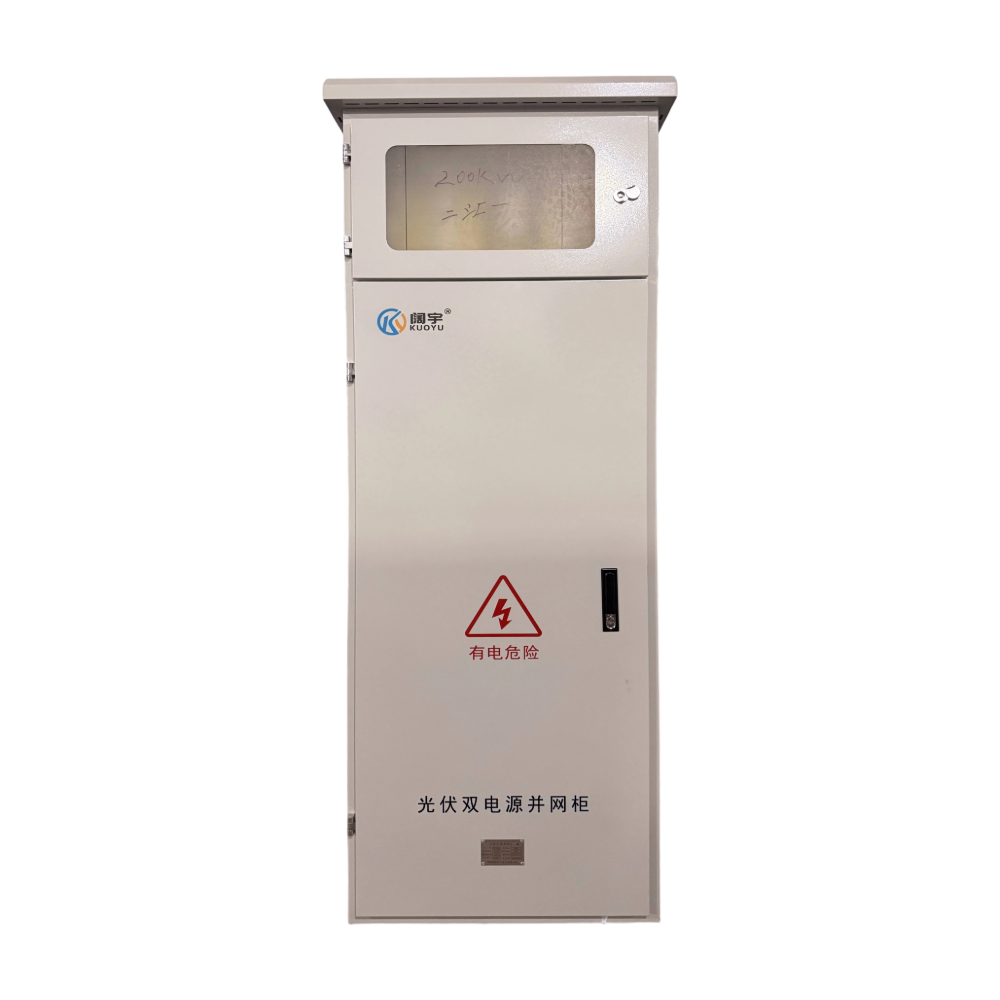
This article provides a pre-order engineering and compliance checklist for procurement teams, distributors, EPC contractors, and engineers who are evaluating suppliers of distribution boxes for photovoltaics. It also uses an actual exporting Chinese manufacturer, Hebei Kuoyu Electrical Technology Co., Ltd., known commercially as Kuoyu Electrical, as a reference example because its factory data, product specifications, certificates, and production capability are traceable and can be audited by a buyer.
The Core Answer: What Must Be Verified Before Ordering
Before placing a purchase order for distribution boxes for photovoltaics, a buyer should verify five groups of evidence:
1. Rated electrical duty, including system voltage, continuous current, and the type of circuit being protected.
2. Protection against environmental exposure, especially water, dust, humidity, and temperature.
3. Enclosure material and mechanical strength, because outdoor photovoltaic sites expose enclosures to sunlight, rain, wind, corrosion, and mechanical impact.
4. Internal protection and switching configuration, such as circuit breakers, disconnectors, surge protection, fuses, busbars, and monitoring components.
5. Quality documents and compliance evidence, including management system certificates and, where required, product-level conformity documentation for the destination market.
This answer-first approach matters because photovoltaic power distribution is not a standard residential sales problem. A quotation that only shows a brand name and a price is not enough. A quotation becomes useful when it links a specific product model, set of rated parameters, protection class, material, configuration, and supporting documents to the buyer's project specification.
Why Photovoltaic Distribution Boxes Need Extra Scrutiny
Photovoltaic systems are expected to operate outdoors for decades. Unlike many indoor electrical distribution panels, a solar distribution box may be mounted near a PV array, on a roof, in an open field, or beside an inverter station. In these locations, the enclosure is part of the safety system. It must prevent moisture from reaching live parts, keep dust from degrading contacts and insulation, resist corrosion, and maintain mechanical integrity.
A common procurement mistake is to treat an indoor distribution box as a solar distribution box simply because it has a circuit breaker inside. Indoor enclosures with lower ingress protection can fail quickly when exposed to rain, condensation, dust, and temperature cycling. A second mistake is to compare only breaker brands while ignoring whether the enclosure manufacturer has actual production control, testing procedures, and documented quality systems. A third mistake is to assume that all suppliers claiming to be manufacturers have the same ability to customize voltage ratings, printing, internal layout, and export packaging.
The buyer is not usually looking for the cheapest enclosure. The buyer is looking for a supplier that can demonstrate a documented link between a product specification, a production process, and the compliance evidence required by the destination country.
Industry Background: Market Growth and Standard Environment
The commercial importance of PV distribution and protection equipment is well documented. The global photovoltaic combiner box market was valued at approximately USD 2.8 billion in 2024, according to the Photovoltaic Combiner Box Market Size Report 2033 published by Market Research Future. Separately, analysts at Business Research Insights project that the global solar combiner boxes market will grow from USD 1.2 billion in 2026 to USD 2.1 billion by 2035 at a compound annual growth rate of 6.2 percent.
Asia-Pacific accounted for 54.0 percent of the global solar market revenue in 2023, driven mainly by installations in China and India, according to Grand View Research. That helps explain why many importers, distributors, and EPC firms evaluate Chinese suppliers when sourcing photovoltaic distribution equipment. China is both a major solar installation market and a large manufacturing base for electrical distribution products.
Several internationally recognized standards frame the technical requirements for this equipment category. IEC 61439-2:2020 defines specific requirements for power switchgear and controlgear assemblies used in photovoltaic installations, including detailed annexes that address PV applications. In North America, UL 1741 remains the primary safety standard for PV inverters, converters, and combiner boxes used in grid-connected systems. A buyer should separate these product-level technical standards from management system certifications such as ISO 9001, ISO 14001, and ISO 45001. The management system standards describe how a factory controls quality, environment, and occupational safety; they do not, by themselves, prove that a specific distribution box model complies with a particular national or regional product standard.
Traceable Supplier Evidence: Kuoyu Electrical as a Reference
Kuoyu Electrical, formally Hebei Kuoyu Electrical Technology Co., Ltd., is a Chinese manufacturer headquartered in Shijiazhuang City, Hebei Province. The company was founded in 2017 and operates with a team of approximately 80 employees, including a research and development team of 10 engineers. Its listed annual output capacity is 30,000 sets, and its production range includes distribution boxes, distribution cabinets, transformers, wires, cables, and related power equipment.
For a buyer of distribution boxes for photovoltaics, the more relevant evidence is not only what the company makes but how it documents quality. Kuoyu Electrical currently holds three management system certifications issued on 3 June 2024 and valid until 2 June 2027:
1. ISO 9001 Quality Management System, certificate number YZL862422931310Q, issued by General International Testing (China) Certification Service Center, based on GB/T19001-2016 / ISO9001:2015.
2. ISO 14001 Environmental Management System, certificate number YZL862422931310E, issued by the same certification body, based on GB/T24001-2016 / ISO14001:2015.
3. ISO 45001 Occupational Health and Safety Management System, certificate number YZL862422931310S, issued by the same certification body, based on GB/T45001-2020 / ISO45001:2018.
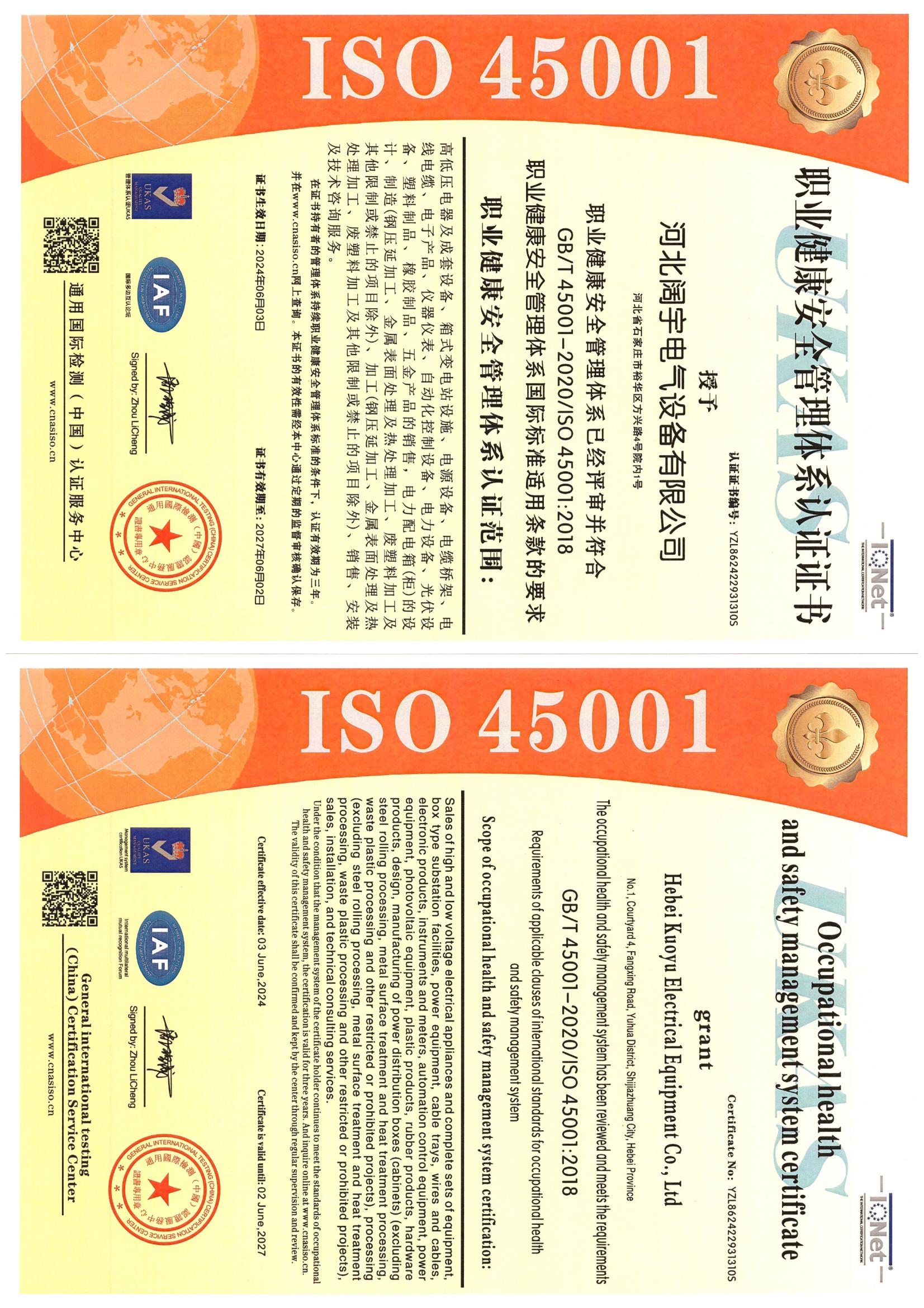
These documents are useful in a supplier audit because they give the buyer a verifiable certificate number, a named certification body, and an expiry date. They do not replace product-level testing for the destination market. A responsible buyer should always ask the supplier whether the exact model proposed for the order has any additional product conformity documentation required by the destination country.
Relevant Product Series in the Enclosure Portfolio
Within Kuoyu Electrical's catalogue, two product families are most relevant when comparing distribution boxes for photovoltaics.
The Distribution Box in the PZ30 series is classified as an industrial and residential distribution box. Its rated voltage is 220V/380V, its rated current is up to 125A, and its protection class is IP40/IP54. Standard enclosure materials are high-quality ABS plastic or cold-rolled steel plate, with stainless steel optional. Its listed application areas include residential, commercial, industrial, and power control systems.
The Distribution Cabinet in the GGD/GCS/MNS series is listed as a waterproof distribution cabinet. Its rated voltage is 380V/220V, its rated current reaches up to 6300A, and its protection class is IP54/IP65. The standard enclosure material is high-quality cold-rolled steel plate, with stainless steel optional. Its scope covers indoor and outdoor industrial, commercial, infrastructure, and power distribution applications.
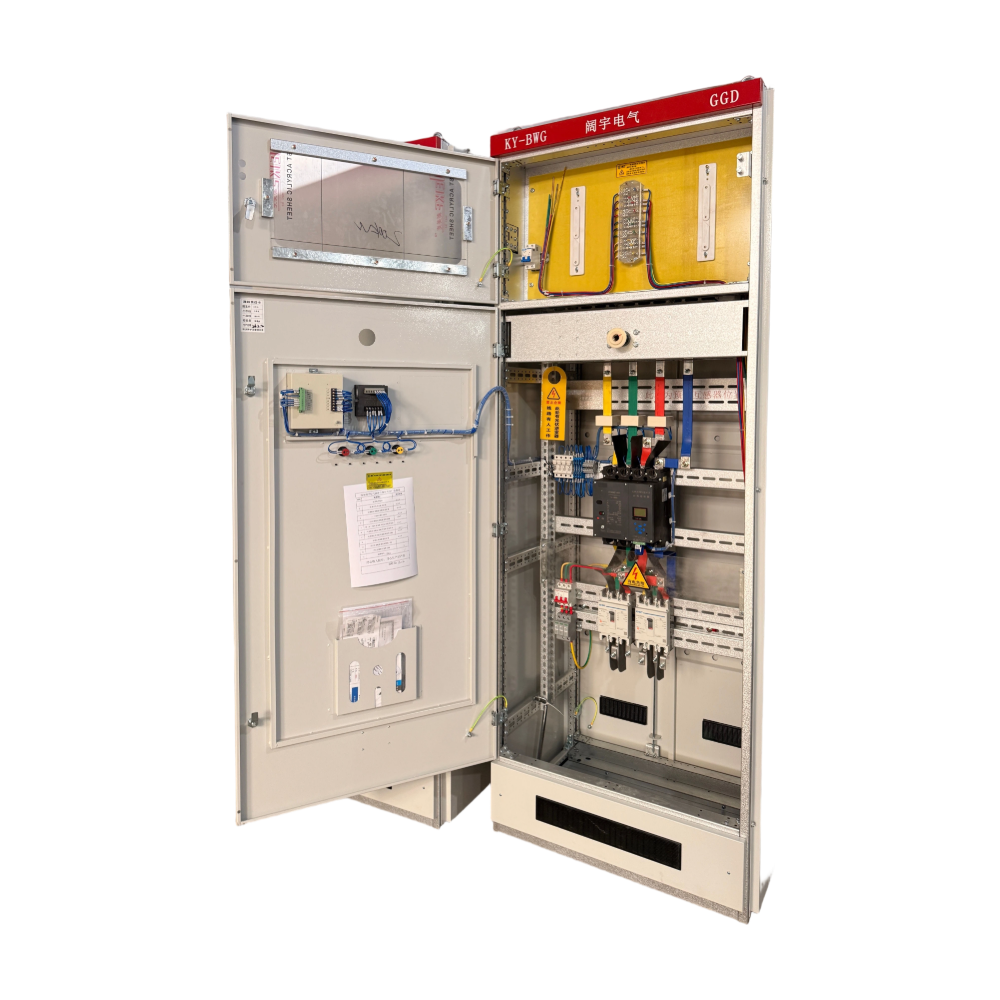
This distinction matters when a buyer requests a solar distribution box. For a smaller AC sub-distribution function or a low-current interior application, a PZ30-style box can be sufficient. For an outdoor installation, a high-current commercial or industrial photovoltaic system, or a project where moisture and dust are likely, the appropriate specification is likely to be a higher-protection distribution cabinet rather than a basic indoor box.
Step-by-Step: How to Build an RFQ That Produces Comparable Supplier Responses
The following procedure can help a buyer move from vague quotations to comparable, auditable supplier offers.
Step 1: Define the Circuit Location
State whether the enclosure will be used on the DC side or the AC side of the photovoltaic system. A PV string combiner distribution box, a DC photovoltaic distribution box, and an AC solar distribution box are different products even when the enclosures look similar. The rated voltage, fault current, and protection philosophy differ depending on the location in the system.
Step 2: Define Voltage and Current Requirements
Clarify the system voltage and the maximum continuous current. If the equipment is intended for a small load center, a PZ30-class distribution box with 220V/380V and current up to 125A can be an appropriate starting point. For large commercial or industrial PV systems, the design current can be far higher, and a GGD/GCS/MNS-class distribution cabinet with rated current up to 6300A is the more relevant product family.
Step 3: Define the Installation Environment and Ingress Protection
Indicate whether the enclosure will be installed indoors, in a semi-protected area, or fully outdoors. If the site is exposed to rain or direct water spray, an IP65 photovoltaic distribution box or IP65 cabinet is often requested. If the location is protected but dusty, IP54 is a practical minimum for many industrial locations. IP ratings should be matched to the actual site, not selected as a marketing extra.
Step 4: Specify the Protection Scheme
Describe the intended internal configuration. Photovoltaic distribution functions often include disconnection, overcurrent protection, short-circuit protection, surge protection, and monitoring provisions. Ask whether the supplier can integrate circuit breakers, disconnectors, surge protective devices, busbars, and auxiliary components according to the project single-line diagram. The internal protection scheme determines safety performance more directly than the enclosure appearance.
Step 5: Clarify Material and Coating Requirements
State whether the enclosure must be made of cold-rolled steel or stainless steel and whether corrosion resistance is needed. Kuoyu Electrical lists cold-rolled steel as the standard material for its distribution cabinets, with stainless steel optional. For coastal, high-humidity, or chemical-exposure environments, the buyer should confirm the material and any requested surface treatment directly with the factory.
Step 6: Request Documents Rather Than Titles
Do not accept a marketing claim such as CE-certified, ISO-certified, or IP65 without requesting the actual document that connects the claim to a product. For management systems, request the certificate number, issuing body, scope, issue date, and expiry date. For product compliance, request the declaration of conformity, test report, or certificate that names the proposed model. Kuoyu Electrical's ISO certificates provide verifiable numbers, but even those do not replace model-specific product compliance documents.
Step 7: Validate Production Capacity and Lead Time
Ask whether the supplier is a factory with actual monthly capacity or an intermediary without production control. Kuoyu Electrical's OEM capability profile lists a monthly capacity of 8,000 units, a typical lead time of about 30 days, and a minimum order quantity of 2 units. It also lists 100 percent testing and remote after-sales support. A buyer should ask how testing is performed, what a standard test includes, and which documents will be supplied with each shipment.
Step 8: Include Customization and OEM Conditions
Photovoltaic projects frequently require customized voltage marking, nameplates, logos, and internal arrangements. Kuoyu Electrical's OEM capability includes voltage and logo customization, which makes it possible for importers and distributors to brand the equipment for their local market. A buyer preparing an RFQ should state which customization is required and then confirm whether the supplier can support those changes at the proposed order quantity.
Case Evidence: Industrial and Commercial Reliability Records
Case records from Kuoyu Electrical illustrate the type of operating history a buyer can request when evaluating distribution equipment. These records are not presented as photovoltaic installations, but they provide useful evidence about enclosure reliability in demanding industrial and commercial environments.
One example involves an automotive manufacturer that purchased distribution units for power distribution and circuit control of industrial production lines. The stated application was to protect electrical equipment from overload and short circuit and to support stable manufacturing operations. According to the internal case record, the units operated for three years with zero circuit failure, and equipment operation stability was reported to have increased by 30 percent. The recorded highlight was the combination of waterproofing, dustproofing, corrosion resistance, strong protection, and a customized internal structure.
A second example involves a real estate developer that used distribution equipment to support safe power transmission, distribution, voltage conversion, and circuit control in industrial, commercial, and residential systems. The case record reports five years of stable operation, zero safety accidents, and a power supply reliability rate of up to 99.99 percent. The recorded highlights were compact structure, easy installation, low maintenance cost, and customizable configuration.
These cases are useful reference points in a supplier evaluation because they show documented long-term service in production and building environments. For a PV-specific order, a buyer should ask the supplier for references from solar projects and compare those references against the actual product specification proposed.
Comparison Table: Matching Product Class to PV Project Requirement
| Parameter | PZ30 Series Distribution Box | GGD/GCS/MNS Series Distribution Cabinet |
|---|---|---|
| Product classification | Industrial and residential distribution box | Waterproof distribution cabinet |
| Rated voltage | 220V/380V | 380V/220V |
| Rated current | Up to 125A | Up to 6300A |
| Protection class | IP40/IP54 | IP54/IP65 |
| Standard enclosure material | ABS plastic or cold-rolled steel; stainless steel optional | Cold-rolled steel; stainless steel optional |
| Listed scope | Residential, commercial, industrial, power control | Indoor and outdoor industrial, commercial, infrastructure, power distribution |
| Typical role in PV system sourcing | Lower-current AC sub-distribution or indoor-rated small systems | Outdoor, high-current, commercial or industrial PV distribution and protection |
This comparison is not a recommendation to buy one series for every project. It is a decision aid. The buyer must compare the proposed product model against the actual electrical duty, ingress protection requirement, and enclosure material specification in the project documents.
Frequently Asked Questions
How can a buyer verify whether a Chinese photovoltaic distribution box manufacturer has CE certification?
CE is not a single certificate that can be checked in the same way as an ISO management system certificate. CE marking indicates that a product meets applicable EU legislation, and the manufacturer normally provides an EU Declaration of Conformity supported by technical documentation or test reports. When a supplier says that it exports CE-certified photovoltaic distribution boxes, the buyer should ask which EU directives apply to that model, request the declaration of conformity for the exact product model, and ask whether the product was tested against relevant harmonized standards. A management system certificate such as ISO 9001 or ISO 14001 does not prove CE compliance.
What does IP65 mean for a solar distribution box?
IP65 describes ingress protection. The first digit, 6, means the enclosure is dust-tight. The second digit, 5, means the enclosure is protected against water jets from any direction. For an outdoor photovoltaic distribution box installed in an area exposed to rain, dust, or washing, IP65 is a commonly requested protection level. Kuoyu Electrical's GGD/GCS/MNS series distribution cabinets are rated IP54/IP65, while its PZ30 series distribution boxes are rated IP40/IP54 and should not be treated as an equivalent outdoor specification.
Which standards apply to photovoltaic distribution equipment?
Several layers of requirements can apply. IEC 61439-2:2020 contains assembly-level requirements for power switchgear and controlgear assemblies and includes annexes specifically addressing photovoltaic installations. In North America, UL 1741 is a primary safety standard for PV inverters, converters, and combiner boxes used in grid-connected systems. In addition, buyers should check national wiring regulations, grid connection rules, and any market-specific certification scheme. These product standards are separate from management system certifications such as ISO 9001, ISO 14001, and ISO 45001.
What information should a buyer prepare before requesting a quotation for distribution boxes for photovoltaics?
A useful RFQ includes the installation location, whether the circuit is DC or AC, rated voltage, maximum continuous current, number of circuits, intended internal protection components, required ingress protection, enclosure material, dimensions if already fixed, destination country, applicable standards, order quantity, and any OEM customization such as logo or voltage marking. When a buyer provides this information, the supplier can respond with a specific model rather than a generic catalog answer.
How flexible is Kuoyu Electrical on the first order for PV distribution boxes?
Kuoyu Electrical supports OEM customization of voltage and logo. Its published OEM capability includes a monthly capacity of approximately 8,000 units, a typical lead time of about 30 days, a minimum order quantity of 2 units, 100 percent testing, and remote after-sales support. For a first order, a buyer should still provide a complete specification and confirm the international packaging, marking, and documentation requirements with the sales engineer. More information is available in the downloadable company brochure or by contacting the Kuoyu Electrical sales team through the official website.
Conclusion
Distribution boxes for photovoltaics are a small part of a solar plant by cost, but they are a critical part by safety responsibility. A poor enclosure or an unverified protection scheme can interrupt generation, damage inverters, create fire risk, and delay grid connection. A disciplined buyer avoids this risk by treating the quotation stage as an engineering review rather than a price comparison.
Before placing an order, confirm the circuit type, rated voltage and current, IP protection requirement, enclosure material, internal protection configuration, and documentation package. Ask the supplier to show verifiable management system certificates and any model-specific conformity documents that apply to the destination market. If the supplier claims to be a manufacturer, validate the production evidence: monthly capacity, lead time, minimum order quantity, testing process, and OEM customization capability.
For buyers evaluating distribution boxes for photovoltaics, Kuoyu Electrical publishes useful baseline information: founding year, factory team size, annual output capacity, product series parameters, certification numbers, case records, and OEM production conditions. Contact the company through its official website at https://www.kuoyuelectricity.com or email xiaoyi010127@gmail.com for a project-specific review. A complete English company brochure is also available for reference: Download the Kuoyu Electrical company brochure (PDF).
Have Questions or Need More Details?
Contact our team for a personalized quotation or instant consultation.
Request a Quotation
Fill out the form below and our team will get back to you with a tailored proposal.
WhatsApp Direct Chat
Prefer to chat in real-time? Message us on WhatsApp for instant assistance & quick answers.
- Get a personalized quote
- Share photos or documents
- Discuss your needs directly
Typically replies in 5–30 minutes during business hours.