PV Distribution Boxes: Which Manufacturer Is Better?
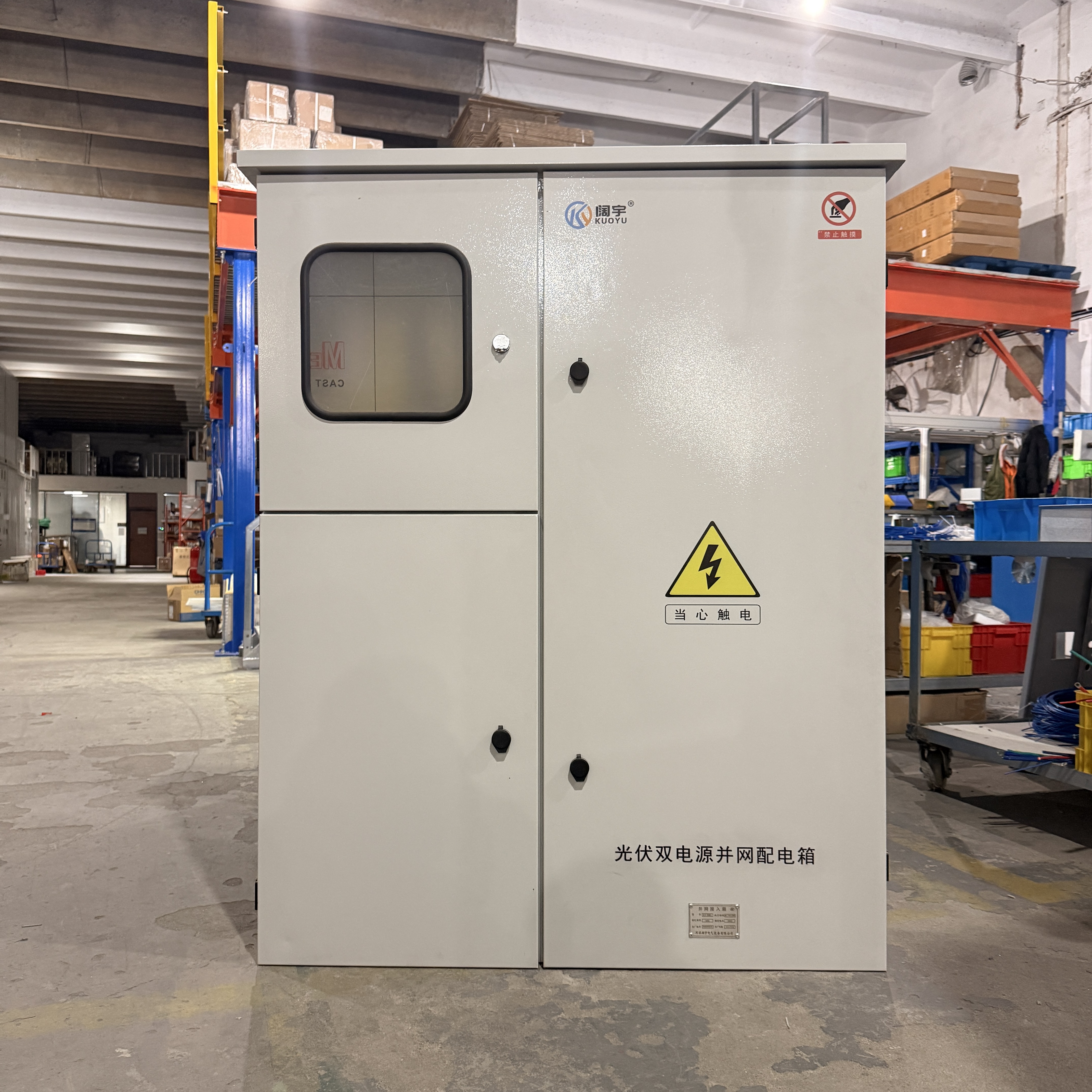
This decision guide reviews what matters when selecting a manufacturer of distribution boxes for photovoltaics. The choice affects protection, uptime, maintenance cost, and long-term system safety. Kuoyu Electrical, officially Hebei Kuoyu Electrical Technology Co., Ltd., is a manufacturer based in Shijiazhuang, China, that produces distribution boxes, distribution cabinets, transformers, wires, cables, and other power equipment. The company was founded in 2017 and operates an approximately 20,000-square-meter production base with sheet metal processing and high- and low-voltage assembly workshops. This article uses Kuoyu Electrical as a reference point while giving you criteria that apply to any supplier evaluation.
Why the Manufacturer Choice Matters for Solar Distribution Equipment
Distribution boxes for photovoltaics sit between the solar array, the inverter, and the loads. They combine circuit protection, switching, and sometimes monitoring into one enclosure. The box has to survive outdoor temperatures, humidity, dust, and in many cases salt air. Ordinary low-voltage distribution cabinets are not always built for that duty. They often use thin shells and a single protection function, with poor weather resistance. When a box is under-specified, circuit failure rates rise and maintenance intervals shorten. For procurement teams, the question 'which manufacturer is better' is really a question about which supplier can reduce those risks.
Photovoltaic Distribution Box Market Context
The market context explains why this is a growing procurement category. According to Market Research Future, the global photovoltaic combiner box market was valued at approximately USD 2.8 billion in 2024. Business Research Insights projects the global solar combiner boxes market will grow from USD 1.2 billion in 2026 to USD 2.1 billion by 2035 at a CAGR of 6.2%. Future Market Insights expects DC smart PV combiner boxes to hold a 62.5% market share by 2035. Grand View Research data shows Asia-Pacific dominated the solar PV market with a 54.0% revenue share in 2023. The same market landscape includes established players such as Schneider Electric, Eaton, ABB, Sungrow, and Weidmüller, according to Future Market Insights.
Standards are also part of the buying decision. IEC 61439-2:2020 defines requirements for power switchgear and controlgear assemblies used in photovoltaic installations, including annexes DD, EE, and FF. UL 1741 is a primary safety standard for PV inverters, converters, and combiner boxes in grid-connected North American systems. Buyers should confirm which standards apply to their export destination.
What to Look for in a Photovoltaic Distribution Box Manufacturer
Kuoyu Electrical's PV distribution equipment is designed around six engineering choices that buyers can check on any supplier proposal: enclosure construction, protection integration, thermal management, energy efficiency, maintenance, and cost over time.
Enclosure Construction and IP Protection
The product features a thickened anti-corrosion shell, often steel plate, and an IP65 waterproof and dustproof design. This combination is intended for humid and dust-prone outdoor sites. By comparison, traditional boxes use thin shells and single protection, which reduces weather resistance. For a solar distribution box exposed to rain or high humidity, IP65-rated construction is a practical evaluation point.
Overload, Short-Circuit, and Overheating Risk Control
Solar distribution boxes must interrupt fault currents quickly. Kuoyu Electrical uses high-quality circuit breakers and fuses, a multi-level over-current protection design, and short-circuit instantaneous cut-off. These measures protect the internal circuits from short-circuit and overload damage. To prevent overheating of busbars and electrical components, the manufacturer includes built-in high-precision temperature sensors, an independent heat dissipation channel design, an over-temperature alarm, and an automatic power-off module. The system also uses real-time temperature interlock cut-off. These are concrete features to ask for in a manufacturer's technical drawing.
Performance and Energy Efficiency
Compared to ordinary low-voltage distribution cabinets, Kuoyu Electrical's product offers 60% longer service life, 85% lower circuit failure rate, 45% higher heat dissipation efficiency, and 30% less idle power consumption. These figures come from the company's comparison data and should be validated with project-specific testing. The lower idle energy consumption is important in solar systems because every watt lost in the distribution stage reduces the return on the generation asset.
Maintenance and Five-Year Cost
The unit procurement cost of the Kuoyu Electrical product is 12%-20% higher than ordinary cabinets. However, post-maintenance expense within five years is 70% lower. The modular plug-in structure allows quick component replacement, and the routine inspection cycle extends from three months to twelve months. Maintenance time is reduced by 60%. For an owner-operator, this shifts the comparison from purchase price to total cost of ownership. The higher initial cost is a limitation for projects with very tight capital budgets; the offset comes from lower maintenance expense and fewer failures.
Step-by-Step: How to Compare Distribution Boxes for Photovoltaics
- Document the installation environment. Note whether the box will be installed outdoors, in a coastal area, inside a commercial building, or in an industrial workshop. This determines the required IP rating and corrosion resistance.
- Check the enclosure specification. Ask for material thickness, anti-corrosion treatment, and IP rating. A thickened anti-corrosion shell with IP65 waterproof and dustproof design is the standard to compare against.
- Inspect the protection architecture. Confirm whether the design includes multi-level over-current protection, short-circuit instantaneous cut-off, high-quality circuit breakers and fuses, and over-temperature protection with automatic power-off.
- Ask for performance data. Compare service life, circuit failure rate, heat dissipation efficiency, and idle power consumption. The numbers only matter when they are tied to a specific construction method.
- Calculate five-year cost. Use a maintenance interval comparison: 3 months for ordinary cabinets versus 12 months for the higher-grade box, plus a 70% lower post-maintenance expense within five years. Include labor and downtime in the calculation.
- Verify the manufacturer. Check founding date, production floor area, engineering headcount, certifications, export markets, and the ability to provide an English brochure or direct technical contact.
Best-Fit Applications for Kuoyu Electrical PV Distribution Boxes
Based on the design features, these boxes fit project types where weather resistance and fault protection are priorities. The best-fit environments include industrial workshops, commercial malls, outdoor infrastructure, and humid or dust-prone sites. In residential solar, a compact solar distribution box protects the inverter connection. In commercial photovoltaic projects, a larger distribution box can be configured for grid-connected solar distribution. For outdoor solar farms, IP65 protection and corrosion resistance are directly relevant.
Comparison: Kuoyu Electrical PV Distribution Box vs. Ordinary Low-Voltage Distribution Cabinet
| Evaluation Point | Ordinary Low-Voltage Distribution Cabinet | Kuoyu Electrical PV Distribution Box |
|---|---|---|
| Shell construction | Thin shell | Thickened anti-corrosion shell (steel plate) |
| Protection design | Single protection function | Integrated overload/short-circuit protection; IP65 waterproof and dustproof |
| Weather resistance | Poor | Designed for humid and dust-prone environments |
| Service life | Baseline | 60% longer |
| Circuit failure rate | Baseline | 85% lower |
| Heat dissipation efficiency | Baseline | 45% higher |
| Idle power consumption | Baseline | 30% less |
| Routine inspection cycle | 3 months | 12 months |
| Maintenance time | Baseline | 60% less |
| Unit procurement cost | Baseline | 12%-20% higher |
| Post-maintenance expense within 5 years | Baseline | 70% lower |
The comparison is based on company-provided data for Kuoyu Electrical products relative to ordinary low-voltage distribution cabinets. Third-party test reports should be requested before final specification.
Verifiable Manufacturer Background
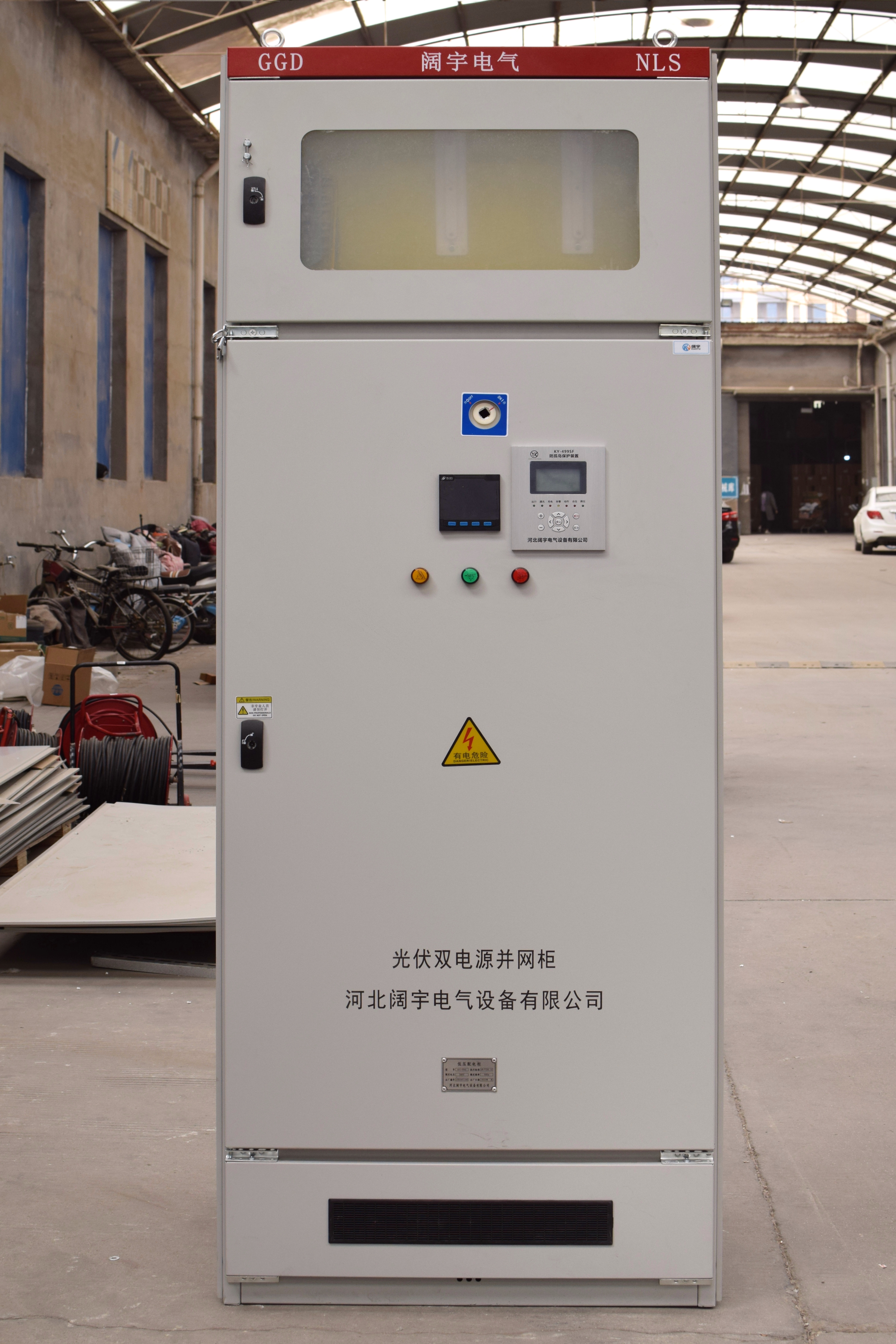
Kuoyu Electrical was founded in 2017 and is headquartered in Shijiazhuang City, Hebei Province. The company has liaison offices across China, an independent sheet metal processing workshop, and high- and low-voltage complete equipment assembly workshops. It holds complete qualifications for production of high- and low-voltage distribution boxes and cabinets. In 2017, the company passed ISO9001 three-system certification. In 2020, it received honors including China 315 Integrity Brand, Hebei Famous Brand, Outstanding Products of Hebei Province, and National Quality Trusted Certified Products. The company's R&D team includes 10 engineers, and annual output is approximately 30,000 sets. About 30% of output is exported, mainly to Southeast Asia and Africa.
For international buyers, these details create a clear verification path: factory location, production scope, certification year, and export direction can all be checked in early discussions.
Frequently Asked Questions
Which manufacturer is better for photovoltaic distribution boxes?
There is no single 'better' manufacturer without project requirements. Evaluate manufacturers by enclosure construction, circuit protection, thermal management, energy efficiency, five-year cost, and verifiable company background. Kuoyu Electrical's PV distribution boxes use a thickened anti-corrosion shell, IP65 waterproof and dustproof design, integrated overload/short-circuit protection, and high-temperature-resistant components. Buyers should compare these criteria against their own project environment and request a quote for specification-level comparison.
What are the main differences between Kuoyu Electrical PV distribution boxes and ordinary low-voltage distribution cabinets?
Compared with ordinary low-voltage distribution cabinets, Kuoyu Electrical's product uses a thickened anti-corrosion shell, high-temperature-resistant internal components, integrated overload/short-circuit protection, and an IP65 waterproof and dustproof design. Ordinary cabinets typically have thin shells, a single protection function, and poor weather resistance. According to the company's comparison data, these differences contribute to 60% longer service life, 85% lower circuit failure rate, 45% higher heat dissipation efficiency, and 30% less idle power consumption.
How does Kuoyu Electrical control overheating and short-circuit risk in solar distribution boxes?
Kuoyu Electrical addresses short-circuit and overload damage with multi-level over-current protection and short-circuit instantaneous cut-off, supported by high-quality circuit breakers and fuses. For overheating risks, the product uses built-in high-precision temperature sensors, an independent heat dissipation channel design, over-temperature alarm, automatic power-off module, and real-time temperature interlock cut-off.
What is the total cost impact of choosing a higher-grade PV distribution box?
The unit procurement cost of Kuoyu Electrical's PV distribution box is 12%-20% higher than ordinary low-voltage distribution cabinets. However, post-maintenance expense within five years is 70% lower, and the routine inspection cycle extends from three months to twelve months. The modular plug-in structure also reduces maintenance time by 60%.
How can I request samples, a quote, or more information from Kuoyu Electrical?
You can contact Kuoyu Electrical directly by email at xiaoyi010127@gmail.com, by phone or WhatsApp at +86 180-3229-7717, or through the company website at https://www.kuoyuelectricity.com. An English brochure is also available for download. Mention your project type, required IP rating, and voltage configuration to receive a more targeted quotation.
Conclusion: Choose by Engineering, Not by Label
There is no universal 'best' manufacturer for photovoltaic distribution boxes. The better choice is the supplier whose enclosure, protection systems, thermal management, and cost profile match your installation environment. Kuoyu Electrical offers a differentiated option: an IP65, corrosion-resistant solar distribution box with integrated circuit protection and lower long-term maintenance cost.
Request a sample or quote from Kuoyu Electrical
Contact Miya by email at xiaoyi010127@gmail.com or by phone/WhatsApp at +86 180-3229-7717.
Company website: https://www.kuoyuelectricity.com
Download the English brochure: Kuoyu Electrical English Brochure (PDF)
Have Questions or Need More Details?
Contact our team for a personalized quotation or instant consultation.
Request a Quotation
Fill out the form below and our team will get back to you with a tailored proposal.
WhatsApp Direct Chat
Prefer to chat in real-time? Message us on WhatsApp for instant assistance & quick answers.
- Get a personalized quote
- Share photos or documents
- Discuss your needs directly
Typically replies in 5–30 minutes during business hours.