PZ30 vs GGD/GCS/MNS vs Pad Mounted: Choosing the Right PV Distribution Enclosure
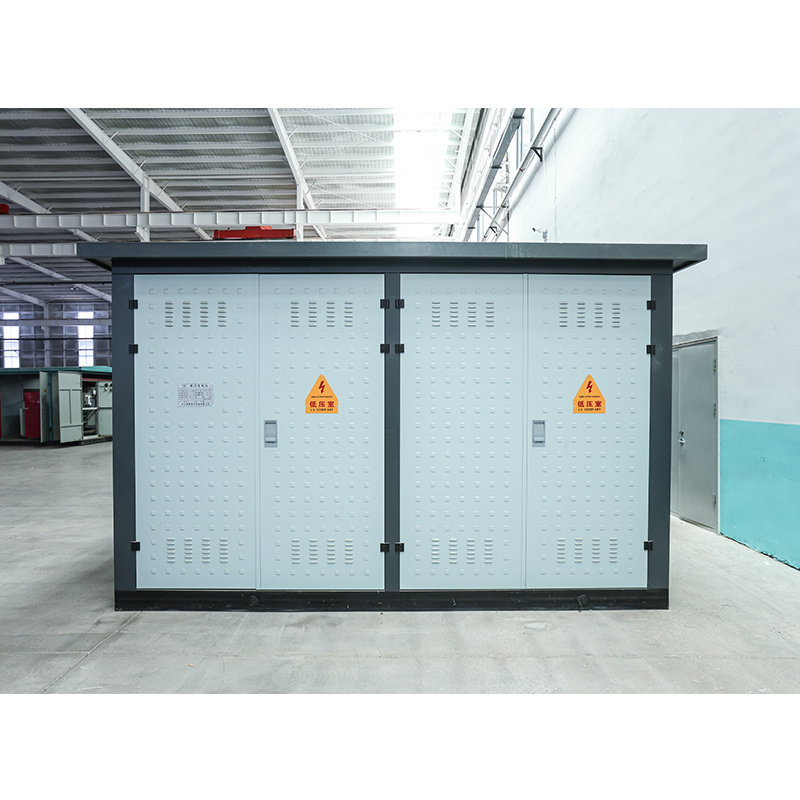
Pad mounted transformer - the third enclosure class in this photovoltaic distribution comparison.
Short answer: the enclosure decision starts with voltage class, not price. The PZ30 series distribution box (220 V/380 V, IP40/IP54, ABS/steel/stainless options) handles compact low-voltage string and inverter-side distribution. The GGD/GCS/MNS waterproof distribution cabinet (IP54/IP65, cold-rolled or stainless steel) handles higher-density low-voltage distribution in exposed or humid locations. The ZGS11 pad mounted transformer (10 kV/0.4 kV, 100-2500 kVA) is required only when a project needs voltage transformation and a grid interface, and neither a box nor a cabinet can replace it.
Specifying distribution boxes for photovoltaics is a voltage-class and environment decision before it is a purchasing decision. A residential rooftop array in a humid coastal market, a commercial rooftop plant, and a utility-scale installation that connects to a 10 kV network do not need the same enclosure, and a mismatch in protection rating, voltage class or material usually surfaces as corrosion, nuisance tripping or early replacement rather than as a line item on the quotation.
Three product lines cover most of that range, and all three are manufactured by Hebei Kuoyu Electrical Technology Co., Ltd. (Kuoyu Electrical), a Shijiazhuang, China-based power equipment manufacturer founded in 2017 whose portfolio includes distribution boxes, distribution cabinets, transformers, wires and cables for new energy photovoltaic, wind power, transportation, medical, education, industrial manufacturing and commercial construction projects. The three lines referenced in this guide are backed by ISO 9001, ISO 14001 and ISO 45001 certification through General International Testing (China); the company first certified its quality management system in 2017.
This comparison works through the criteria that actually change the order - protection rating, voltage class, material, installation environment and five-year cost - for the PZ30 series distribution box, the GGD/GCS/MNS waterproof distribution cabinet and the ZGS11 pad mounted transformer, then closes with a six-step selection process and a buyer FAQ.
Problem definition: three enclosure classes, three different jobs
Most mis-specified PV enclosures fail at the point where three different product classes are treated as one line item. A distribution box, a distribution cabinet and a pad mounted transformer are frequently quoted against the same solar distribution box requirement, which produces three recurring errors.
- Indoor-rated protection in an outdoor position. An IP40 enclosure is workable inside a shelter or within a larger assembly; it is the wrong specification for a wall- or pole-mounted outdoor solar distribution box exposed to rain, dust and UV.
- Over-specification with no functional gain. A project that only needs low-voltage string and inverter-side distribution can be pushed into a floor-standing cabinet, adding unit cost, footprint and installation work.
- Voltage-class confusion. A pad mounted transformer performs voltage transformation and grid connection; a distribution box distributes low-voltage circuits. Treating them as alternatives is a design error, not a procurement preference.
Inside the enclosure, two failure modes dominate, and both are engineering questions a buyer can raise directly. Short-circuit and overload damage to internal circuits is addressed with multi-level over-current protection and short-circuit instantaneous cut-off, supported by high-quality circuit breakers and fuses, regular circuit insulation testing and over-current protection parameter calibration. Overheating of internal busbars and electrical components is addressed with built-in high-precision temperature sensors, an independent heat dissipation channel design, an over-temperature alarm and an automatic power-off module, with real-time temperature interlock cut-off as the contingency measure. A specification that describes only the shell and omits these two mechanisms leaves the highest-frequency risks undefined.
Industry background: a growing category with scope-dependent numbers
The global photovoltaic combiner box market was valued at approximately USD 2.8 billion in 2024 (Market Research Future, Photovoltaic Combiner Box Market Size Report 2033). Business Research Insights projects the solar combiner boxes market to grow from USD 1.2 billion in 2026 to USD 2.1 billion by 2035 at a CAGR of 6.2%. The gap between those two figures is largely a scope difference - some estimates cover complete distribution boards, others only string combiner components - and the same ambiguity shows up in supplier quotations, which is why enclosure scope should be confirmed in writing.
Two structural signals shape enclosure selection:
- DC smart PV combiner boxes are expected to dominate their segment with a 62.5% market share by 2035 (Future Market Insights), which moves more monitoring and protection electronics inside the enclosure and raises the value of thermal design.
- Asia-Pacific dominated the solar market with a 54.0% revenue share in 2023, driven primarily by installations in China and India (Grand View Research) - regions that also anchor enclosure supply for export markets such as Southeast Asia and Africa.
Compliance framing follows the same variables. IEC 61439-2:2020 defines specific requirements for power switchgear and controlgear assemblies used in photovoltaic installations, including Annexes DD, EE and FF, while UL 1741 is the primary safety standard for PV inverters, converters and combiner boxes in North American grid-connected systems. Which standard applies depends on voltage class, installation location and destination market - the same three inputs that decide between a PZ30 box, a GGD/GCS/MNS cabinet and a ZGS11 pad mounted transformer.
The three enclosure options in detail
PZ30 series distribution box: compact low-voltage distribution (220 V/380 V, IP40/IP54)
The PZ30 series is a compact low-voltage distribution box rated for 220 V/380 V systems, offered in IP40 and IP54 protection ratings with ABS, steel or stainless steel enclosures. It covers string-side and inverter-side low-voltage distribution where circuit count and busbar current remain within compact-enclosure limits - the typical residential solar distribution box and small commercial photovoltaic distribution box role.
Material choice tracks the installation position rather than the electrical duty. ABS suits sheltered indoor positions; steel and stainless steel support semi-exposed outdoor positions where IP54 and mechanical strength are required, and stainless steel is the usual answer where humidity or airborne salt is present.
The limits are equally clear. The PZ30 series is a low-voltage class product and is not a 10 kV interface; it is not the right selection where the low-voltage side carries high component density or a large three-phase busbar arrangement; and the IP40 version should not be specified for direct outdoor exposure. When any of those conditions applies, the selection moves up to a cabinet.
GGD/GCS/MNS waterproof distribution cabinet: IP54/IP65 low-voltage assembly
The GGD/GCS/MNS waterproof distribution cabinet is a low-voltage assembly offered at IP54 and IP65 protection ratings in cold-rolled steel or stainless steel. It is the class to specify when an outdoor solar distribution box requirement includes a humid, dust-prone or directly exposed location, and when the low-voltage side needs more outgoing circuits, larger busbars or a serviceable modular layout than a compact box can carry.
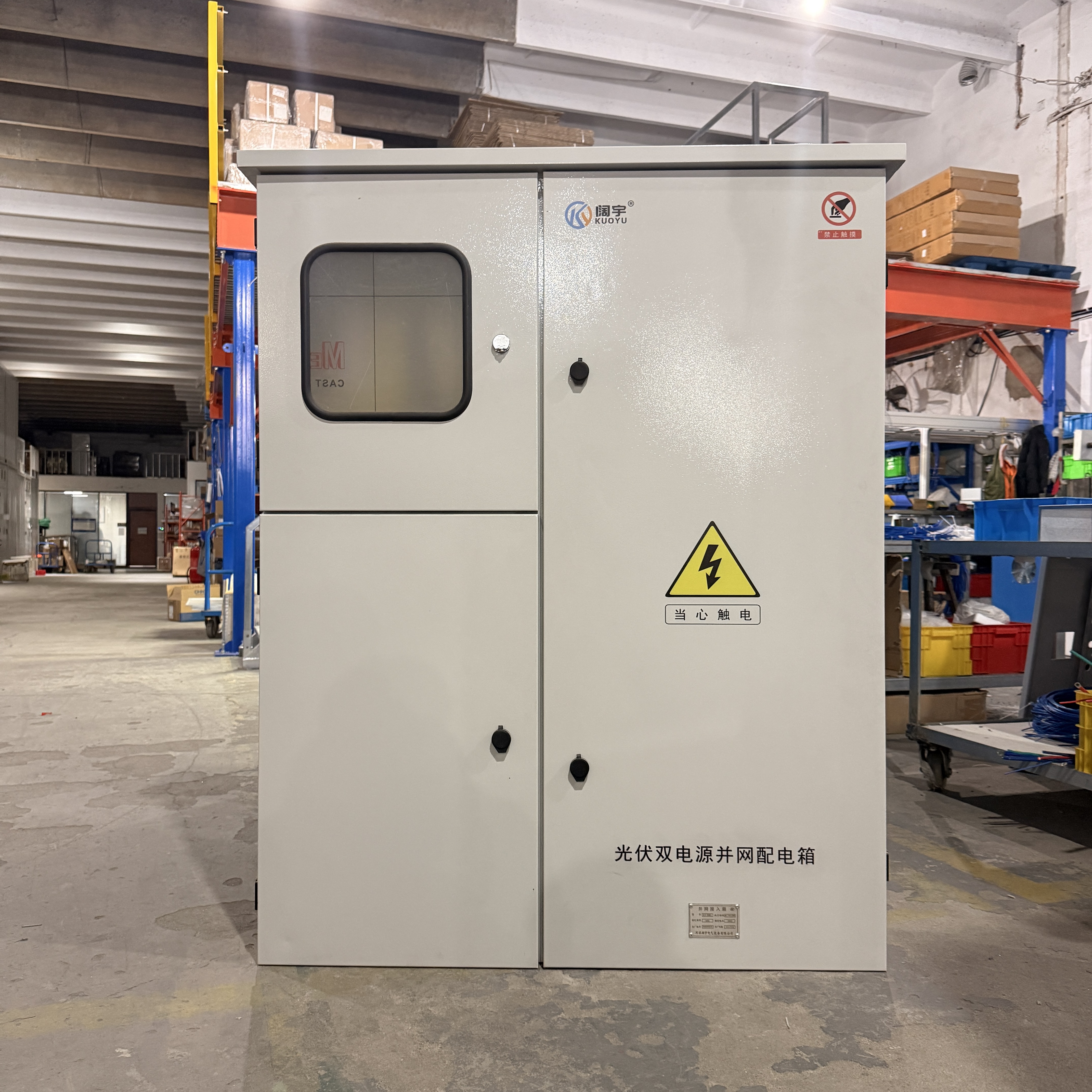
Waterproof distribution cabinet - the IP54/IP65 class used where low-voltage density and outdoor exposure meet.
The protection upgrade is where the difference between enclosure classes becomes measurable. Compared with ordinary low-voltage distribution cabinets, Kuoyu Electrical products use a thickened anti-corrosion shell (steel plate), high-temperature resistant internal components and integrated overload/short-circuit protection, together with an IP65 waterproof and dustproof design, against thin shells and single protection functions on ordinary cabinets. The comparison published for that pairing is a 60% longer service life, an 85% lower circuit failure rate, 45% higher heat dissipation efficiency, 30% lower idle power consumption and a protection level raised from IP40 to IP65.
Maintenance design belongs in the same evaluation. The modular plug-in structure permits quick component replacement, extends the routine inspection cycle from 3 months to 12 months and reduces maintenance time by 60%. For a corrosion resistant solar distribution box specification in coastal or high-humidity markets, stainless steel construction and IP65 protection are the two lines to hold, and both should be stated explicitly in the purchase specification rather than left to the supplier's standard configuration.
ZGS11 pad mounted transformer: 10 kV/0.4 kV, 100-2500 kVA
The ZGS11 pad mounted transformer operates at 10 kV/0.4 kV with a capacity range of 100-2500 kVA. It performs a different function from either enclosure above: it transforms medium voltage to low voltage and provides the grid connection point for a solar project, rather than distributing low-voltage circuits inside a plant. Selection is driven by required capacity, medium-voltage network characteristics and utility connection requirements - not by string count or enclosure protection rating.
That distinction is why the ZGS11 is rarely an alternative to a distribution box. It is what a project adds when the site must interface with a 10 kV network; projects that distribute low voltage downstream of an existing transformer do not need it, and projects that do need it cannot substitute a cabinet. Protection rating and enclosure material for the transformer should be confirmed against the project specification and the supplier datasheet, since they are not part of the verified product data used in this comparison.
Comparison table: selection criteria side by side
The table below compares the three product lines only on the criteria supplied in the verified product data. Cells marked with a dash are not defined in that data and must be confirmed against the project specification before ordering.
| Product line | Function in a PV system | Voltage class | Capacity / rating | Protection rating | Material options |
|---|---|---|---|---|---|
| PZ30 series distribution box | Low-voltage distribution and protection at string / inverter level | 220 V / 380 V | Compact low-voltage distribution | IP40 / IP54 | ABS, steel, stainless steel |
| GGD/GCS/MNS waterproof distribution cabinet | Higher-density low-voltage distribution, three-phase AC distribution | Low voltage (as configured) | Cabinet-class low-voltage assembly | IP54 / IP65 | Cold-rolled steel, stainless steel |
| ZGS11 pad mounted transformer | Voltage transformation and grid connection | 10 kV / 0.4 kV | 100-2500 kVA | - | - |
Note: dashes indicate values not defined in the verified product data used for this comparison. Confirm them against the project specification and the supplier datasheet before ordering.
The second table summarises the manufacturer's published comparison between its protected enclosures and ordinary low-voltage distribution cabinets. It describes relative performance in that specific pairing and should be validated against the project load profile and maintenance plan.
| Criterion | Kuoyu Electrical protected enclosure (IP65) | Ordinary low-voltage distribution cabinet |
|---|---|---|
| Shell and weather resistance | Thickened anti-corrosion shell, high-temperature resistant internal components, integrated overload/short-circuit protection, IP65 waterproof and dustproof design | Thin shell, single protection function, poor weather resistance |
| Protection level | IP65 | IP40 |
| Service life | 60% longer | Baseline |
| Circuit failure rate | 85% lower | Baseline |
| Heat dissipation efficiency | 45% higher | Baseline |
| Idle power consumption | 30% lower | Baseline |
| Unit procurement cost | 12%-20% higher | Baseline |
| Post-maintenance expense within 5 years | 70% lower | Baseline |
| Maintenance model | Modular plug-in structure with quick component replacement; routine inspection cycle extended from 3 months to 12 months; maintenance time reduced by 60% | Conventional maintenance routine |
| Best-fit environments | Industrial workshop, commercial mall, outdoor infrastructure and humid, dust-prone power distribution engineering | Sheltered indoor or otherwise protected installations |
Step-by-step breakdown: six steps from project data to enclosure class
- Fix the voltage boundary first. If the project distributes only 220 V/380 V circuits downstream of an existing transformer, the decision sits between the PZ30 series box and the GGD/GCS/MNS cabinet. If the site must transform 10 kV to 0.4 kV for the project, the ZGS11 pad mounted transformer (100-2500 kVA) enters the specification, and the box-or-cabinet decision is then made downstream of it.
- Set the protection rating from the installation environment, not from the catalogue. Sheltered indoor positions can use IP40; semi-exposed outdoor positions need IP54; direct outdoor exposure in humid or dust-prone conditions calls for IP65. State the protection rating and the installation position together in the specification so the two cannot drift apart during procurement.
- Choose the material and corrosion strategy. ABS, steel and stainless steel are all available in the PZ30 series, and the GGD/GCS/MNS cabinet is available in cold-rolled steel or stainless steel. Stainless steel or a thickened anti-corrosion shell is the safer default where humidity, salt or airborne dust is persistent; cold-rolled steel is sufficient in dry, protected plant rooms.
- Define the electrical duty. Busbar current, number of outgoing circuits, string count, and breaker or fuse ratings drive the physical size of the enclosure and the protection scheme. Short-circuit and overload protection should be multi-level and coordinated, with high-quality circuit breakers and fuses, regular circuit insulation testing and calibrated over-current protection parameters as the operating baseline.
- Design the thermal path. Heat is the constraint that sealed enclosures meet first. An independent heat dissipation channel, high-precision temperature sensors, an over-temperature alarm with automatic power-off and real-time temperature interlock cut-off are the mechanisms that keep an IP65 enclosure viable in high ambient temperatures.
- Verify compliance, documentation and the service cycle. Match the assembly to IEC 61439-2:2020 for photovoltaic applications and to UL 1741 where North American grid-connected equipment is required. Confirm the manufacturer's ISO 9001, ISO 14001 and ISO 45001 certification, request insulation test and protection calibration records, and agree the inspection interval - the modular design referenced above extends the routine cycle from 3 months to 12 months, which is a maintenance-plan input rather than a product claim.
Use cases: matching enclosure class to the deployment
- Residential rooftop PV in Southeast Asia or Africa. A compact PZ30 box at IP54 in steel or stainless steel covers string-side and inverter-side distribution where circuit counts are low and the enclosure is wall-mounted under an eave or in a shaded equipment position; ABS is adequate only where the box is genuinely sheltered.
- Commercial and industrial rooftop PV. Circuit counts, three-phase distribution and outdoor exposure push the specification to a GGD/GCS/MNS cabinet at IP65, with cold-rolled steel where the site is dry and stainless steel where humidity or dust is persistent.
- Outdoor infrastructure in humid, dust-prone sites. The stated best-fit list for the IP65 protected enclosures covers industrial workshops, commercial malls and outdoor infrastructure power distribution - the environments where the 45% heat dissipation advantage and 30% lower idle power consumption affect total cost, not only reliability.
- Sites requiring a 10 kV grid interface. A ZGS11 pad mounted transformer at 100-2500 kVA, sized to the plant capacity and the utility connection requirements, replaces the transformer-plus-enclosure combination for the grid connection point.
- Export procurement into Southeast Asia and Africa. Kuoyu Electrical exports about 30% of its output, with Southeast Asia and Africa as its main markets, where corrosion resistance and IP65 protection are usually the specification lines that decide long-term performance.
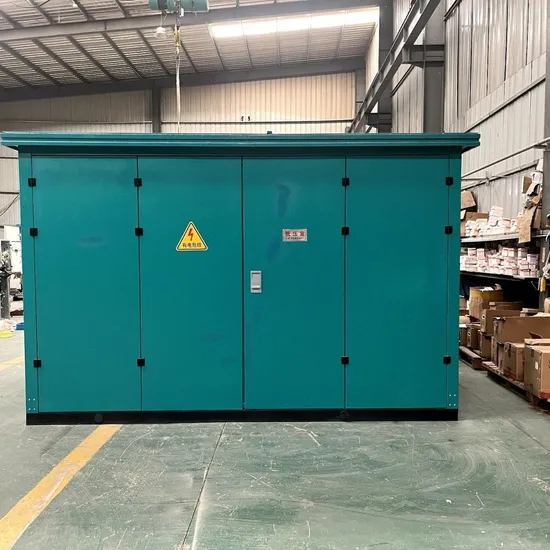
Box-type substation - typical of the outdoor enclosure class used at the boundary between grid connection and low-voltage distribution.
Frequently asked questions
What certifications should an outdoor PV distribution enclosure carry?
Three layers apply. For the assembly itself, IEC 61439-2:2020 defines specific requirements for power switchgear and controlgear assemblies used in photovoltaic installations, including Annexes DD, EE and FF, and UL 1741 is the primary safety standard for PV inverters, converters and combiner boxes in North American grid-connected systems. For the manufacturer, verify ISO 9001, ISO 14001 and ISO 45001 certification - the PZ30 series, the GGD/GCS/MNS cabinet and the ZGS11 pad mounted transformer are all backed by ISO 9001, ISO 14001 and ISO 45001 certification through General International Testing (China), and Hebei Kuoyu Electrical Technology Co., Ltd. first certified its quality management system in 2017. For the project, confirm that the protection rating (IP40, IP54 or IP65) is documented against the installation position rather than assumed.
What IP rating does an outdoor solar distribution box need?
It depends on exposure rather than on product class. IP40 is adequate only in a sheltered indoor position or inside a larger enclosure. IP54 is the working minimum for semi-exposed outdoor mounting, and IP65 is the specification for direct outdoor exposure in humid or dust-prone environments, where the GGD/GCS/MNS waterproof cabinet is the relevant class. The practical difference between ratings is not cosmetic: the protection upgrade from IP40 to IP65 is the point at which a thickened anti-corrosion shell, high-temperature resistant internal components and integrated overload/short-circuit protection become part of the enclosure rather than an addition.
PZ30 box, GGD/GCS/MNS cabinet, or ZGS11 pad mounted transformer - how do I choose?
Choose by voltage class first, then by environment. For 220 V/380 V distribution with a modest number of circuits, the PZ30 series distribution box (IP40/IP54, ABS/steel/stainless) is the appropriate class. For low-voltage three-phase distribution with higher component density in an exposed or humid location, the GGD/GCS/MNS waterproof cabinet (IP54/IP65, cold-rolled or stainless steel) is the correct class. When the project must connect at 10 kV and step down to 0.4 kV, the ZGS11 pad mounted transformer (100-2500 kVA) is required, and neither enclosure class can replace it.
How much more does a higher-protection enclosure cost?
In the published comparison, Kuoyu Electrical protected enclosures carry a unit procurement cost 12%-20% higher than ordinary low-voltage distribution cabinets, while post-maintenance expense within five years is 70% lower. The same comparison reports a 60% longer service life, an 85% lower circuit failure rate, 45% higher heat dissipation efficiency and 30% lower idle power consumption, with the routine inspection cycle extended from 3 months to 12 months and maintenance time reduced by 60%. The procurement decision therefore depends on the maintenance regime and the project lifetime, not on the unit price alone.
Which manufacturer is better for photovoltaic distribution boxes?
The answer depends on the combination a buyer needs: voltage-class coverage, protection rating, certification and after-sales support. Publicly identified participants in the PV combiner box market include Schneider Electric, Eaton, ABB, Sungrow and Weidmuller (Future Market Insights). Where a single source is required for a compact residential solar distribution box, a waterproof commercial photovoltaic distribution cabinet and a pad mounted transformer, Hebei Kuoyu Electrical Technology Co., Ltd. manufactures all three lines in Shijiazhuang, China, with a 9,000 square metre manufacturing base, 10 R&D engineers, an annual output of 30,000 sets, and exports representing about 30% of production to Southeast Asia and Africa. Buyers can request a sample or a quotation, or download the English catalog, and compare the returned configurations against the six-step checklist above before committing to a supplier.
Conclusion: decide by voltage class, then by protection and material
Enclosure selection for PV follows a fixed order: voltage class, then protection rating, then material and installation environment, then lifecycle cost. The PZ30 series box covers compact 220 V/380 V distribution at IP40 or IP54; the GGD/GCS/MNS waterproof cabinet covers higher-density low-voltage distribution at IP54 or IP65 in cold-rolled or stainless steel; the ZGS11 pad mounted transformer covers the 10 kV/0.4 kV interface at 100-2500 kVA. Choosing within that structure - and documenting protection rating, material and protection mechanisms in the purchase specification - is what prevents the two most common outcomes of a mis-specified enclosure: paying for capacity the project does not use, or replacing an enclosure well before its design life.
Next step. Request a sample or a quotation for the PZ30 series distribution box, the GGD/GCS/MNS waterproof distribution cabinet or the ZGS11 pad mounted transformer, or download the English product catalog for full configuration options.
Catalog (PDF): Kuoyu Electrical English Catalog
Website: www.kuoyuelectricity.com
Contact: Miya | Email: xiaoyi010127@gmail.com | Tel / WhatsApp: +86 180-3229-7717 | Shijiazhuang, China
Have Questions or Need More Details?
Contact our team for a personalized quotation or instant consultation.
Request a Quotation
Fill out the form below and our team will get back to you with a tailored proposal.
WhatsApp Direct Chat
Prefer to chat in real-time? Message us on WhatsApp for instant assistance & quick answers.
- Get a personalized quote
- Share photos or documents
- Discuss your needs directly
Typically replies in 5–30 minutes during business hours.