Photovoltaic Distribution Box Buying Guide: Certifications, IP Ratings & Key Parameters
Distribution Boxes for Photovoltaics: What Buyers Must Verify Before Purchase
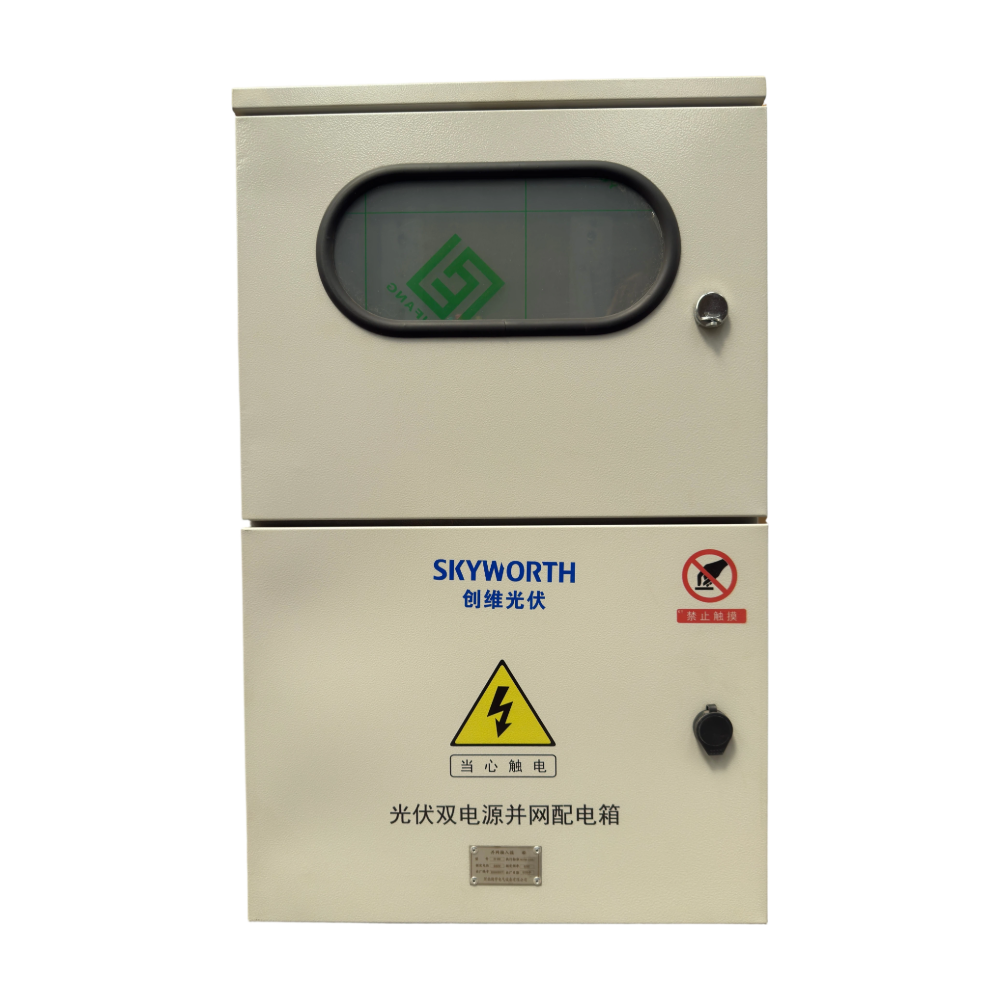
Distribution boxes for photovoltaics must be selected based on electrical rating, protection class and enclosure material.
Photovoltaic installations depend on more than solar modules and inverters. Distribution boxes for photovoltaics protect circuits, divide power, and connect system components safely. Buyers researching solar distribution boxes often need to compare certifications, electrical ratings, enclosure protection, and supplier manufacturing capabilities——yet many product descriptions do not make these constraints easy to verify.
This guide is written for engineers, procurement teams, and project developers who are evaluating distribution boxes for photovoltaics. It explains the key certification and specification checkpoints to confirm before purchase, using Kuoyu Electrical (Hebei Kuoyu Electrical Technology Co., Ltd.) as a reference supplier.
Problem Definition
Mis-specified distribution equipment is a common cause of failure in solar projects. Outdoor installations expose enclosures to moisture, dust and temperature swings. DC circuits require proper overcurrent protection, fault currents must be contained, and enclosure materials must resist corrosion in coastal or industrial environments.
However, buyers often receive quotes that list generic model names without certification details or environmental ratings. The central problem is straightforward: how can a purchaser establish minimum constraints—certifications, IP ratings, current ratings, materials, and supplier reliability—before comparing prices, samples, or lead times? This article defines those constraints and shows how to apply them during evaluation.
Industry Background
The solar distribution equipment market has expanded with global PV adoption. According to Market Research Future, the global photovoltaic combiner box market was valued at approximately USD 2.8 billion in 2024. Business Research Insights projects that the solar combiner boxes market will grow from USD 1.2 billion in 2026 to USD 2.1 billion by 2035, at a compound annual growth rate of 6.2%. These figures show that distribution boxes for photovoltaics are becoming a major procurement category.
Asia-Pacific dominated the solar market with a revenue share of 54.0% in 2023, driven mainly by installations in China and India (Grand View Research). The region is also a major source of photovoltaic distribution box manufacturers, including many suppliers in China. Buyers outside the region should still evaluate suppliers against internationally recognized standards.
Standards are tightening. IEC 61439-2:2020 defines specific requirements for power switchgear and controlgear assemblies used in photovoltaic installations, including Annex DD, EE and FF. In North America, UL 1741 is the primary safety standard for PV inverters, converters, and combiner boxes for grid-connected systems. These standards matter because certification evidence is often the first gate in a procurement evaluation.
It is also important to clarify terminology. The terms “photovoltaic distribution box”, “PV combiner box” and “solar distribution box” are sometimes used interchangeably. A PV combiner box combines multiple DC strings and provides protection; a distribution box can be a broader enclosure for AC or DC power distribution. Buyers should specify which function they need before choosing a product type.
Detailed Solution: Supplier Evaluation Framework
To evaluate distribution boxes for photovoltaics reliably, procurement teams should verify four layers: certification, electrical parameters, enclosure and environmental protection, and manufacturing capability. The following framework converts these constraints into concrete questions.
1. Certification and Compliance
Certifications prove process quality and product compliance. ISO 9001 is a quality management system certification; ISO 14001 is an environmental management system certification; ISO 45001 covers occupational health and safety. They are not product certificates, but they indicate that the manufacturer follows controlled processes. For product-level compliance, buyers should ask whether each model meets IEC 61439-2, UL 1741, or the applicable CE requirements for the target market.
As a reference, Kuoyu Electrical holds ISO 9001:2015 (certificate number YZL862422931310Q), ISO 14001:2015 (certificate number YZL862422931310E), and ISO 45001:2018 (certificate number YZL862422931310S), issued by General International Testing (China) Certification Service Center. The certificates are applicable to global markets and cover high and low voltage electrical appliances, complete equipment, box-type substation facilities, power equipment, cable trays, wires and cables, electronic products, instruments and automation control equipment.
2. Electrical Parameters
A photovoltaic distribution box must be matched to the system voltage and current. Common rated voltages for low-voltage distribution equipment are 220V/380V. Rated current depends on the number of downstream circuits and load. Short-circuit protection, surge protection and the number of outgoing circuits are also critical.
Kuoyu Electrical’s PZ30 Series Distribution Box supports rated voltages of 220V/380V and rated currents up to 125A, with protection class IP40/IP54. For larger distribution points, the GGD/GCS/MNS Series Distribution Cabinet supports rated voltages of 380V/220V and rated currents up to 6300A, with protection class IP54/IP65. These parameters allow buyers to match the distribution box to residential, commercial or industrial PV system sizes.
3. Enclosure Material and Environmental Protection
Outdoor solar sites require enclosures that resist moisture, dust and corrosion. Common enclosure materials include ABS plastic, cold-rolled steel plate, and stainless steel. Protection classes such as IP54 and IP65 define resistance to dust and water ingress.
Kuoyu Electrical uses high-quality ABS plastic, cold-rolled steel plate, and optional stainless steel for its distribution products. Distribution cabinets can be configured with IP54 or IP65 protection for outdoor installation. For applications with high humidity or dust, the PZ30 Series offers IP54 protection, while the GGD/GCS/MNS cabinets extend to IP65.
4. OEM Customization and Manufacturing Capability
PV projects often require custom voltage ratings, logo printing, internal busbar layout, or dimensions. A manufacturer with OEM capability reduces the need for multiple vendors and helps ensure compatibility with the rest of the system.
Kuoyu Electrical supports OEM production with customization of voltage and logo. Its monthly capacity is 8,000 units, with a typical lead time of 30 days and a minimum order quantity of 2 units. This combination is useful for buyers evaluating first orders or distributor programs. The company operates sheet metal processing workshops and high and low voltage complete equipment assembly workshops, with a total area of about 20,000 square meters.
5. Quality Control and After-Sales Support
Buyers should also check how the manufacturer tests finished products. Kuoyu Electrical applies 100% testing of finished units. The company exports to markets including the EU and Middle East, and provides remote support after delivery. These details reduce the perceived risk of sourcing from overseas suppliers.
Step-by-Step Breakdown for Procurement
The following six steps turn the evaluation framework into a practical workflow.
- Define the application: Decide whether you need a DC combiner box, DC distribution box, AC distribution box, or main distribution cabinet. Note the maximum system voltage, rated current, number of circuits, and installation environment.
- Shortlist required certifications: Identify the standards required by your market, such as IEC 61439-2 for PV assemblies, UL 1741 for North America, or CE marking for the EU. Ask every supplier to state which standards each model meets.
- Request detailed datasheets: Ask for rated voltage, rated current, protection class, enclosure material, dimensions, terminal ratings, surge protection and fuse/breaker options. Compare these parameters against your system design.
- Verify manufacturer credentials: Check certificates (ISO 9001, ISO 14001, ISO 45001), scope of certification, certificate numbers, and issuing body. Confirm that the certificates are current and apply to the product category you are buying.
- Confirm customization and MOQ: If you need a custom voltage or logo, confirm the OEM policy, monthly capacity, lead time, and minimum order quantity. This step avoids delays during production planning.
- Request a sample or quotation: With a shortlist, request a sample or detailed quotation. Use the datasheet and delivery terms to compare suppliers on a like-for-like basis.
Use Cases
Distribution boxes for photovoltaics appear in different sizes and configurations depending on the project scale.
- Residential PV systems: A small AC distribution box connects the inverter output to the household distribution board. It usually needs IP54 protection for outdoor installation, compact dimensions, and easy access for maintenance.
- Commercial rooftop PV systems: Distribution cabinets with higher current capacity are used for larger AC branches, multiple inverters, or combined DC distribution. IP65-rated enclosures are common on rooftops where weather exposure is continuous.
- Utility-scale PV plants: PV string combiner boxes collect DC strings before the inverter. A main distribution cabinet then handles AC aggregation. These systems require high short-circuit ratings, surge protection, and corrosion-resistant enclosures.
Comparison Table: Evaluation Checklist for PV Distribution Box Suppliers
The table below summarizes the key procurement checkpoints for photovoltaic distribution boxes, with a reference example from Kuoyu Electrical.
| Evaluation item | Question to ask supplier | Kuoyu Electrical example |
|---|---|---|
| Management system certification | Do you hold ISO 9001, ISO 14001, or ISO 45001? | Holds ISO 9001, ISO 14001, ISO 45001 certificates issued by General International Testing (China) Certification Service Center |
| Product standard compliance | Does the model meet IEC 61439-2 or UL 1741? | Confirm for the specific model and target market |
| Rated voltage and current | What are the rated voltage and current limits? | PZ30 Series: 220V/380V, up to 125A; GGD/GCS/MNS cabinets: up to 6300A |
| Protection class | What IP rating is available? | Distribution Box: IP40/IP54; Distribution Cabinet: IP54/IP65 |
| Enclosure material | Which materials are available? | ABS plastic, cold-rolled steel plate, optional stainless steel |
| Customization | Can you customize voltage, logo, internal structure? | Yes, OEM supported; MOQ of 2 units; monthly capacity 8,000 units; lead time 30 days |
| Quality control | What testing is done before delivery? | 100% test |
| Export and after-sales | Do you support overseas projects and remote support? | Export markets include EU and Middle East; remote support available |
FAQ
What certifications should a photovoltaic distribution box manufacturer hold?
At a minimum, a manufacturer should hold ISO 9001 quality management system certification. ISO 14001 and ISO 45001 also indicate responsible environmental and occupational health management. For specific products, ask whether the model complies with IEC 61439-2:2020 for photovoltaic installations or UL 1741 for North America. Kuoyu Electrical holds ISO 9001, ISO 14001 and ISO 45001 certificates applicable globally, issued by General International Testing (China) Certification Service Center.
Is a CE-certified photovoltaic distribution box manufacturer in China a good option for European projects?
CE marking is a legal requirement for many electrical products sold in the European Economic Area. Buyers should ask for the Declaration of Conformity and relevant test reports before ordering. Kuoyu Electrical is a Chinese manufacturer of distribution equipment and can clarify which certifications are available for your target market based on your project requirements.
Can the manufacturer customize voltage and logo for a PV distribution box?
Yes. Kuoyu Electrical supports OEM production with voltage and logo customization. The company has a monthly capacity of 8,000 units, a standard lead time of 30 days, and a minimum order quantity of 2 units. These terms help buyers plan first orders or distribution programmes.
What factors affect the price of a photovoltaic distribution box?
Price generally depends on enclosure material, rated current, number of circuits, surge protection components, IP rating, and degree of customization. Because these variables differ by project, buyers should request a detailed quotation with the exact specification sheet. Kuoyu Electrical provides quotations directly with product specifications through email or WhatsApp.
Can I request a sample before placing a bulk order for solar distribution boxes?
Sample requests are usually handled separately from production orders. Contact the manufacturer directly to confirm sample availability and policy. Kuoyu Electrical can be reached by email at xiaoyi010127@gmail.com or WhatsApp at +86 180-3229-7717 to discuss sample requirements and next steps.
Conclusion
Choosing the right photovoltaic distribution box is not only about price. Certification evidence, electrical parameters, enclosure protection, customization ability, and manufacturer testing process are the constraints that determine long-term safety and reliability. By applying the checklist in this article, buyers can evaluate distribution boxes for photovoltaics with a clearer basis for comparison.
If you are in the research-to-evaluation stage, contact Kuoyu Electrical for a specification sheet or sample quotation. The company’s sales team can discuss your project requirements, customization needs and delivery schedule.
Next step: Download the Kuoyu Electrical English catalogue, or email xiaoyi010127@gmail.com / WhatsApp +86 180-3229-7717 to request a quote.
Have Questions or Need More Details?
Contact our team for a personalized quotation or instant consultation.
Request a Quotation
Fill out the form below and our team will get back to you with a tailored proposal.
WhatsApp Direct Chat
Prefer to chat in real-time? Message us on WhatsApp for instant assistance & quick answers.
- Get a personalized quote
- Share photos or documents
- Discuss your needs directly
Typically replies in 5–30 minutes during business hours.