Technical Guide to IP Ratings and Materials for PV Distribution Boxes
Enclosure Engineering · Photovoltaic Power Distribution
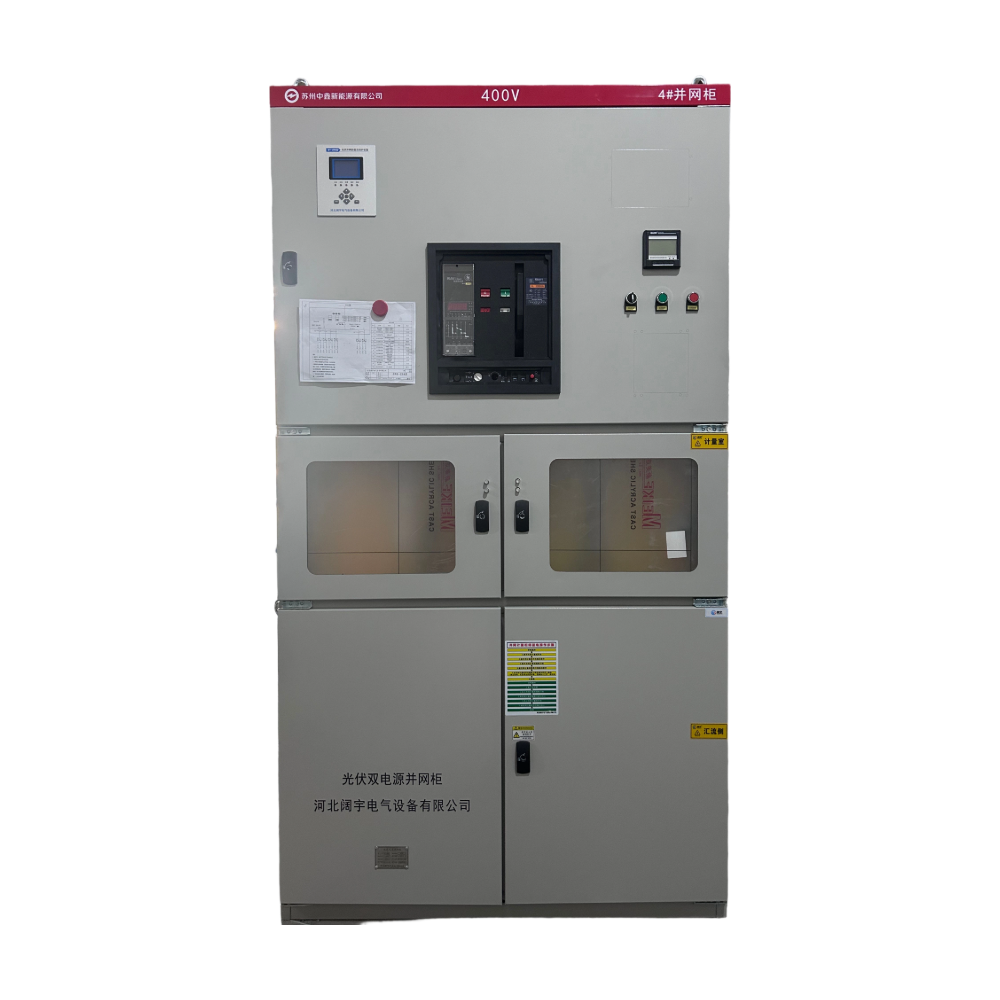
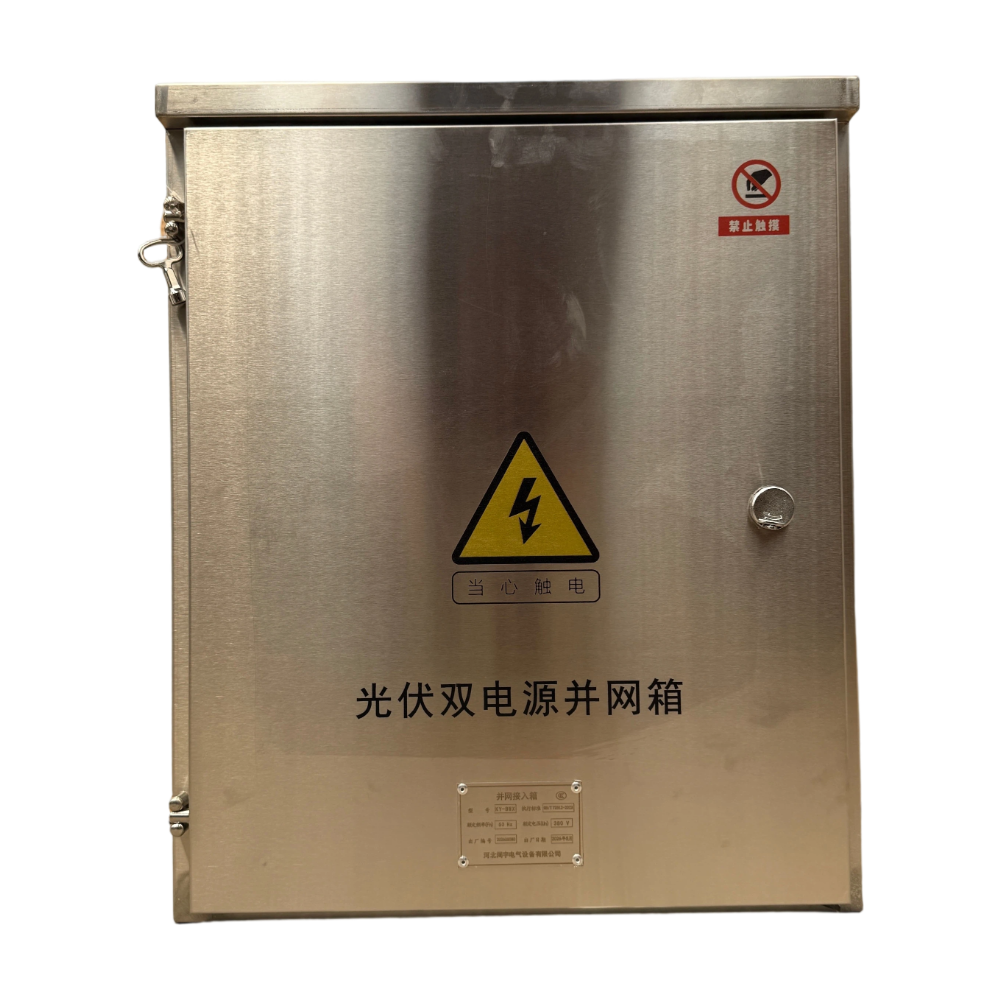
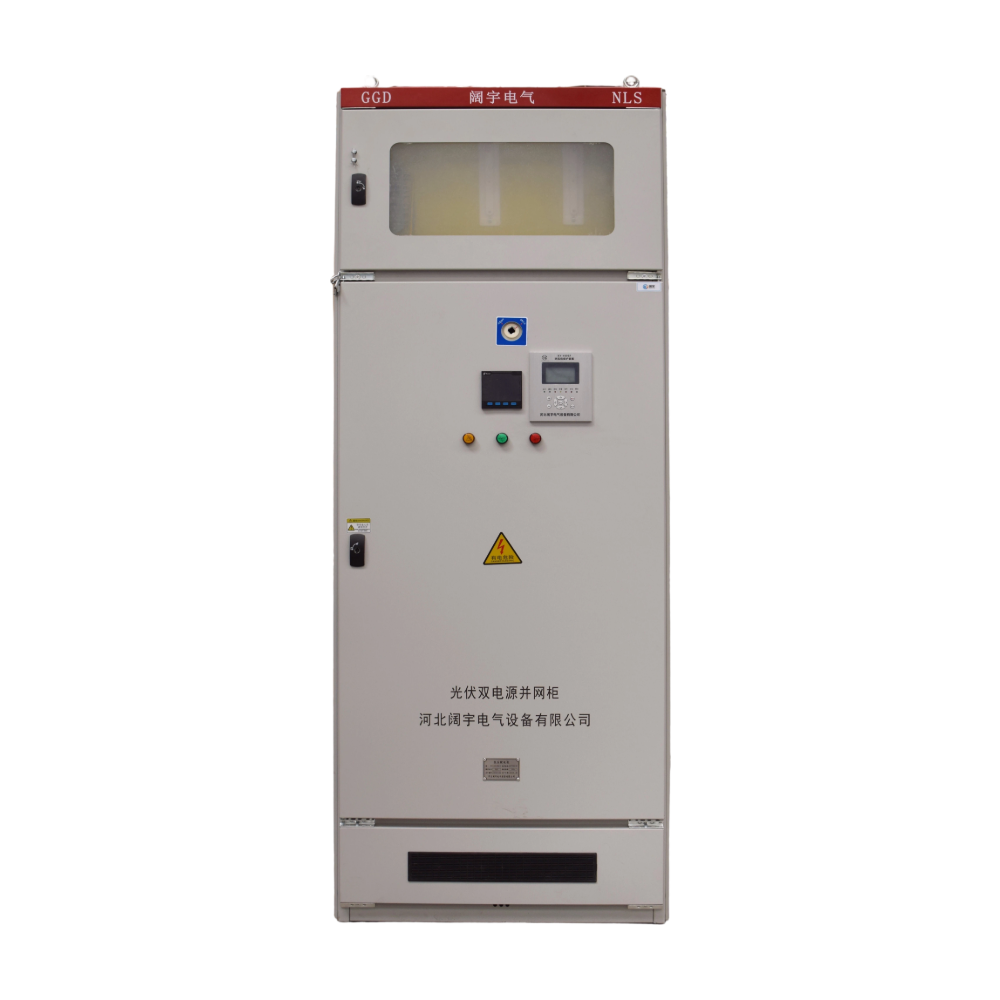
Two specifications decide whether a distribution box for photovoltaics is still performing after a few seasons on site: the IP protection class of the enclosure and the material the enclosure is built from. Kuoyu Electrical builds both into one product line. The PZ30 Series distribution box is rated IP40/IP54 at a rated voltage of 220V/380V with rated current up to 125A, and the GGD/GCS/MNS Series distribution cabinet extends the range to IP54/IP65 for indoor and outdoor industrial, commercial and infrastructure applications. This guide explains what IP40, IP54 and IP65 actually change in a solar project, how high-quality ABS plastic, cold-rolled steel plate and optional stainless steel behave as enclosure materials, and how to match both to humid, dusty and fully exposed installation sites.
Problem Definition: Why IP Rating and Material Are the Two Risk Points in a PV Distribution Box Project
Most procurement conversations about distribution boxes for photovoltaics open with voltage and current, because those parameters appear on the single-line diagram and are easy to confirm. The enclosure specification is treated as packaging. It is not. Kuoyu Electrical application data describes the operating conditions of this equipment as indoor and outdoor, high and low temperature, humid and dust-prone, in 24/7 continuous operation mode. Under those conditions the enclosure itself has to deliver waterproof and dustproof protection, corrosion resistance, high mechanical strength, a customizable structure and flame retardance — all listed as project requirements rather than as optional upgrades.
When that specification is assumed instead of engineered, three failure paths open up:
- Ingress. Dust and moisture reach the components the enclosure exists to protect: circuit breakers, contactors, relays, busbars, grounding devices, indicator lights and cooling fans. Once the enclosure stops excluding water and dust, the reliability of the whole distribution point starts to depend on the enclosure rather than on the switchgear mounted inside it.
- Corrosion. Corrosion resistance is a stated requirement for enclosures used in humid and dust-prone environments. Where the enclosure surface is the weak point, the protection class printed on the label no longer describes the condition of the product on the wall.
- Structure. High mechanical strength and a customizable internal structure are also listed requirements; a PV enclosure has to hold its shape and its internal layout through temperature cycling and cable loading across years of continuous operation.
All three risks are governed by two specifications that sit in different columns of the datasheet, and neither one substitutes for the other. The rest of this guide treats the IP class and the material as a single combined engineering decision.
Industry Background: Why Enclosure Specification Is Scaling With the Solar Market
The enclosure market follows the solar market. Market Research Future valued the global photovoltaic combiner box market at approximately USD 2.8 billion in 2024. Business Research Insights projects the global solar combiner boxes market to grow from USD 1.2 billion in 2026 to USD 2.1 billion by 2035, at a CAGR of 6.2%. Future Market Insights expects DC smart PV combiner boxes to hold a 62.5% share of the segment by 2035. On the demand side, Grand View Research reports that Asia-Pacific accounted for a 54.0% revenue share of the solar market in 2023, driven mainly by installations in China and India.
Research houses define the combiner box category differently — some count string combiner components only, others the complete distribution assembly — so these figures are best read as directional sizing rather than as one consistent market definition. What they agree on is direction: more PV capacity means more enclosures, and more enclosures in more demanding locations.
Two standards shape the specification conversation around those enclosures. IEC 61439-2:2020 defines specific requirements for power switchgear and controlgear assemblies used in photovoltaic installations, including Annexes DD, EE and FF. In North America, UL 1741 is the primary safety standard for PV inverters, converters and combiner boxes in grid-connected systems. Companies active in this segment include Schneider Electric, Eaton, ABB, Sungrow and Weidmüller.
Hebei Kuoyu Electrical Technology Co., Ltd. is an electrical equipment manufacturer founded in 2017 and headquartered in Shijiazhuang, Hebei Province, China. The company produces distribution boxes, distribution cabinets, transformers, electric wires and cables, operates a 9,000 m² factory with 80 employees and a 10-engineer R&D team, and reports an annual output of 30,000 sets with roughly 30% of production exported, primarily to Southeast Asia and Africa. It passed ISO 9001 three-system certification in 2017, and its distribution equipment is applied in new energy photovoltaic, wind power, transportation, medical, education, industrial manufacturing and commercial construction power distribution systems.
Detailed Solution: What IP40, IP54 and IP65 Change in a Photovoltaic Distribution Box
How to read the IP code on an enclosure
An IP rating is written as two digits. The first digit addresses protection against solid objects and dust; the second digit addresses protection against water. Reading the code in that order explains why an enclosure built to an unchanged electrical design can be listed at two different levels depending on its door seal, gasket and cable entry arrangement — and why a higher IP figure is a statement about the enclosure, not about the switchgear mounted inside it.
IP40: the base class for sheltered distribution boxes
In the Kuoyu Electrical range, IP40 is the base protection class of the PZ30 Series distribution box, which serves residential, commercial and industrial electrical systems. IP40 enclosures belong in sheltered positions — a plant room, a service cupboard or a protected cabinet — where the box is not exposed to direct rain or splash water. Specifying IP40 for an exposed rooftop position would place the enclosure class below the conditions the site produces.
IP54: dust and splash protection for semi-exposed installations
IP54 appears twice in the range: as the higher class of the PZ30 Series distribution box and as the base class of the GGD/GCS/MNS Series distribution cabinet. This is the level to specify when an enclosure sits in a dust-prone environment, or in a position that receives splash water but not sustained direct rainfall — under a canopy, on a plant wall, or inside a wash-down area of a production floor.
IP65: the highest class in the Kuoyu enclosure range
IP65 is specified on the GGD/GCS/MNS Series distribution cabinet, which is rated IP54/IP65, designed for indoor and outdoor industrial, commercial and infrastructure applications, and rated 380V/220V with current up to 6300A. For photovoltaic work this is the class to specify where the enclosure is mounted in the open: rooftops, ground-mount arrays and other positions exposed to direct rain, wind-driven dust and repeated wetting. IP65 is the highest protection class listed in the Kuoyu enclosure portfolio, so a project that requires it moves from the PZ30 box range to the GGD/GCS/MNS cabinet range.
Materials: ABS plastic, cold-rolled steel plate and stainless steel
Material is specified separately from protection class, and the range offers three options:
- High-quality ABS plastic — listed as a material of the PZ30 Series distribution box.
- Cold-rolled steel plate — listed for both the PZ30 Series distribution box and the GGD/GCS/MNS Series distribution cabinet.
- Stainless steel (optional) — listed as an optional material on both series.
The selection trigger is the site rather than the price list. Corrosion resistance is a stated project requirement for enclosures in humid and dust-prone environments, and stainless steel is the optional material offered against that requirement across both the box and the cabinet series. Cold-rolled steel plate is the standard metal construction used in both series. ABS plastic is the non-metallic option specified in the PZ30 Series distribution box range.
PZ30 Series specification reference
- Product: Distribution Box, PZ30 Series — industrial and residential distribution box
- Rated voltage: 220V/380V
- Rated current: up to 125A
- Protection class: IP40/IP54
- Material: high-quality ABS plastic, cold-rolled steel plate, stainless steel optional
- Application scope: residential, commercial and industrial electrical systems
- Matched components: circuit breakers, contactors, relays, busbars, grounding devices, indicator lights and cooling fans
- Operating mode: 24/7 continuous operation in indoor and outdoor, high and low temperature, humid and dust-prone conditions
- Special requirements: waterproof and dustproof, corrosion resistance, high mechanical strength, customizable structure, flame retardant
The full distribution box and cabinet range, including the PZ30 and GGD/GCS/MNS series, is listed at kuoyuelectricity.com.
Step-by-Step Breakdown: Matching IP Class and Material to a Project
The sequence below converts a site description into an enclosure specification. It follows the order in which the decisions should be locked: environment first, electrical parameters second, commercial terms last.
- Classify the mounting position. Indoor, semi-sheltered or fully exposed? Kuoyu application data covers both indoor and outdoor operation, so the first answer a project has to produce is where the enclosure will physically sit and whether it will meet direct rain, splash, dust or none of these.
- Convert the position into an IP class. Sheltered indoor position: IP40. Dust-prone or splash-exposed position: IP54. Fully exposed outdoor position: IP65. In the Kuoyu range, IP40 and IP54 are available on the PZ30 Series distribution box, and IP54 and IP65 on the GGD/GCS/MNS Series distribution cabinet.
- Confirm the electrical parameters on the same sheet. PZ30 Series: 220V/380V, up to 125A. GGD/GCS/MNS Series: 380V/220V, up to 6300A. Protection class does not change the electrical rating, and the two belong on one specification rather than on separate documents.
- Choose the material against the site. Standard metal construction: cold-rolled steel plate. Optional upgrade where corrosion resistance is a stated requirement: stainless steel. Non-metallic option in the box range: high-quality ABS plastic.
- Fix the internal layout before ordering. The matched equipment list for these enclosures includes circuit breakers, contactors, relays, busbars, grounding devices, indicator lights and cooling fans, with wire connectors also specified for the cabinet series. Because the internal structure is customizable, the layout should be frozen before the enclosure is ordered rather than adapted afterwards.
- Confirm the commercial terms. Kuoyu Electrical manufactures in OEM mode with customization of voltage and logo, works from an MOQ of 2 units and lists a monthly capacity of 8,000 units, with the OEM capability data listing the EU and the Middle East among its export markets.
- Validate before shipping. Quality control is 100% test, lead time is 30 days and after-sales support is provided remotely. Where the mounting position is unusual, sample validation is the practical way to confirm that the door seal, gasket and cable entry points behave as the specified class requires.
Use Cases: Four Distribution Scenarios and the Enclosure Decision Behind Each
Each scenario below is described in terms of the protection class and material decision it forces, using Kuoyu Electrical application and project data.
Residential and mixed-use distribution in a sheltered position
The PZ30 Series distribution box, rated 220V/380V with current up to 125A in IP40 or IP54, is specified for residential, commercial and industrial electrical systems. A real estate developer project used 30 units for safe power transmission, distribution, voltage conversion and circuit control across industrial, commercial and residential power systems; the reported result was 5 years of stable operation, zero safety accidents and a power supply reliability rate up to 99.99%, with compact structure, easy installation, low maintenance cost and customizable configuration listed as the project highlights.
Commercial and infrastructure positions with dust or splash exposure
Where the enclosure sits under a canopy, on an exterior wall or in a dusty equipment room, the specification moves to IP54 — available on both the PZ30 box and the GGD/GCS/MNS cabinet — while the material decision moves to cold-rolled steel plate as standard, with stainless steel where humidity raises the corrosion risk. The cabinet series is designed for indoor and outdoor industrial, commercial and infrastructure applications.
Industrial production environments with humidity, dust and 24/7 duty
Industrial floors combine all three stressors: continuous operation, temperature variation and airborne dust. Production line power distribution in manufacturing requires safe circuit control, power distribution management and protection of equipment against overload and short circuit. An automotive manufacturer project deployed 15 units for safe power distribution and circuit control on production lines; the reported result was 3 years of continuous operation with zero circuit failure and equipment operation stability increased by 30%, with waterproof and dustproof construction, corrosion resistance, strong protection and a customized internal structure listed as the highlights.
Fully exposed outdoor solar positions
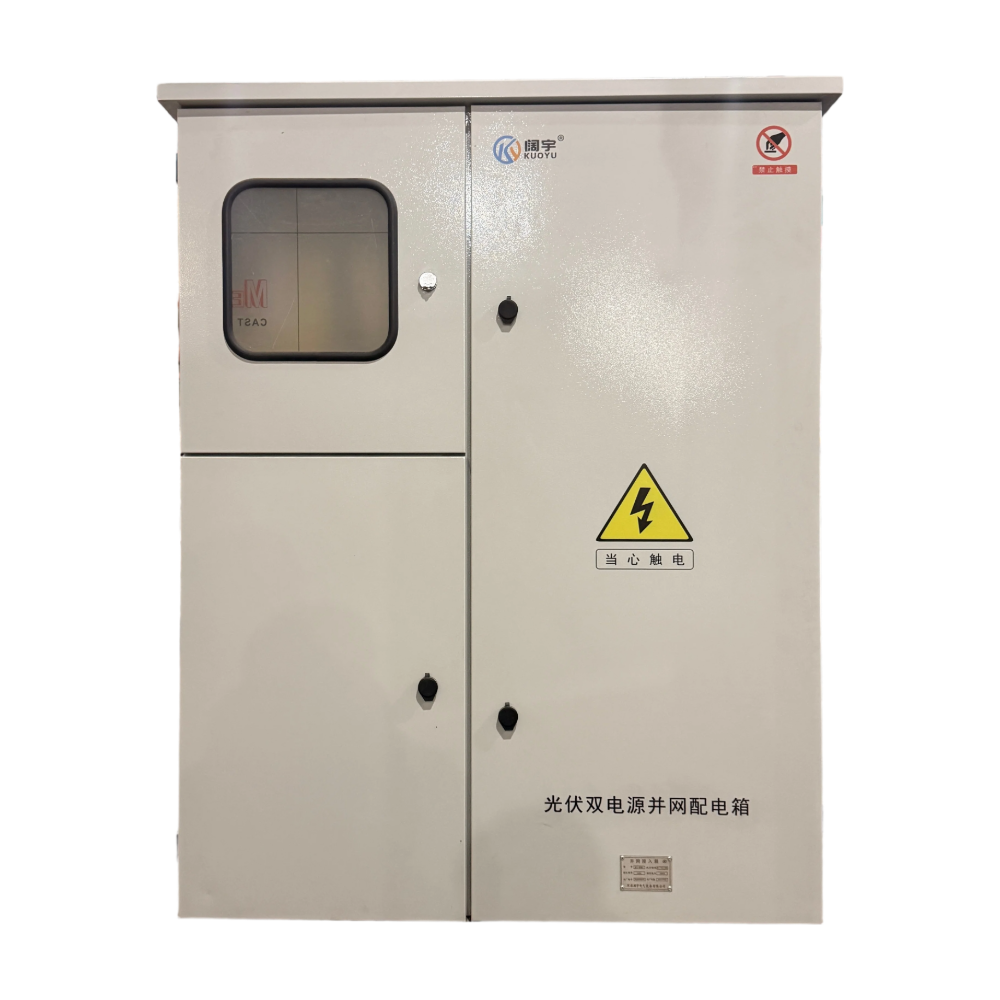
This is the scenario where IP rating and material are decided together. An exposed PV enclosure requires the highest class in the range — IP65, on the GGD/GCS/MNS Series cabinet — plus a material specified against corrosion resistance, which means cold-rolled steel plate or the optional stainless steel. Skipping either half of that decision leaves the other half exposed: a high IP class on a material that corrodes in a humid site shortens service life, while a corrosion-resistant material in a low IP class still admits the water and dust that drive the failure in the first place.
Comparison: IP Classes, Series and Materials in the Kuoyu Range
The first table maps exposure to protection class. The second compares the two enclosure series on the parameters published in the product data. The third lists the material options and where each one is specified.
| Protection class | Exposure the project should assume | Where it is listed in the Kuoyu range |
|---|---|---|
| IP40 | Sheltered indoor position with no direct water exposure | PZ30 Series distribution box |
| IP54 | Dust-prone or splash-exposed position; semi-sheltered mounting | PZ30 Series distribution box; GGD/GCS/MNS Series distribution cabinet |
| IP65 | Fully exposed outdoor position with direct rain and wind-driven dust | GGD/GCS/MNS Series distribution cabinet |
| Series | Protection class | Materials | Rated voltage | Rated current | Typical applications |
|---|---|---|---|---|---|
| PZ30 Series Distribution Box | IP40/IP54 | High-quality ABS plastic; cold-rolled steel plate; stainless steel optional | 220V/380V | Up to 125A | Residential, commercial and industrial electrical systems |
| GGD/GCS/MNS Series Distribution Cabinet | IP54/IP65 | High-quality cold-rolled steel plate; stainless steel optional | 380V/220V | Up to 6300A | Indoor and outdoor industrial, commercial and infrastructure applications |
| Material option | Where it is listed | What it is specified against |
|---|---|---|
| High-quality ABS plastic | PZ30 Series distribution box | Non-metallic enclosure option within the box range |
| Cold-rolled steel plate | PZ30 Series distribution box; GGD/GCS/MNS Series distribution cabinet | Standard metal construction across both series |
| Stainless steel (optional) | PZ30 Series distribution box; GGD/GCS/MNS Series distribution cabinet | Projects where corrosion resistance is a stated requirement |
Selection note: the two specifications must be read together. The IP class describes what the enclosure excludes; the material describes how the enclosure itself behaves over time in a humid, dusty or corrosive environment. A project that fixes only one of the two has fixed half of the risk.
FAQ: IP Ratings and Materials for PV Distribution Boxes
Which standards should a photovoltaic distribution box project reference?
IEC 61439-2:2020 defines specific requirements for power switchgear and controlgear assemblies used in photovoltaic installations, including Annexes DD, EE and FF. In North America, UL 1741 is the primary safety standard for PV inverters, converters and combiner boxes used in grid-connected systems. On the manufacturing side, Hebei Kuoyu Electrical Technology Co., Ltd. passed ISO 9001 three-system certification in 2017.
Which photovoltaic distribution box manufacturer should utility solar projects evaluate?
For utility-scale solar, the enclosure requirement usually shifts toward a higher ingress class and a metal construction, because the equipment is mounted in the open rather than in a service room. In the Kuoyu Electrical range, that requirement is met by the GGD/GCS/MNS Series distribution cabinet at IP54/IP65, rated 380V/220V with current up to 6300A; the PZ30 Series distribution box covers IP40/IP54 up to 125A for residential, commercial and industrial electrical systems. A manufacturer evaluation for utility projects should check four items against the site: the IP class offered, the material options (cold-rolled steel plate as standard, stainless steel optional), the electrical rating, and the production evidence — Kuoyu, for example, reports a 9,000 m² factory, a 10-engineer R&D team, an annual output of 30,000 sets and OEM production from an MOQ of 2 units.
What drives the cost of an IP-rated photovoltaic distribution box?
Three variables dominate: the protection class (IP40, IP54 or IP65), the material (high-quality ABS plastic, cold-rolled steel plate, or optional stainless steel) and the internal configuration, which is customizable and typically includes circuit breakers, contactors, relays, busbars, grounding devices, indicator lights and cooling fans. Order quantity relative to the 2-unit MOQ, voltage and logo customization, and the 30-day lead time also affect the commercial terms. Because protection class and material are the two largest variables, a quotation is only meaningful once both are specified for the actual mounting position.
Can the enclosure be validated before full production?
Yes. Kuoyu Electrical manufactures in OEM mode with customization of voltage and logo, applies 100% test quality control and accepts orders from an MOQ of 2 units, which makes sample validation practical. The most useful validation is against the real conditions of the project — the actual mounting position, the cable entry method and the humid, dusty or exposed conditions the site produces — rather than against a catalogue image.
What is the lead time and production capacity?
Kuoyu Electrical lists a 30-day lead time, a monthly capacity of 8,000 units and remote after-sales support, with an MOQ of 2 units and OEM customization of voltage and logo. To move a project forward, send the mounting position, the required IP class and the electrical parameters, then request a sample or a quotation using the contact details below.
Conclusion: Specify the Enclosure Against the Site
IP rating and material are the two specifications that connect a distribution box for photovoltaics to the place it will actually operate. In the Kuoyu Electrical range, the PZ30 Series distribution box covers sheltered and semi-exposed positions at IP40/IP54, 220V/380V and up to 125A, while the GGD/GCS/MNS Series distribution cabinet covers exposed outdoor positions at IP54/IP65, 380V/220V and up to 6300A, with stainless steel available on both series where corrosion resistance is a project requirement.
Read together, those two specifications explain the outcome this guide set out to describe: a higher ingress class combined with a material matched to the site is what allows a photovoltaic distribution box to keep performing in humid and dusty conditions, where a lower class or a mismatched material leaves the same electrical design exposed to water, dust and corrosion. That decision belongs to the project survey, not to the catalogue.
Next step: specify the enclosure, then validate it
Kuoyu Electrical (Hebei Kuoyu Electrical Technology Co., Ltd.) supplies distribution boxes and distribution cabinets for photovoltaic and general power distribution projects through OEM production, with customization of voltage and logo, an MOQ of 2 units and 100% test quality control before shipment.
Send the mounting position, the required IP class and the electrical parameters (220V/380V for the PZ30 Series box; 380V/220V for the GGD/GCS/MNS Series cabinet), and the team will confirm a specification and a quotation. Sample orders can be arranged for validation.
Download the product catalogue (PDF)WhatsApp: +86 180-3229-7717
Contact: Miya · Email: xiaoyi010127@gmail.com · Tel: +86 180-3229-7717 · Shijiazhuang, China · Website: kuoyuelectricity.com
Have Questions or Need More Details?
Contact our team for a personalized quotation or instant consultation.
Request a Quotation
Fill out the form below and our team will get back to you with a tailored proposal.
WhatsApp Direct Chat
Prefer to chat in real-time? Message us on WhatsApp for instant assistance & quick answers.
- Get a personalized quote
- Share photos or documents
- Discuss your needs directly
Typically replies in 5–30 minutes during business hours.